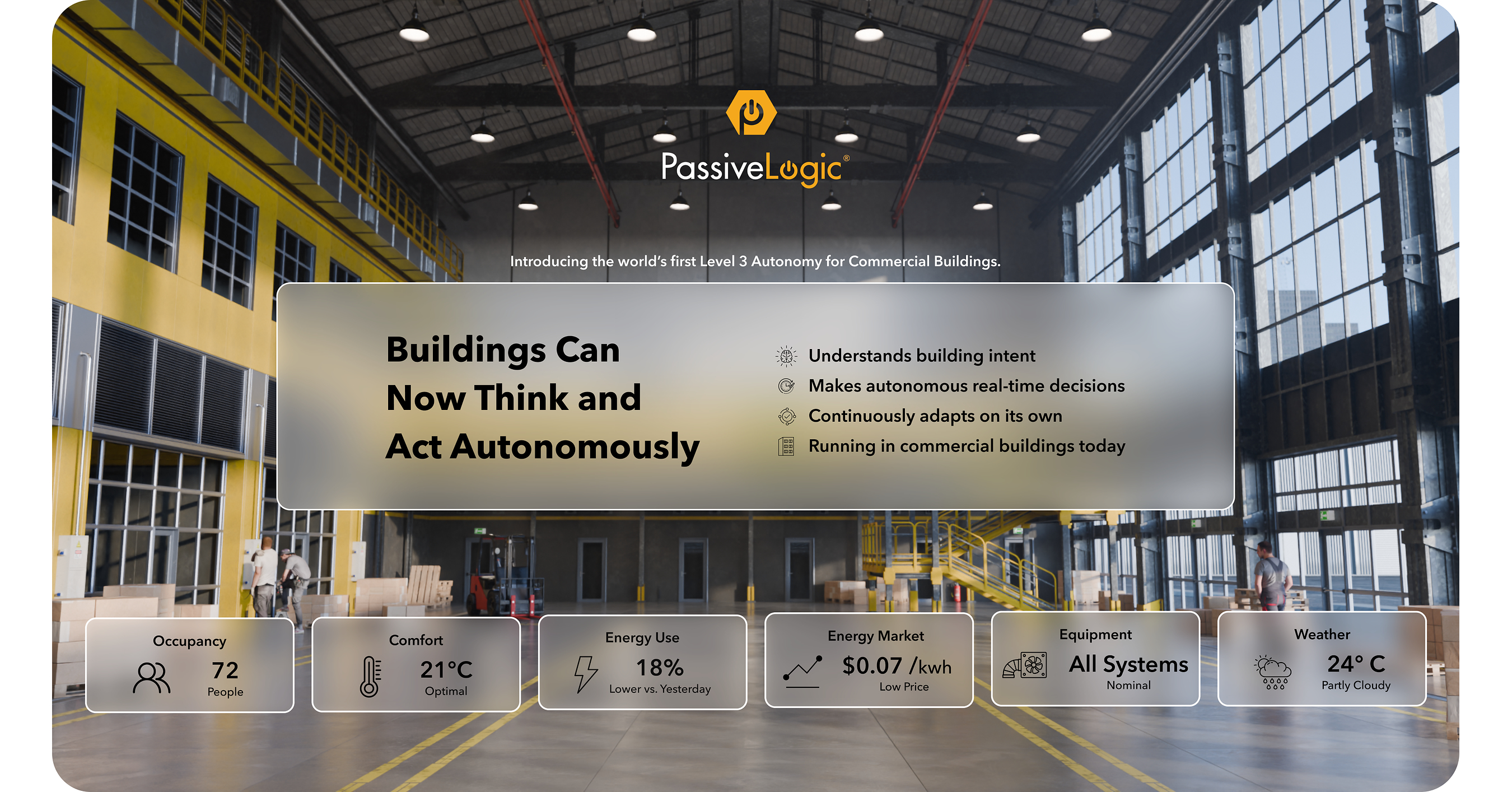
PassiveLogic kündigt „Full Level 3 Autonomy“ an, das als erstes System Gebäude und industrielle Infrastruktur autonom steuern soll, um Komfort zu maximieren und den Energieverbrauch zu minimieren. Die Stufe-3-Steuerung wird als KI-„White-Box“ beschrieben, die Veränderungen der physischen Umgebung über ein physikbasiertes Grounded World Model (auf NVIDIA-Technologie) antizipiert und vorab anpasst. Das Unternehmen erwartet noch 2026 eine weitere Stufe, die On-Edge-Lernen ermöglicht und den Prognosehorizont erweitert.
This is more useful as a signal about where value could migrate in building tech than as a stand-alone revenue event. If autonomous control systems prove durable, the economic rent shifts away from manual tuning and toward the layer that owns the control loop, which is a margin threat to traditional building-automation vendors and a potential attach-rate opportunity for whoever owns the edge compute stack. For NVDA, the upside is narrative first and financial second: the real question is whether physical-AI workloads become a material edge-inference category, which would expand the installed base of low-latency compute but likely only over multiple budget cycles.
The immediate risk is the classic pilot-to-production gap. Building controls are sticky because liability, cybersecurity, and commissioning failures matter more than demo quality, so the first 90 days of reaction should fade unless there is third-party evidence of measurable energy savings, fewer service calls, or uptime gains. The relevant catalyst window is 6-18 months: if the technology lands in data centers or large multi-site portfolios, it can compress service revenue and software pricing for incumbents while raising switching costs for owners that standardize on one autonomy stack.
Contrarian takeaway: the market may be overreacting to the autonomy framing while underappreciating that the first monetizers may be asset owners and integrators, not the startup itself. BN could actually benefit more than headline software names if portfolio-level optimization lowers OPEX across infrastructure assets, while JCI faces the more direct risk if AI control becomes a packaged layer rather than a bespoke engineering service. The thesis is falsified if incumbent controls vendors keep winning retrofit budgets or if this remains confined to a handful of showcase deployments rather than repeatable, audited economics.
AI-powered research, real-time alerts, and portfolio analytics for institutional investors.
Request DemoOverall Sentiment
mildly positive
Sentiment Score
0.25
Ticker Sentiment
