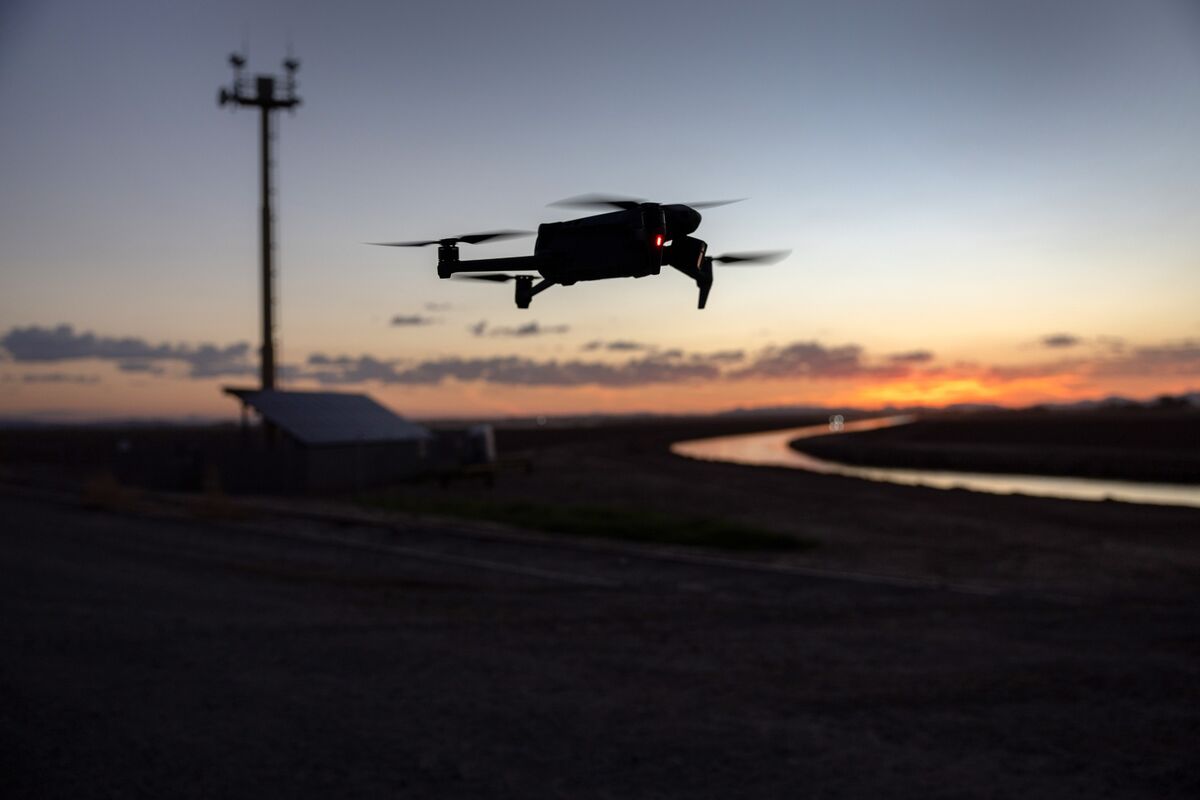
The FAA is proposing new rules that would let owners of certain sensitive facilities, including energy plants, oil refineries, state prisons and amusement parks, request drone-flight restrictions near their sites. The move is aimed at tightening security against rogue drones and could affect operators across transportation, infrastructure and defense-adjacent sectors. The proposal is regulatory in nature and does not specify immediate financial impacts.
This is not a broad aerospace demand story; it is a selective re-pricing of who gets permissioned access to airspace. The immediate winners are firms that sell counter-UAS detection, geofencing, perimeter security, and compliance software, while the less obvious beneficiaries are critical-infrastructure operators that can shift security spend from guards and cameras into automated monitoring with better incident-response economics. The second-order effect is procurement acceleration: once facilities can formally request restrictions, board-level security budgets become easier to justify, which should lift win rates for vendors with existing government or industrial relationships.
The market may underappreciate the option value embedded in defense-adjacent and industrial-security suppliers: this kind of regulation tends to create a multi-year installed-base cycle, not a one-time equipment pull. If the FAA process is cumbersome, the real monetization will accrue to vendors that can bundle mapping, authorization, and incident workflows into a recurring SaaS layer, not just hardware-only providers. The flip side is that drone operators serving inspection, filming, and logistics use cases could see localized friction and higher compliance costs, but the economic damage is likely more pronounced in low-margin consumer/commercial activity than in enterprise/industrial missions that can route around restricted zones.
Catalyst timing matters: near-term reaction is likely muted because rulemaking, comments, and implementation can take months, but the narrative can intensify quickly after high-profile security incidents. The main reversal risk is that the final rule is narrow, heavily grandfathered, or administratively slow, limiting addressable revenue for security vendors. Another tail risk is litigation from drone ecosystem participants if restrictions are perceived as overly broad, which could push meaningful revenue recognition out by 12+ months.
AI-powered research, real-time alerts, and portfolio analytics for institutional investors.
Request DemoOverall Sentiment
neutral
Sentiment Score
0.00
Consensus likely misses that the largest economic beneficiary may be not the drone-defense pure plays but the existing physical-security incumbents that can cross-sell drone detection into enterprise accounts with minimal CAC. This favors firms with installed bases at utilities, ports, prisons, and industrial sites, because the incremental drone module becomes a low-friction upsell. In other words, the trade is less about a big TAM re-rating and more about a higher conversion rate on already-budgeted security capex.
