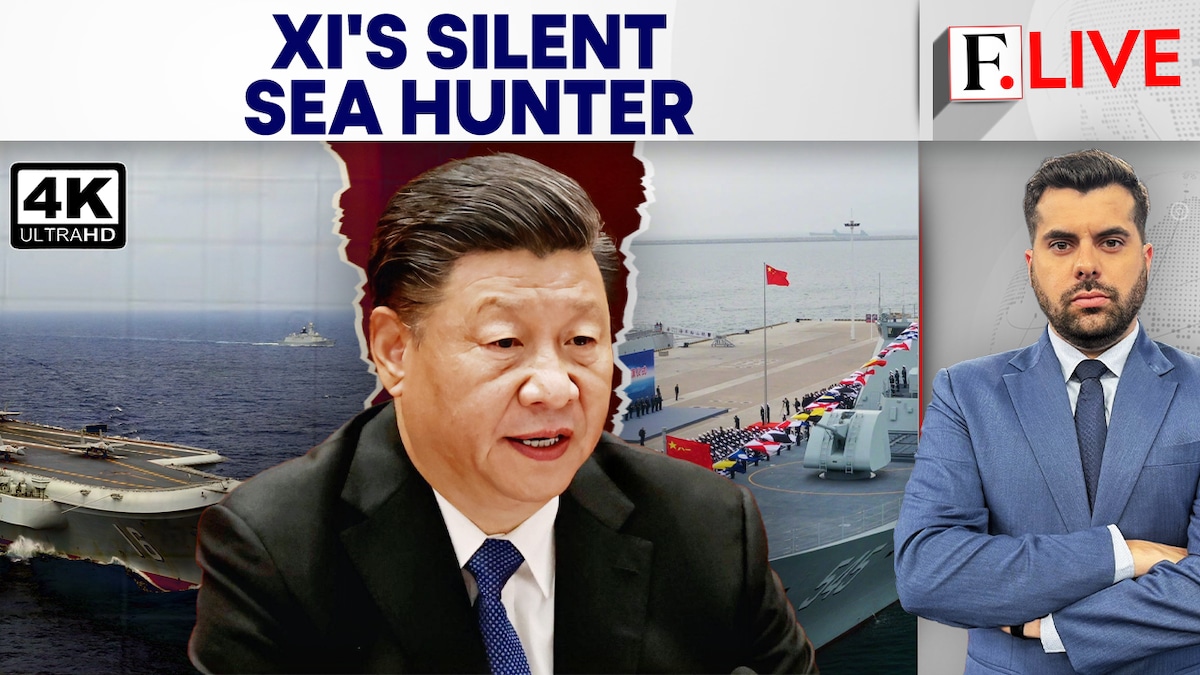
China’s Liaoning carrier group has begun fresh live-fire drills in the western Pacific, marking the first deployment of the new Type 054B guided-missile frigate alongside the strike group. Japan says it is closely monitoring Chinese fighter jet and helicopter operations beyond the First Island Chain, underscoring rising regional security tensions and China’s expanding naval reach.
The market implication is less about this single drill and more about the signal that China is now practicing blue-water carrier operations with newer escort capability, which raises the probability of a longer-run regional force posture shift. That matters for Japan first: it should keep nudging defense budgets, missile defense procurement, and munitions stockpiles higher over the next 12-36 months, creating a durable demand tailwind for domestic and allied defense suppliers. The second-order effect is on shipping and marine insurance pricing in the western Pacific; even modest increases in perceived operational risk can widen war-risk premia before any actual disruption occurs.
The bigger strategic risk is escalation through miscalculation, not a deliberate blockade. Live-fire drills beyond the first island chain increase the number of intercepts, shadowing events, and electronic-warfare interactions, which is exactly the sort of environment that can produce a one-off incident and a fast repricing of regional risk assets within days. The consensus may be underestimating how quickly supply chains can be rerouted away from the Taiwan-adjacent sea lanes once insurers, freight forwarders, and semiconductor OEMs perceive a persistent change in patrol patterns.
From an equities perspective, this is constructive for defense primes with exposed Asia procurement pipelines and for Japanese hard-security beneficiaries, but it is a headwind for China-sensitive cyclical names if tensions keep ratcheting. The asymmetry is that defense spending is sticky while headline risk is episodic, so the earnings impact can outlast the news flow by several quarters. The contrarian view is that markets often overreact to visibility of drills while underpricing the budgetary follow-through across Japan, Australia, and the Philippines, where procurement cycles can stay elevated for years even if the immediate tension fades.
AI-powered research, real-time alerts, and portfolio analytics for institutional investors.
Request DemoOverall Sentiment
mildly negative
Sentiment Score
-0.15
