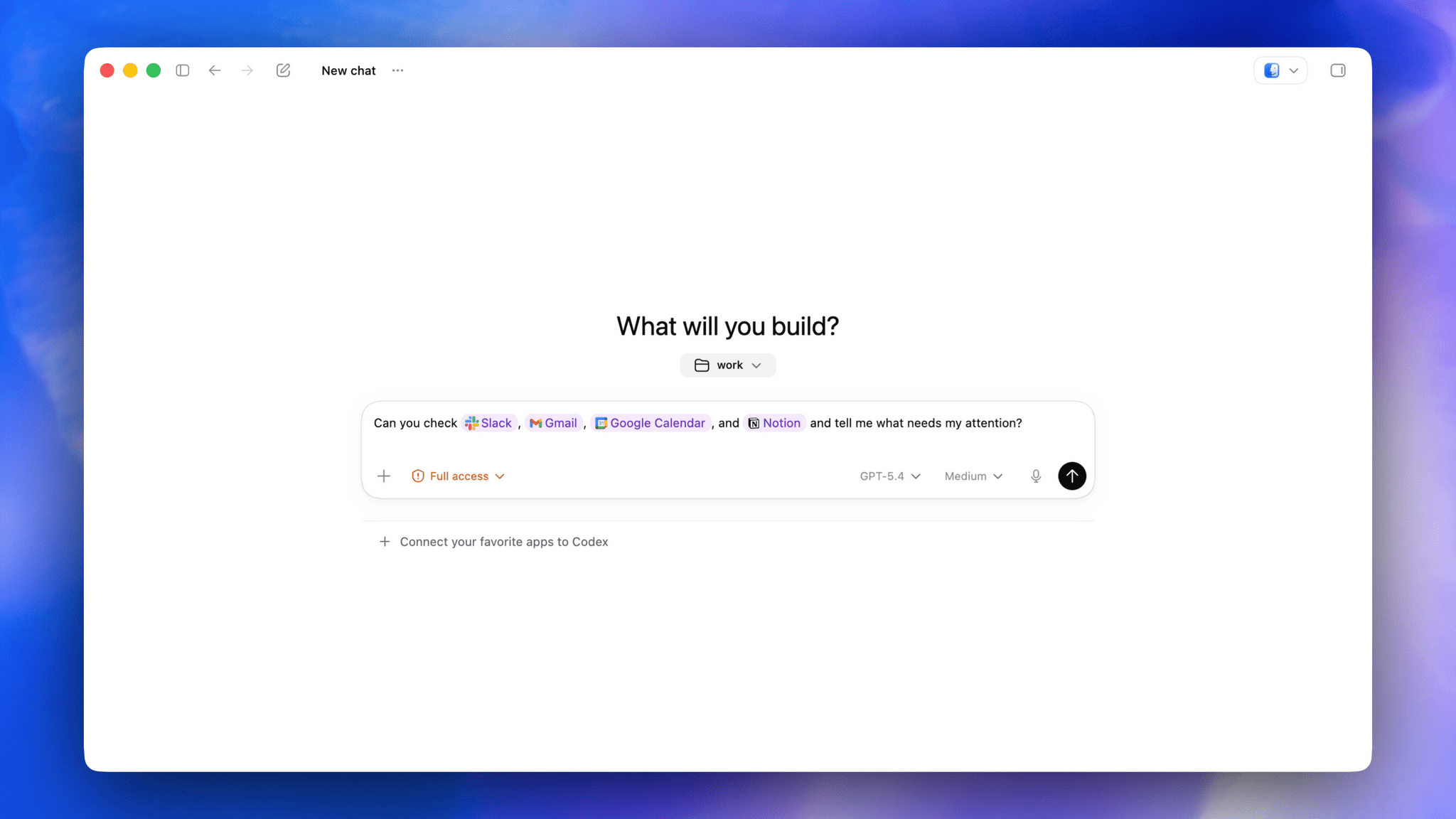
OpenAI rolled out a broad Codex upgrade, adding desktop app control, 100+ new plugins, enhanced memory, expanded automations, and support for image generation. The update also brings new developer tools such as multiple terminal tabs, GitHub PR review, a file sidebar, and remote devbox SSH, while Codex already has more than 3 million weekly users. The launch broadens Codex from a coding tool into a wider productivity platform and could strengthen user engagement, though some features are limited at launch.
This is less a product announcement than a distribution-layer escalation: OpenAI is trying to collapse the distance between chat, browser, desktop automation, and workflow orchestration into one sticky surface. That is strategically bullish for Microsoft over the medium term because it reinforces the value of being the default enterprise identity, productivity, and cloud substrate underneath AI agents; the economic moat shifts from model quality alone to workflow capture and admin control. The second-order winner is any SaaS vendor that becomes an agent-friendly integration surface, while the loser set is the long tail of point productivity tools whose UI becomes the battleground for automated access rather than direct human use.
The key risk is not feature quality but trust and governance. Once an agent can touch email, calendar, files, and desktop apps proactively, enterprise adoption will be gated by permissions, auditability, and data-loss controls; that creates a months-long rollout curve even if demos are compelling today. The Mac-only launch is a reminder that technical feasibility is not the same as enterprise scale, and any security incident or misfire in autonomous actions could slow adoption sharply. In that scenario, near-term enthusiasm can outrun monetization, which is especially relevant for a stock like MSFT where AI optionality is already partially capitalized.
The contrarian read is that this may be more valuable as an engagement-retention feature than a direct revenue driver in the next 2-4 quarters. If Codex becomes the front end for busywork, usage may rise faster than willingness to pay, pressuring inference economics and increasing the need for bundling into existing enterprise subscriptions. The market may be underestimating how much this strengthens Microsoft’s negotiating position with OpenAI, but overestimating immediate monetization from agentic productivity.
Over a 3-6 month horizon, the catalyst is enterprise pilot announcements and deeper Microsoft stack integration; over 12 months, the real test is whether autonomous workflows reduce seat churn or simply add usage. If memory/proactivity works well, the product could shift from reactive assistant to daily workflow default, which is the kind of habit formation that compounds. If it works poorly, the feature set becomes a UX burden and the narrative reverts to model-demo churn.
AI-powered research, real-time alerts, and portfolio analytics for institutional investors.
Request DemoOverall Sentiment
moderately positive
Sentiment Score
0.55
Ticker Sentiment
