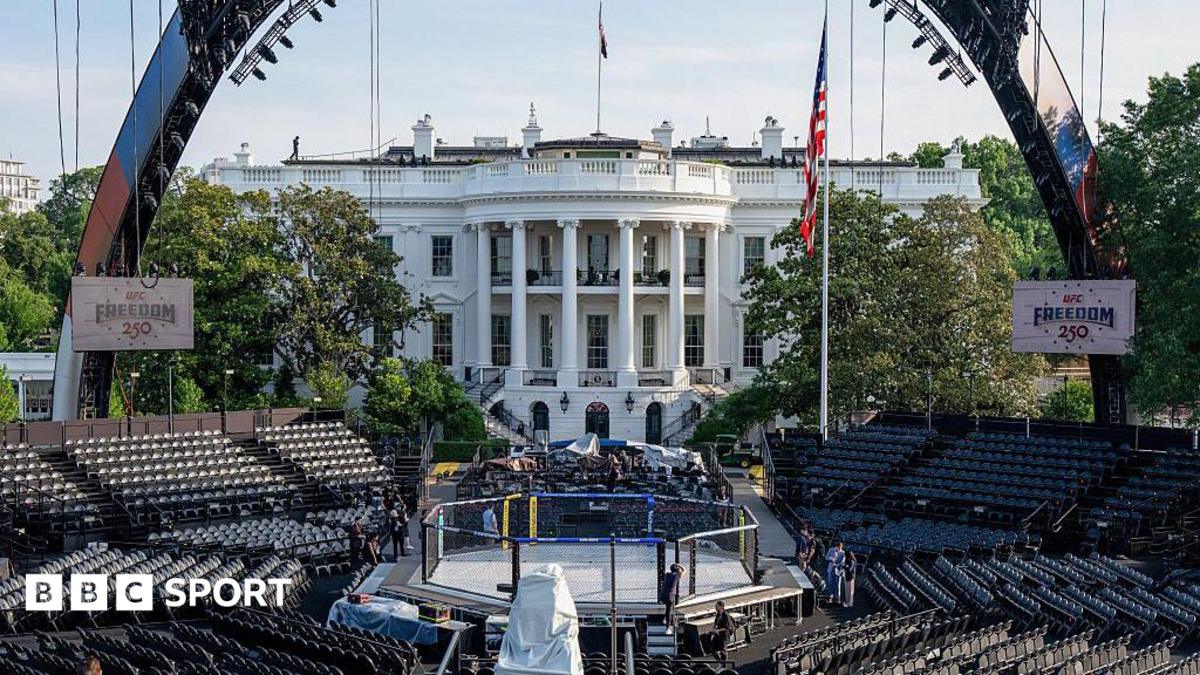
A federal judge rejected a lawsuit seeking to block UFC Freedom 250 at the White House, allowing the event to proceed as planned on Sunday. The UFC has reportedly spent about $60m on the show, which features Ilia Topuria vs. Justin Gaethje and Ciryl Gane vs. Alex Pereira. The ruling removes a legal overhang for the event, but the news is likely to have limited broader market impact.
The immediate market read is that regulatory friction around politically sensitive venue use is proving weak, which lowers the probability of last-minute cancellation risk for event-linked cash flows. That matters less for UFC equity value directly than for the broader monetization model: a successful execution normalizes the idea that premium live sports can be staged in nontraditional, high-symbolism venues, expanding the addressable universe for spectacle-based sponsorship, hospitality, and broadcast packaging.
The second-order winner is not the promoter alone but the surrounding ecosystem: media rights holders, sports betting operators, and high-end consumer brands that can attach to a one-off cultural event with outsized earned media. If execution is clean, the real asset is precedent — future promoters will be more willing to pay for headline-grabbing venue access, while public-venue objections become more obviously a delay tactic than a true stopping mechanism. That should incrementally benefit platforms with flexible event inventory and integrated distribution, not just combat sports.
The main tail risk is reputational rather than legal: any operational mishap, security issue, or optics failure would convert a novelty into a governance story and could harden local resistance for future public-site events over the next 6-12 months. A clean result would likely be faded by broader markets after the weekend, but the stronger signal is to watch whether sponsors and broadcasters treat this as a one-off or as a replicable premium format. If the latter, there is a credible path to better monetization per event across the sector.
Contrarian view: consensus will likely focus on the legal win as bullish for the event, but the more important dynamic is that a successful show may accelerate scrutiny of municipal and federal venue rules, creating more front-loaded compliance costs for rivals that try to copy the model. In that sense, the near-term headline is a modest positive for UFC-style spectacle, but the medium-term edge accrues to operators with the balance sheet and legal infrastructure to absorb venue experimentation.
AI-powered research, real-time alerts, and portfolio analytics for institutional investors.
Request DemoOverall Sentiment
neutral
Sentiment Score
0.05
