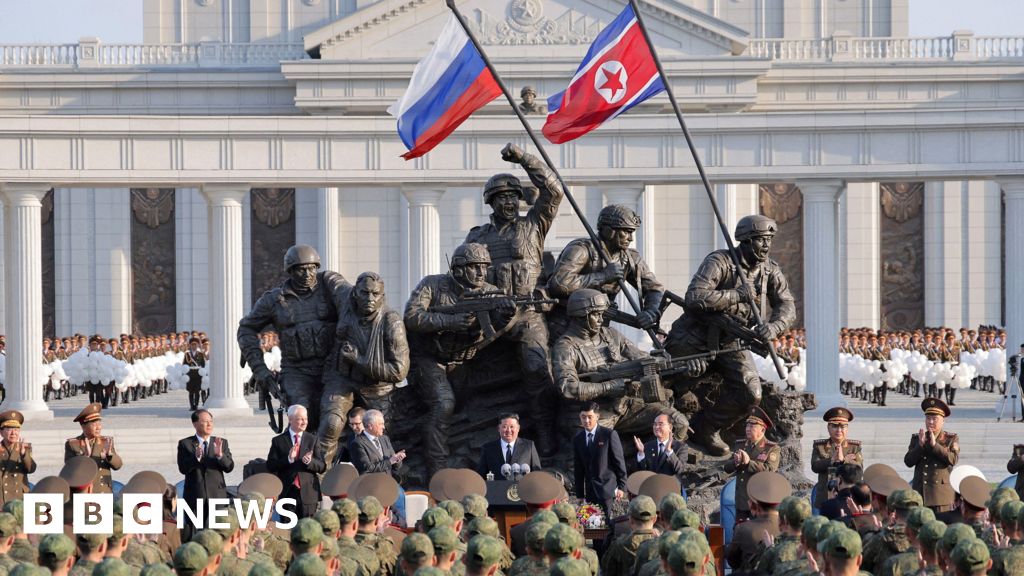
North Korea and Russia unveiled a memorial in Pyongyang for North Koreans killed fighting in Ukraine, underscoring deeper military cooperation. South Korean intelligence estimates at least 15,000 North Korean troops have been sent to support Russia in Kursk, with about 2,000 killed, though neither Pyongyang nor Moscow has released official figures. The article also highlights continued barter-style support, with North Korea reportedly receiving food, money, and technical assistance in return for soldiers and workers.
This is less about the memorial itself and more about institutionalizing a wartime labor/arbitrage loop between Russia and North Korea. The important second-order effect is that Pyongyang is proving it can monetize manpower, not just munitions: that makes the regime more resilient to sanctions while giving Moscow a low-cost, politically disposable source of labor for rear-area reconstruction and military logistics. If those workers are used in Kursk rebuild activity, the economic impact is concentrated in low-productivity, labor-intensive work rather than high-skill engineering, which limits near-term upside for Russian industrial output but lowers the fiscal burden of occupation and reconstruction.
For markets, the more relevant catalyst is not additional battlefield escalation but the durability of the Russia-NK logistics corridor. Over the next 3-6 months, any widening of technical aid from Moscow to Pyongyang could translate into higher North Korean missile, drone, and artillery throughput, which raises the odds of more persistent pressure on European defense procurement cycles. The marginal beneficiary is not classic heavy armor primes alone, but firms with exposure to air defense, counter-UAS, and munitions replenishment where replenishment demand tends to persist 12-24 months after a headline conflict spike.
The contrarian read is that this may be a sign of Russian labor scarcity and battlefield attrition becoming binding constraints, which is bullish for eventual negotiations but bearish for near-term de-escalation. If Russia is importing manpower from a sanctioned state, it suggests domestic mobilization options are politically limited and the war is becoming more resource-constrained, not less. That means the tail risk is a longer, messier conflict with deeper sanctions leakage, but the reversal trigger would be any disruption to the Russia-NK transport/payment channel, which could hit both sides' military resilience faster than sanctions headlines imply.
AI-powered research, real-time alerts, and portfolio analytics for institutional investors.
Request DemoOverall Sentiment
neutral
Sentiment Score
-0.10
