





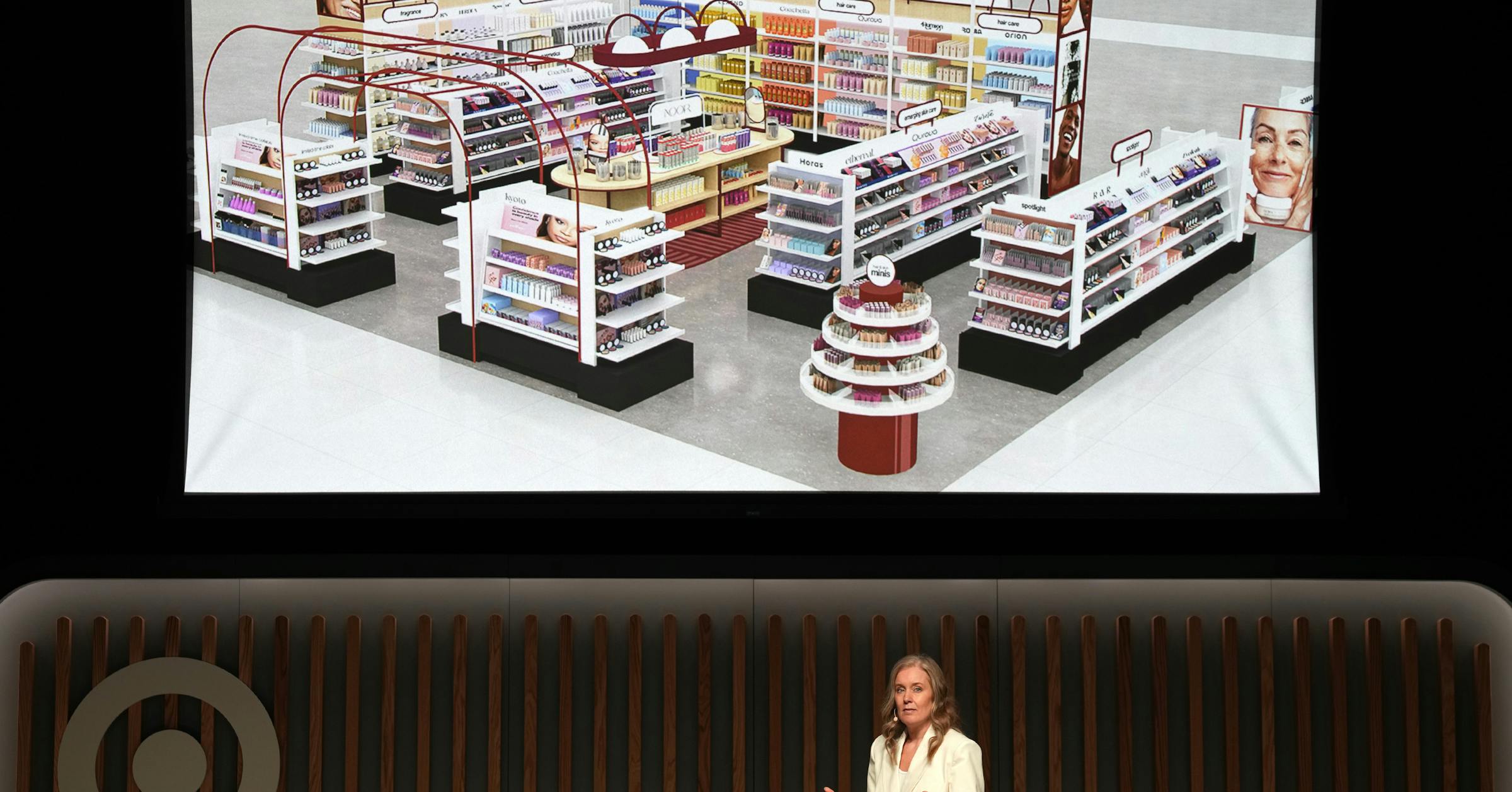
Target signaled a strategic shift under new CEO Michael Fiddelke toward elevating in-store experiences, unveiling plans that include $5 billion in capital improvements and 30 new stores; the stock jumped 6.7% on the investor meeting. Management emphasized a store-first strategy with expanded grocery footprints, halving home assortment to focus assortment, a new Target Beauty Studio replacing the Ulta shop-in-shop, and an AI-driven trend-forecasting tool to accelerate apparel turnarounds—changes that analysts received more positively, improving investor sentiment.
Market structure: Target (TGT) is the clear near-term winner — $5bn capex + 30 new stores and a pivot to curated groceries/beauty should lift sales density and gross-margin per sqft versus broad assorters; expect 3–6% upside to consensus 12‑month targets if execution is clean. Losers: ULTA is exposed (in‑store removal) and e‑commerce incumbents (AMZN, WMT) lose some grocery/discovery moat; categories with halved shelf space (home, electronics) face reallocated supplier demand. Cross-asset: modest upward pressure on retail credit spreads if peers chase capex; TGT option vol spiked — expect vol compression post-catalyst; commodities: incremental demand for packaged/healthy food ingredients could lift select ag/food names by low single digits over 12 months.
Risk assessment: Main tail risks are execution (>$5bn cost overruns or supply-chain bottlenecks), loyalty adoption failure for Beauty Studio, and macro-driven discretionary downturn that hits apparel/beauty sales — each could erase 20–30% of projected incremental EBIT. Time horizons: immediate (days) = earnings/analyst sentiment moves; short (0–6 months) = KPIs from initial store rollouts and beauty loyalty signups; long (1–3 years) = ROI on capex and market-share shifts. Hidden dependencies include fresh-grocery logistics and private‑label supplier capacity; catalysts = quarterly comps, beauty loyalty launch metrics, initial store NPS.
Trade implications: Primary trade — establish a 2–3% long in TGT, scaling to 4% on a >5% pullback, targeting +20–30% total return in 9–12 months; hedge with a 9–12 month call spread (buy ATM, sell ATM+25%). Secondary — 1–1.5% short ULTA (or 6‑month puts) to capture potential 15–30% downside if early share loss appears; pair trade = long TGT / short ULTA. Rotate 1–2% from pure e‑commerce discretionary (AMZN) into experiential retailers (TGT, DKS) over 2 weeks.
Contrarian angles: The 6.7% pop may be overdone — capex execution and supply-chain complexity historically take 2–4 quarters to prove out (Best Buy parallel). Consensus underestimates risk of alienating price‑sensitive grocery shoppers; if Target’s grocery prices widen vs Walmart by >5% on a basket, traffic risk rises materially. Unintended consequence: tighter SKU sets could reduce frequency visits, offsetting higher basket size — monitor 12‑week trip frequency closely as a binary signal.
AI-powered research, real-time alerts, and portfolio analytics for institutional investors.
Request TrialOverall Sentiment
moderately positive
Sentiment Score
0.55
Ticker Sentiment
