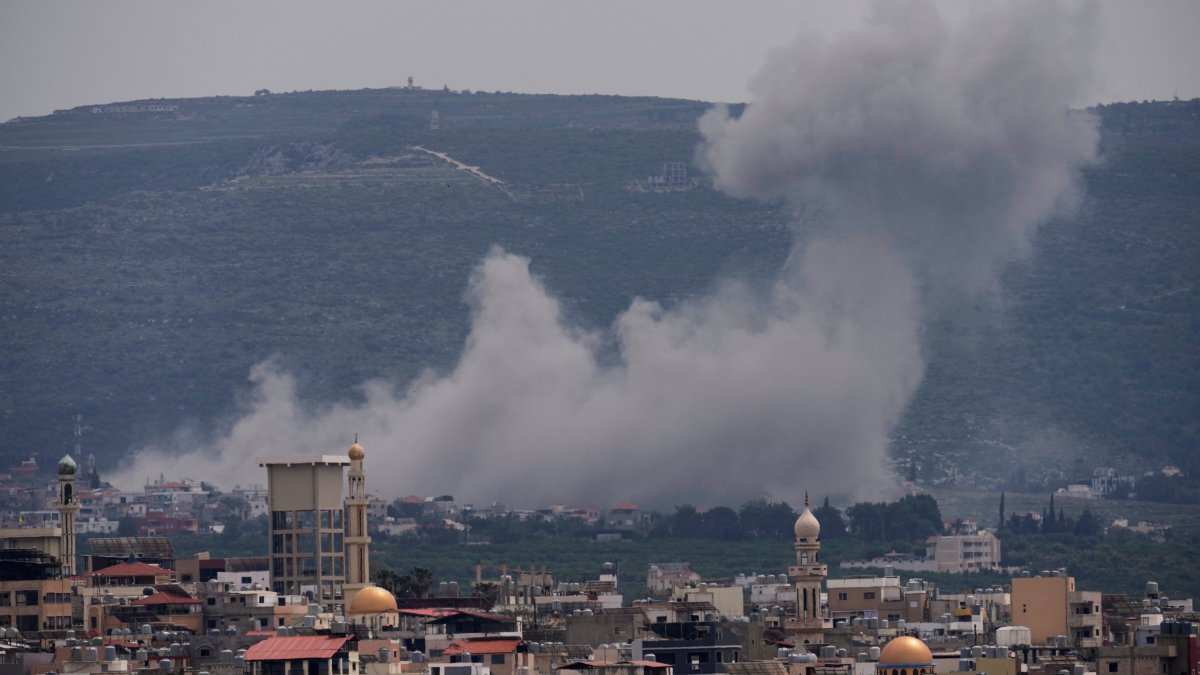
A 10-day ceasefire between Israel and Hezbollah appears to be holding, while mediators push to extend broader U.S.-Iran talks on Iran’s nuclear program, the Strait of Hormuz, and wartime compensation. The Strait remains a critical risk point for global energy flows, with South Korea reporting its first successful Red Sea tanker passage since seeking alternate routes and 26 vessels still stranded in the strait. The article also reports widespread destruction in Lebanon, continued regional casualties, and diplomatic pressure from France, Germany and other mediators.
The near-term market read-through is less about the ceasefire itself and more about the probability-weighted unwind of the “extreme supply disruption” tail. If the truce extends even modestly, the risk premium embedded in Brent, regional freight, and insurance should compress faster than physical balances improve, because positioning in energy and shipping tends to be reflexive on de-escalation headlines. That creates a classic second-order setup: the first beneficiaries are not producers, but consumers and transport-intensive sectors that have been forced to hedge at inflated forward curves.
The biggest loser from a durable pause is the complex of assets that monetized blockade scarcity—tanker rates, alternative routing plays, and any equities with embedded wartime scarcity optionality. A reopening of the Strait would also reduce the need for emergency government fuel underwriting, which is a subtle negative for refiners and logistics operators that had been capturing subsidy-enabled volume. In contrast, Gulf and Asian importers gain twice: once from lower delivered energy costs and again from reduced inventory precautionary demand, which can free working capital quickly over a 2-6 week horizon.
The contrarian risk is that the market may overestimate the speed of normalization. Even if guns quiet, the physical damage to ports, pipelines, storage, and distribution networks means supply recovery is likely measured in months, not days; that argues against chasing broad energy shorts after the first relief move. The better expression is to fade the geopolitical premium in the paper market while keeping some upside convexity in case talks fail and the corridor re-closes.
From a macro perspective, this is mildly disinflationary for oil-importing economies, but the bigger trade is dispersion: transportation, airlines, chemicals, and retailers should outperform high-beta energy and defense if the ceasefire persists. Any reversal would likely come from a failed extension or a single visible attack on chokepoints, which would quickly reprice options skew far more than outright spot.
AI-powered research, real-time alerts, and portfolio analytics for institutional investors.
Request TrialOverall Sentiment
neutral
Sentiment Score
0.10
