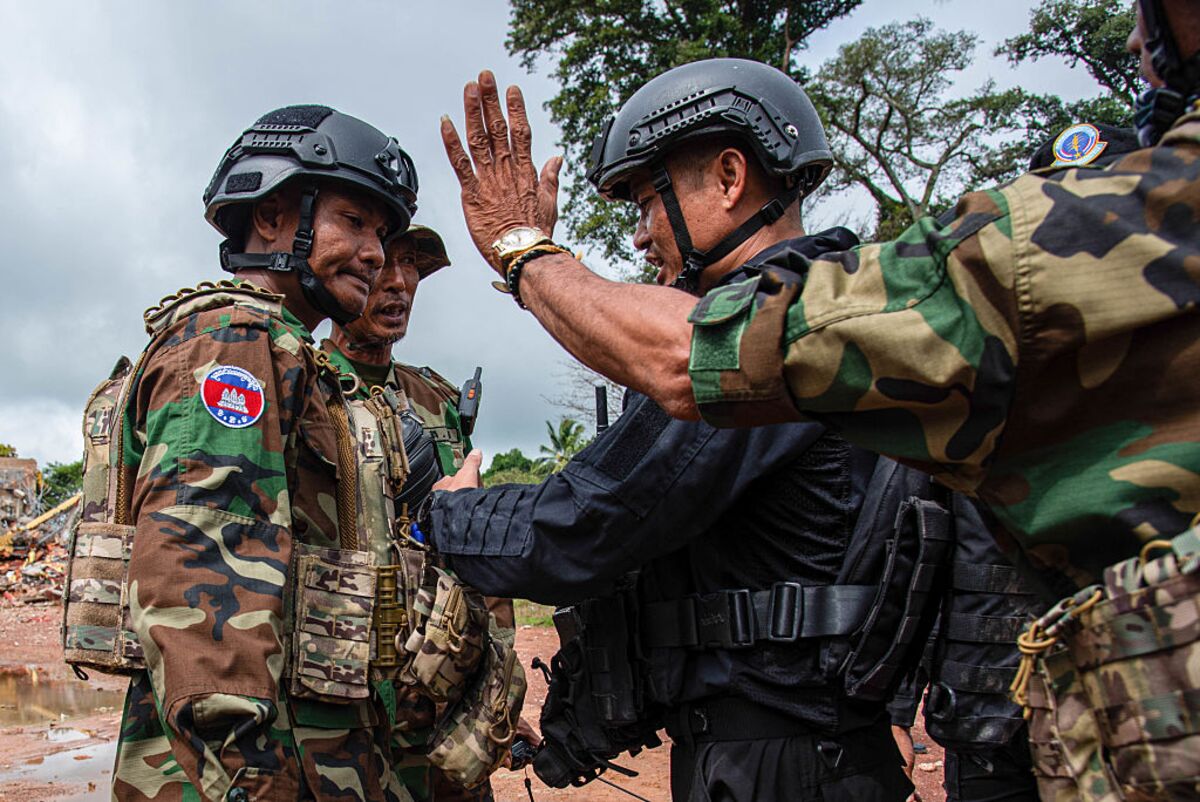
Thai and Cambodian troops clashed along their border in Thailand's Ubon Ratchathani province, exchanging gunfire and grenades, marking the first breach of their US-backed August ceasefire. The Thai army reported Cambodian initiation, placing its Suranaree Task Force on alert, with no Thai casualties reported. This incident signals renewed geopolitical instability in the region, which could impact investor sentiment and regional stability.
A recent clash involving gunfire and grenades between Thai and Cambodian troops marks the first breach of the US-backed ceasefire established in August. According to the Thai army, the conflict was initiated by Cambodian soldiers in the Chong An Ma area of Ubon Ratchathani province, prompting Thailand to place its Suranaree Task Force on high alert. While no Thai casualties have been reported, this event signals a significant deterioration in bilateral relations and injects a high degree of geopolitical uncertainty into the region. The breakdown of the ceasefire undermines previous diplomatic progress and raises the risk of further military escalation, which could negatively impact investor sentiment and the outlook for assets exposed to both nations and potentially the broader Southeast Asian market.
AI-powered research, real-time alerts, and portfolio analytics for institutional investors.
Request DemoOverall Sentiment
moderately negative
Sentiment Score
-0.50
