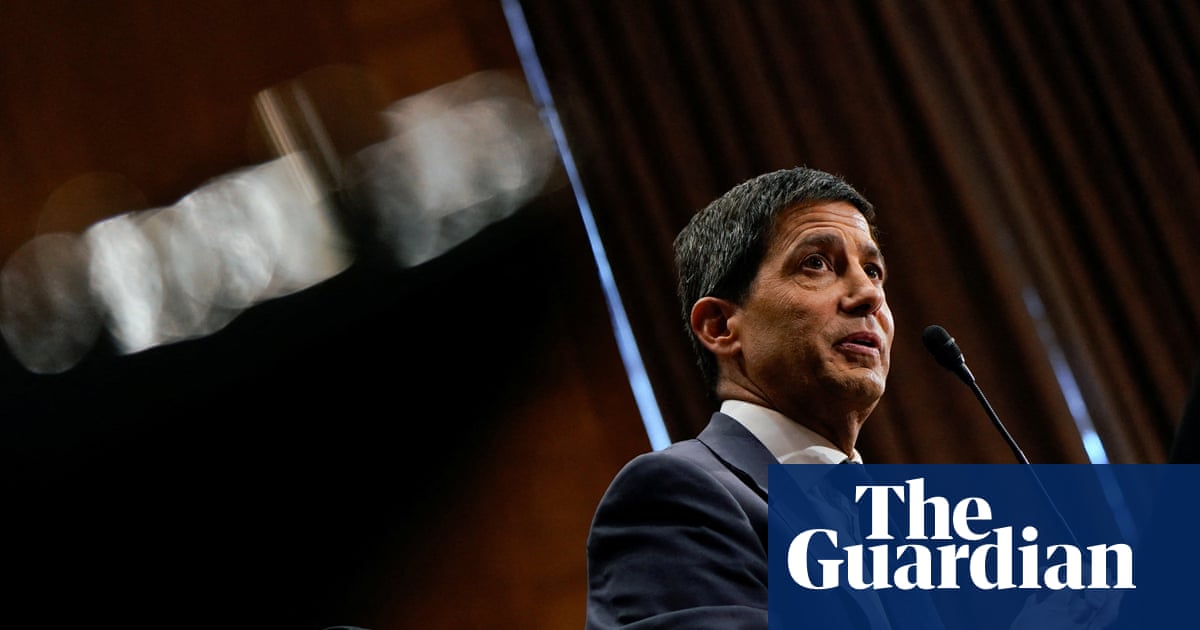
Kevin Warsh’s Fed chair confirmation hearing was dominated by political scrutiny over his independence, finances, and ties to Donald Trump, while Democrat Elizabeth Warren accused him of potential conflicts of interest. The nomination also remains politically fragile after Republican Sen. Thom Tillis said he will block it unless Trump drops the Justice Department investigation into Fed Chair Jerome Powell. The episode underscores heightened pressure on Fed independence at a time when Trump is already attacking the central bank.
The market’s real issue is not Warsh himself but the implied regime shift: if a Fed chair is perceived as politically contingent, the front end should price a higher probability of policy errors, steeper term premia, and a larger volatility risk premium across rates. That tends to help assets that benefit from uncertainty and hurt duration-sensitive balance sheets, especially if the market starts discounting a faster, less credible easing cycle followed by a later re-tightening response to inflation drift.
The second-order effect is that independence risk can become self-reinforcing. Even without an actual change in policy today, investors may demand a higher inflation risk buffer in 5s/10s, which transmits into mortgage rates, bank asset-liability management, and equity multiples for rate-sensitive sectors. The biggest loser is not the Fed’s balance sheet; it is confidence in the policy reaction function, which can widen breakeven/real-rate dispersion and keep volatility bid for weeks to months.
The political overhang is also creating a tactical asymmetry: confirmation uncertainty can suppress the market’s ability to fully price any dovish pivot until the seat is settled, while a surprise confirmation could trigger a rapid knee-jerk rally in the front end and a bear flattening if traders infer more pressure for cuts. Conversely, if the nomination stalls, Powell-related legal/political noise remains a persistent tail risk that can cap rallies in long-duration equities and credit. The consensus is too focused on the immediate rate path and not enough on the credibility discount that can persist across multiple meetings.
This is a better volatility than direction trade: the setup argues for owning convexity in rates and underweighting highly levered duration proxies. If the political conflict escalates, the market may price a less disciplined Fed and a higher inflation regime premium, which is bearish for long-end Treasuries but supportive for gold and defensive cash-generative sectors. The key reversal signal would be a clean de-escalation of the legal/political attacks plus a credible independence signal from the nominee after confirmation.
AI-powered research, real-time alerts, and portfolio analytics for institutional investors.
Request TrialOverall Sentiment
neutral
Sentiment Score
-0.10
