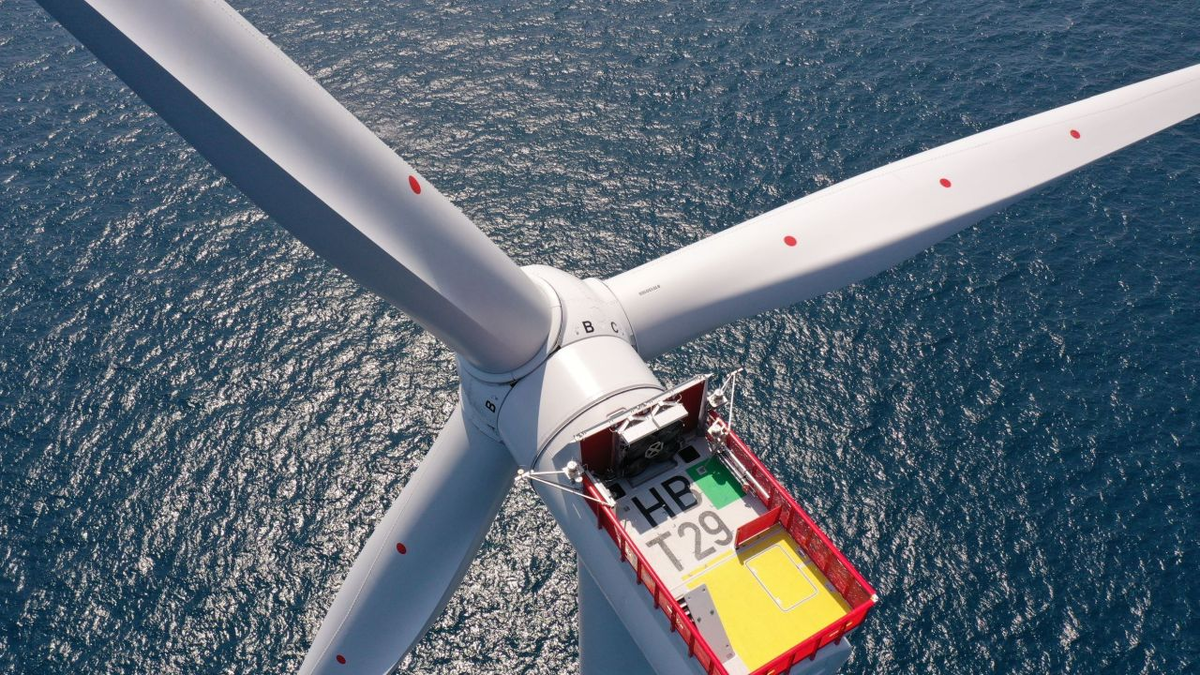
Energy ministers from nine North Seas countries are expected to sign a Hamburg communique on 26 January 2026 committing to joint development of roughly 100 GW of offshore wind capacity as part of a broader regional target to build 300 GW of offshore wind by 2050 (with about one-third from joint projects). The summit—which includes heads of state, the European Commission, Iceland and NATO—aims to accelerate cross-border offshore wind and hydrogen infrastructure, bolster supply-chain certainty and promote Contracts for Difference to replace negative-bidding auction models; participants warn the business case is currently weakened by inflation, higher interest rates and supply-chain bottlenecks. The initiative has strategic/security dimensions (NATO engagement, calls to harden infrastructure) and, if supported by clear volume commitments and stable revenue mechanisms, could unlock large-scale supply-chain investment, jobs and cost reduction opportunities for renewable suppliers and utilities over the coming decades.
Market Structure: A formal North Sea “100 GW joint” commitment materially re-routes demand toward offshore OEMs (Vestas, Siemens Gamesa), cable makers (Prysmian, Nexans) and installation/OSV owners (Subsea 7). Expect supplier pricing power for turbines, HVDC cables and heavy-lift vessels to re-emerge: constrained vessel capacity + multi-year pipelines imply component orderbooks growing ~5-10% p.a. through 2030, pressuring steel/copper and raising project capex by mid-single digits initially.
Risk Assessment: Tail risks include permitting delays (2–5 year slippage), financing shock (a +150bp rise in real yields can cut project IRRs by ~10–15%) and security-driven capex increases (militarisation could add 3–8% to O&M/capex). Hidden dependencies: concentrated HVDC/cable manufacturing and installation vessel availability; a supply shock there amplifies costs and delays. Key catalysts are EU/national CfD shifts and concrete auction schedules in the next 6–12 months.
Trade Implications: Near-term (0–3 months) event trade: take small pre-summit positions; medium-term (3–12 months) scale after CfD/auction confirmations. Favor long positions in vertically integrated developers with secured offtake (Ørsted, Equinor) and cable makers (Prysmian) and an ETF tilt (ICLN/FAN) for basket exposure; underweight/short selected oil majors (BP, Shell) by 2–4% as capital rotates. Use long-dated call LEAPs to capture policy realization while limiting cash outlay.
Contrarian Angles: Consensus underestimates execution friction — commitments do not equal delivered GW; markets may underprice cable/manufacturing upside today and overprice developer growth if CfDs are not adopted. Historical parallels (US offshore delays 2010s) suggest capital allocation winners are those with yard capacity and state-backed contracts. If NATO/security add-ons increase costs >5%, favor firms with contracted revenue streams over merchant-exposed developers.
AI-powered research, real-time alerts, and portfolio analytics for institutional investors.
Request DemoOverall Sentiment
mildly positive
Sentiment Score
0.28
