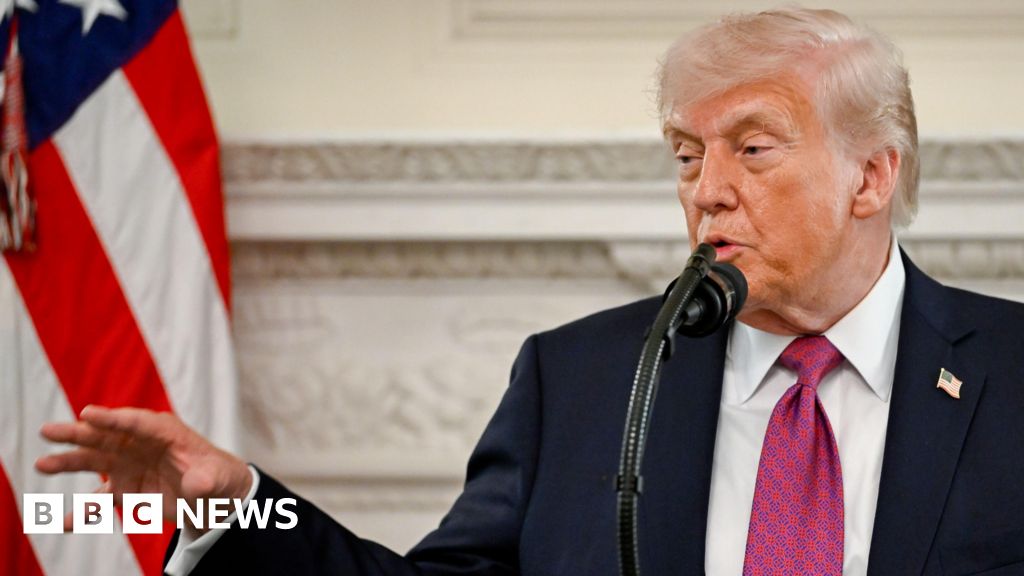
Trump extended the Iran ceasefire and delayed peace talks, giving Tehran more time to produce a "unified proposal" while leaving the duration of the truce unspecified. The standoff keeps the Strait of Hormuz blockade and Iran's nuclear/proxy demands unresolved, preserving a significant geopolitical risk over energy markets and broader global growth. The article suggests the conflict remains unresolved despite a temporary diplomatic pause.
The immediate market read is not “peace,” but a prolongation of a volatility regime that keeps the risk premium embedded in crude, freight, and regional assets. The key second-order effect is that a ceasefire extension without a clear end-state reduces the probability of an immediate spike, but increases the odds of a stop-start negotiation cycle that keeps energy traders hesitant to fade upside in Brent/WTI on geopolitical headlines. That asymmetry tends to support option-implied volatility more than outright price direction, especially while the Strait of Hormuz remains a live pressure point.
The biggest losers are not just direct energy consumers; it is any business exposed to lead-time uncertainty and inventory planning. Airlines, chemicals, and global shippers face a broader hidden tax through fuel hedging slippage and procurement delays, while emerging markets with external funding needs remain vulnerable because every renewed headline lifts dollar strength and sovereign risk premia. Conversely, US integrateds and LNG-linked names benefit from the market repeatedly repricing tail risk without needing a full-blown supply disruption to monetize it.
Politically, the move also buys Trump domestic time, but that cut both ways: the more he delays escalation, the more he signals reluctance to absorb the economic cost of a wider conflict. That makes a hard military reset less likely near-term, which caps upside in defense names tied to rapid escalation scenarios, but it does not remove the tail risk if talks fail abruptly. The consensus is likely underestimating how much of the current market reaction is being driven by uncertainty duration rather than event severity; prolonged ambiguity can be more supportive for commodity hedges than a clean, quickly-resolved shock.
AI-powered research, real-time alerts, and portfolio analytics for institutional investors.
Request TrialOverall Sentiment
mildly negative
Sentiment Score
-0.20
