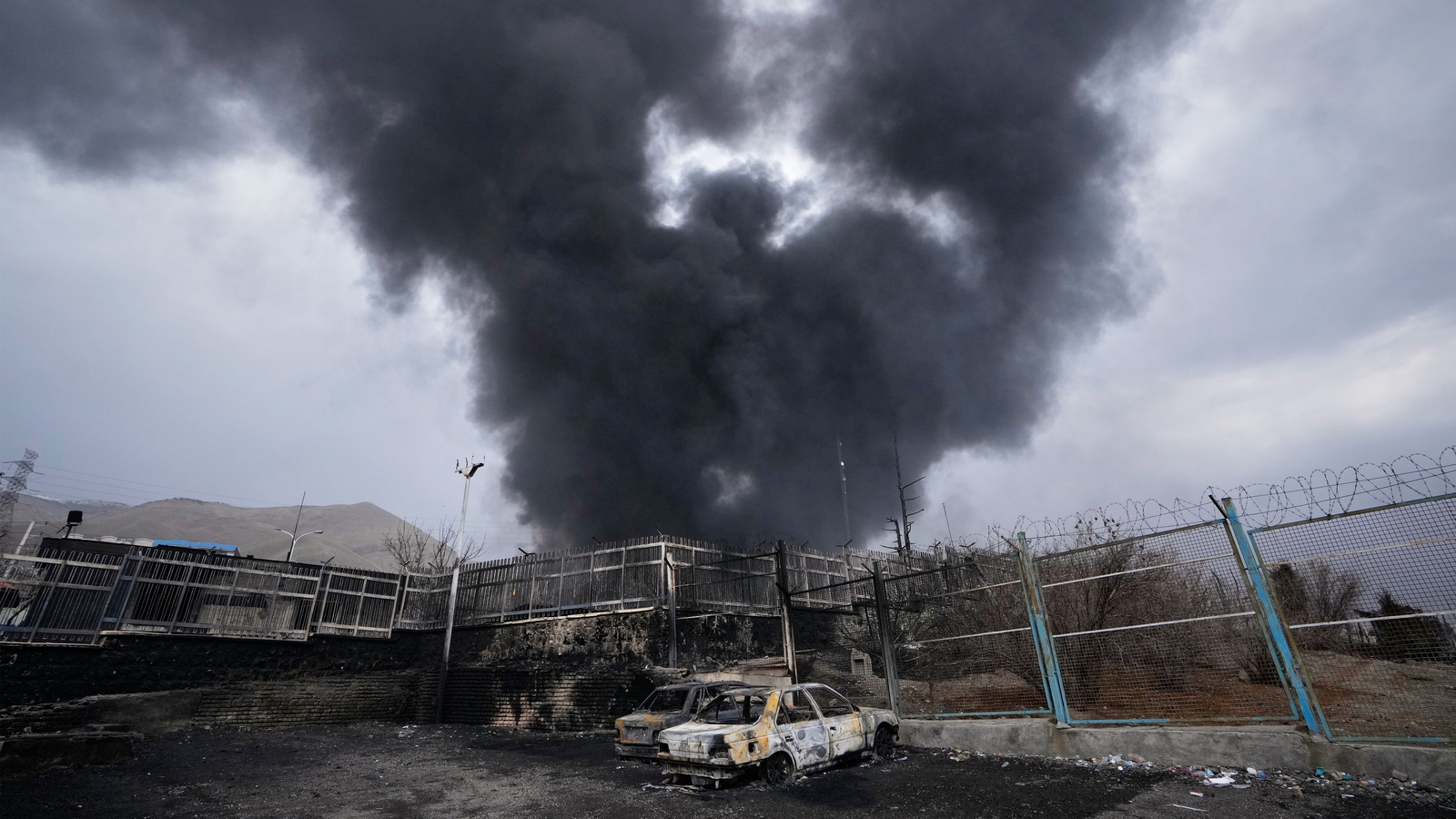
Brent crude briefly hit $119.50/bbl intraday before settling at $98.96 and trading below $90 later; U.S. crude touched $119.48, settled at $94.77 and moved toward $85, with strategists warning prices could reach $150/bbl if the Strait of Hormuz is closed for weeks. U.S. equities swung sharply intraday—S&P 500 down as much as 1.5% then closed up 55.97 pts at 6,795.99, Dow recovered from a near-900pt plunge to close +239.25 at 47,740.80, and Nasdaq gained 308.27 to 22,695.95. The 10-year Treasury yield traded above 4.20% intraday and settled around 4.10% (from 4.15% Friday), reflecting competing inflation/oil and growth-slowing concerns; overall outlook remains highly uncertain and volatility-driven.
Intraday mood swings we saw are not random — they’re the product of concentrated headline risk hitting a market that is short gamma and long conviction in a handful of macro narratives. That creates outsized intraday moves on statements alone; expect this to persist while market participants remain levered into directional equity and commodity exposures and short-term options skew remains elevated.
Concrete second-order winners include fast-response US onshore producers (ability to add rigs and cut hedges within months), refiners (wider crack spreads when physical flows are disrupted), and tanker owners/spot rates/insurers (benefitting from reroutes and higher freight/war-risk premiums). Clear losers are high fuel-intensity sectors — airlines, container logistics, and low-margin retail — where margin pressure will show through in both unit economics and working capital if costs persist for more than a few months.
Macroe risk bifurcates by horizon: days-weeks are headline and positioning driven (high volatility); 2–6 months is where supply-side responses (US shale, OPEC decisions, SPR releases) can materially unwind price moves; beyond 12 months, structural capex and energy-transition dynamics (EV adoption, refinery closures) set a new baseline. Key catalysts to watch: tanker spot rates and insurance premia, coordinated government releases or diplomatic de-escalation, and forward-curve steepness that tells whether the market prices a temporary shock or persistent structural shortfall.
AI-powered research, real-time alerts, and portfolio analytics for institutional investors.
Request DemoOverall Sentiment
mixed
Sentiment Score
0.00
