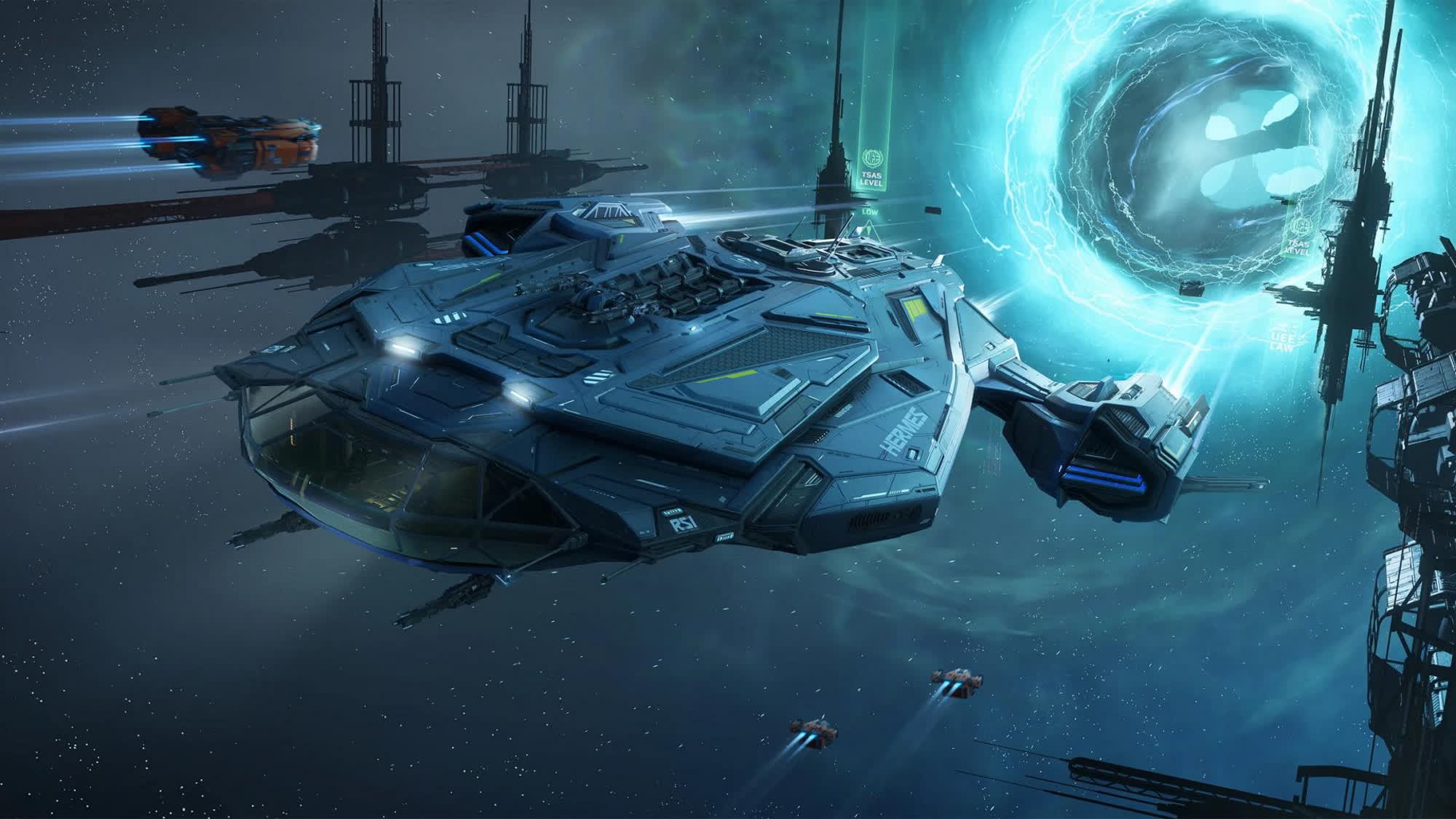
Star Citizen has crossed $1 billion in crowdfunding from 6,547,075 backers since the campaign began in December 2012, underscoring unusually strong consumer support for the still-unfinished game. Cloud Imperium Games and Chris Roberts are still targeting a first 1.0 release and continue adding content, while Squadron 42 is reportedly aiming for a 2026 launch. The news is positive for sentiment around the franchise and its monetization model, but the market impact is limited because it is a niche entertainment story rather than a broad financial event.
The real signal here is not game economics; it is proof that a large, emotionally engaged niche can be monetized as an annuity before product completion. That is structurally bullish for adjacent private-market models built on pre-release community monetization, but it also exposes a governance edge: when funding is tied to perpetual scope expansion, management’s incentive shifts from shipping to extending the funnel. The market should treat this less like a software launch and more like a recurring-membership asset with unusually high customer acquisition via fandom rather than utility.
Second-order impact likely accrues to publishers and live-service operators, not traditional premium single-player studios. If the audience continues to reward indefinite development, the competitive moat moves toward content velocity, community management, and monetizable exclusivity, while smaller studios trying to ship polished boxed games may look strategically disadvantaged. However, the model is fragile: a material delay in the next milestone, a backlash to perceived pay-to-play gating, or a high-profile fulfillment miss could trigger a sentiment unwind over weeks to months, not years.
The contrarian read is that the headline funding milestone may be near a local exhaustion point. Once a project has demonstrated it can raise at this scale without a finished product, incremental capital may become less informative and more dependent on conversion of whales, making growth rates harder to sustain. That sets up a classic expectation gap: the next catalyst is not more money raised, but whether the 1.0/2026 narrative re-rates from aspirational to credible; if execution slips, the market lesson could be that fandom is abundant but patience is finite.
AI-powered research, real-time alerts, and portfolio analytics for institutional investors.
Request DemoOverall Sentiment
mildly positive
Sentiment Score
0.18
