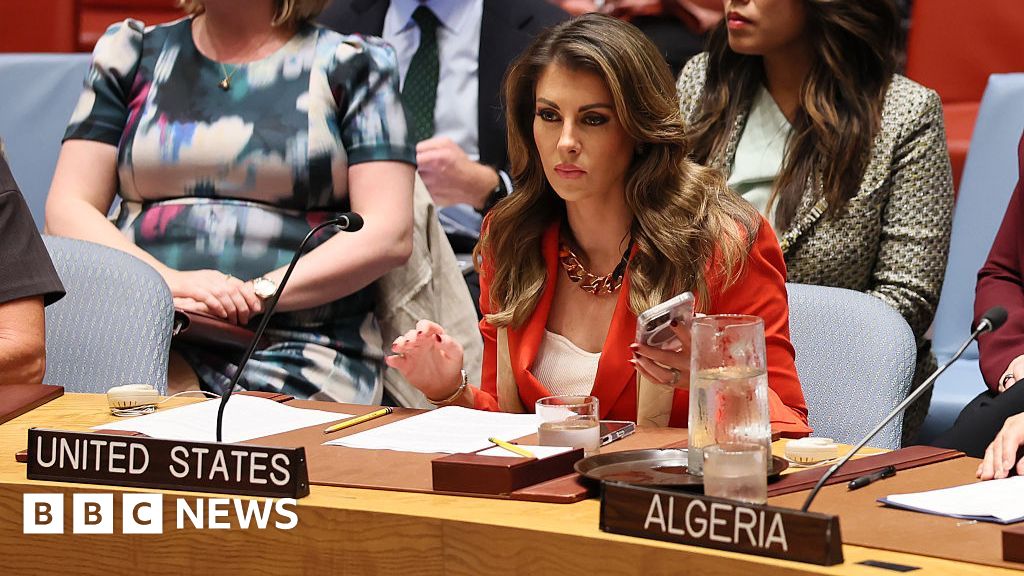
The U.S. has for the sixth time vetoed a UN Security Council resolution demanding an immediate Gaza ceasefire and hostage release, citing the text's failure to condemn Hamas or recognize Israel's right to self-defense, despite all 14 other members voting in favor. This action highlights growing international isolation for the U.S. and Israel amidst a deteriorating humanitarian crisis and expanding Israeli offensive in Gaza, signaling continued regional instability and diplomatic friction ahead of the UN General Assembly where key U.S. allies may recognize an independent Palestinian state.
The United States has exercised its veto power for the sixth time on a UN Security Council resolution demanding an immediate Gaza ceasefire, a decision that underscores a profound diplomatic deadlock and the increasing international isolation of the U.S. and Israel. This was evidenced by the unanimous support for the resolution from all 14 other council members. The U.S. justified its position by citing the text's failure to condemn Hamas, but this diplomatic stalemate occurs against the backdrop of a deteriorating humanitarian crisis, which the UN has described as "catastrophic" and "cataclysmic," with Israeli attacks resulting in over 65,000 reported fatalities. The ongoing expansion of Israel's ground offensive, coupled with the prospect of key U.S. allies recognizing a Palestinian state at the upcoming UN General Assembly, signals a high likelihood of sustained regional instability and escalating geopolitical friction, elevating the risk premium for global markets.
AI-powered research, real-time alerts, and portfolio analytics for institutional investors.
Request DemoOverall Sentiment
strongly negative
Sentiment Score
-0.80
