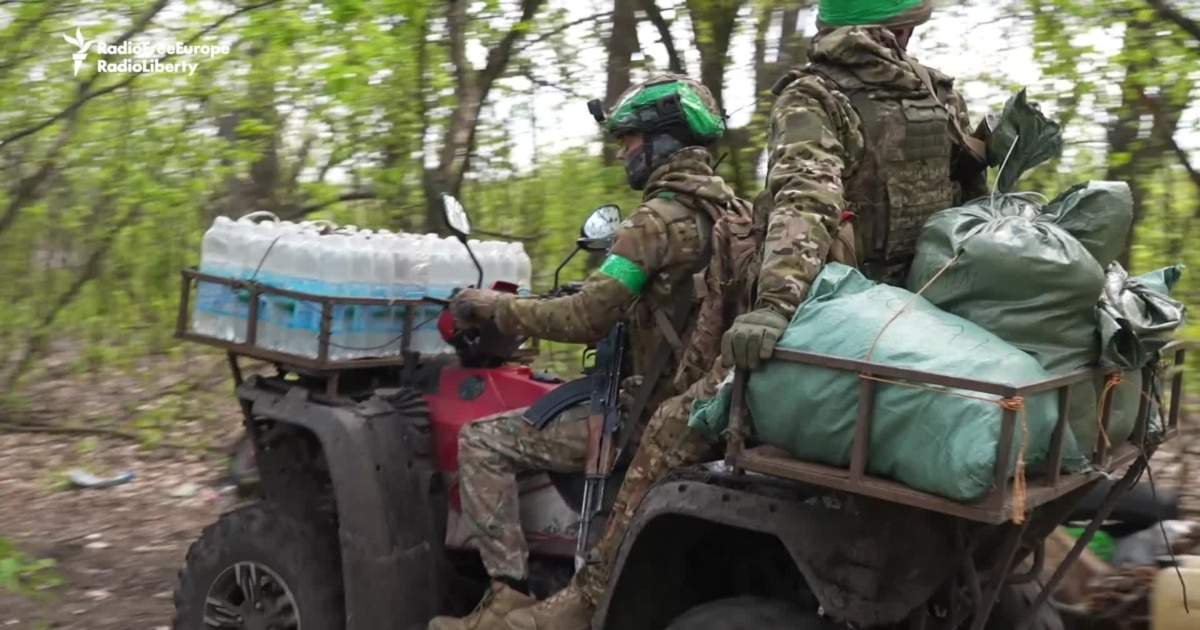
Ukraine’s battlefield position has improved modestly in mid-May, with analysts saying Russian advances have stalled and Ukrainian forces have regained more territory than they lost, though gains remain incremental. The article highlights heavy ongoing losses on both sides, especially Russia’s estimated 500,000+ deaths and 1.2 million permanent losses, alongside continued drone strikes on Russian oil refineries and logistics. Despite the tactical improvement, the war remains a high-impact geopolitical risk with no clear front-line shift or near-term resolution.
The marketable read-through is not “Ukraine is winning,” but that Russia’s marginal cost of advancing is rising faster than its ability to convert manpower into terrain. That favors any asset tied to persistent attritional warfare: drones, EW, ISR, precision munitions, counter-UAS, and last-mile battlefield logistics. The more the front becomes a distributed kill zone, the more the advantage shifts to systems that scale with software, sensors, and cheap expendables rather than armored mass.
A second-order effect is on energy and transport infrastructure risk inside Russia, not just on the front. Repeated strikes on refineries and export/logistics nodes can create intermittent product tightness even if headline crude flows are unchanged, which is more bullish for refined-product crack spreads than for flat Brent. If infrastructure degradation compounds into rail, pipeline, and depot fragility, the bottleneck becomes delivery reliability rather than raw production, raising volatility in regional diesel and aviation fuel markets.
The main contrarian risk is timeline. Tactical stabilization can look like strategic reversal for several months before manpower exhaustion or a political inflection actually matters. If Moscow can keep recruiting and rotate units through summer, stalled offensives may simply mean a slower grind rather than a durable Ukrainian advantage; that would cap upside in defense names tied to immediate conflict escalation while supporting a broad, persistent-but-unspectacular rearmament trade.
Bottom line: this is more a volatility and duration trade than a one-shot event trade. The highest-conviction implication is to own the picks-and-shovels of modern war—especially drone supply chains and electronic warfare—while being selective on broad defense primes that already price in a long conflict.
AI-powered research, real-time alerts, and portfolio analytics for institutional investors.
Request DemoOverall Sentiment
mildly negative
Sentiment Score
-0.25
