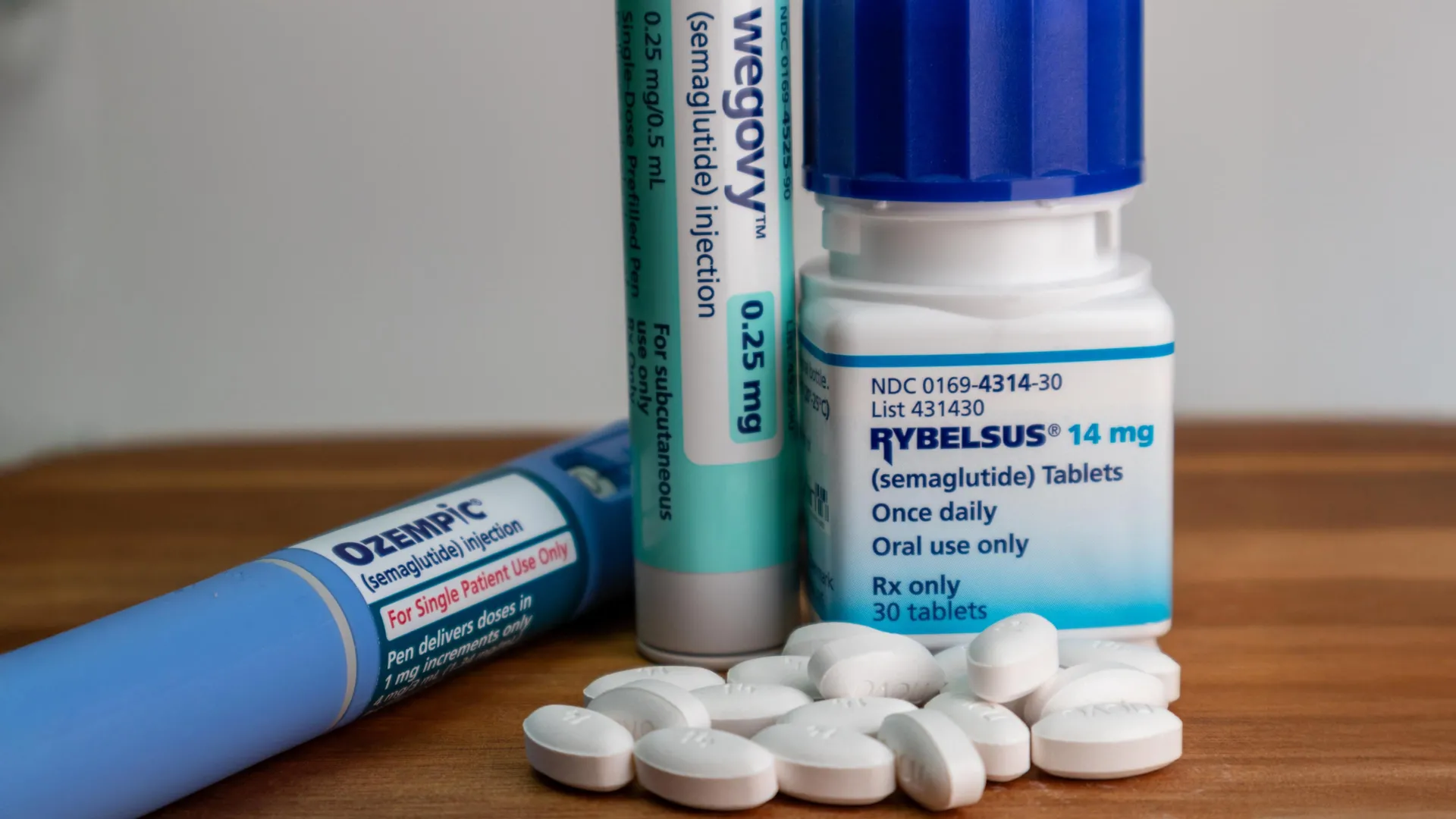
A new observational analysis found Wegovy had the strongest association with ischemic optic neuropathy, a rare condition that can cause sudden blindness, with a risk signal nearly 5x stronger than Ozempic and odds nearly 75 times higher than expected. The study reviewed more than 30.6 million FDA adverse event reports and identified 28 Wegovy-linked ION cases versus 47 for Ozempic, though it does not prove causality. The findings raise a potential dose- and formulation-related safety concern for semaglutide drugs and could prompt closer regulatory and ophthalmology scrutiny.
This is not a simple semaglutide class headline; it is a duration-of-risk problem for the obesity franchise. The market will likely treat this as a formulation-specific label/medico-legal issue first, but the bigger second-order effect is that it increases the cost of treating the highest-intensity end of the obesity market, where dose escalation and faster uptake matter most. That creates an asymmetry: the premium growth narrative around injectable obesity drugs becomes more fragile than the broader GLP-1 demand story, while oral and next-gen non-semaglutide assets gain relative attractiveness.
The immediate winners are competitors with either differentiated mechanisms or lower perceived ophthalmic risk, especially companies with late-stage obesity pipelines that can market around tolerability and safety. Over the next 3-12 months, any signal that this becomes a class-warning rather than a Wegovy-only issue would pressure the entire obesity complex, but the first-order damage is likely concentrated in obesity-focused multiples rather than diabetes revenues. The market should also underappreciate the legal overhang: even a rare serious adverse event can matter disproportionately when prevalence is massive and treatment duration is chronic.
The key catalyst path is regulatory, not clinical. If ophthalmology groups or regulators push for label language, prescriber screening, or dose-modification guidance, that can slow initiation and refill persistence before any causal proof emerges. Conversely, a clean prospective dataset or pharmacoepidemiology study that normalizes the signal would quickly reverse this, because the downside case here is mostly sentiment + litigation discount rather than near-term revenue collapse.
Consensus is likely overreacting to the term "blindness" while underreacting to where the margin pressure migrates: away from commoditized semaglutide use and toward the next wave of obesity differentiation. In our view, this is a relative-value event, not a broad bearish call on obesity as a category. The correct response is to fade the most crowded long exposure in semaglutide obesity while rotating toward names with diversified pipelines and optionality on oral/alternative modalities.
AI-powered research, real-time alerts, and portfolio analytics for institutional investors.
Request DemoOverall Sentiment
mildly negative
Sentiment Score
-0.25
