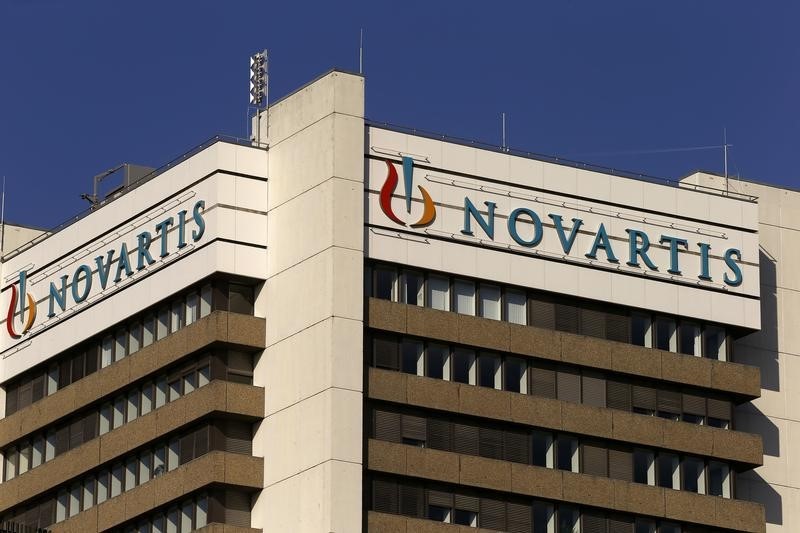
Novartis reported Q1 2026 core EPS of $1.99, below Bloomberg consensus of $2.10 and down from $2.28 a year earlier, as net sales fell 1% to $13.11 billion. Management cited U.S. generic erosion and higher R&D costs, while three blockbuster drugs lost U.S. patent exclusivity in 2025. The company kept full-year guidance unchanged for low single-digit sales growth and a low single-digit decline in core operating income.
The market is likely underestimating how quickly patent cliffs compound through the P&L: once a flagship drug loses exclusivity, the damage is not linear but front-loaded, because payors and pharmacy benefit managers immediately reprice access and formulary positioning. That means the earnings drag should persist for several quarters even if top-line declines look manageable, with the next inflection point tied less to reported sales than to management’s ability to offset erosion via new launches and geographic mix.
Second-order winners are the large-cap generics players and distributors with preferred formulary access, as they can capture rapid share without waiting for long development cycles. The bigger strategic issue for NVS is that higher R&D spend is no longer optional; it is the cost of maintaining a premium multiple, but it also creates near-term margin pressure that can keep consensus too high for 2-3 reporting cycles. If the upcoming data readouts are positive, the stock can re-rate quickly, but until then the market is likely to fade every rally as a "show me" story.
The contrarian angle is that the current weakness may be less about the quality of the franchise and more about timing: a multi-billion-dollar patent transition often creates a temporary valuation air pocket before pipeline optionality is recognized. That makes the setup asymmetric if clinical catalysts arrive within the next 6-9 months, because upside from restored growth expectations can be sharper than downside from already-known generic erosion. The key risk is that pipeline disappointment would expose a slower replacement cycle, turning a manageable earnings reset into a longer-duration de-rating.
AI-powered research, real-time alerts, and portfolio analytics for institutional investors.
Overall Sentiment
mildly negative
Sentiment Score
-0.35
Ticker Sentiment
