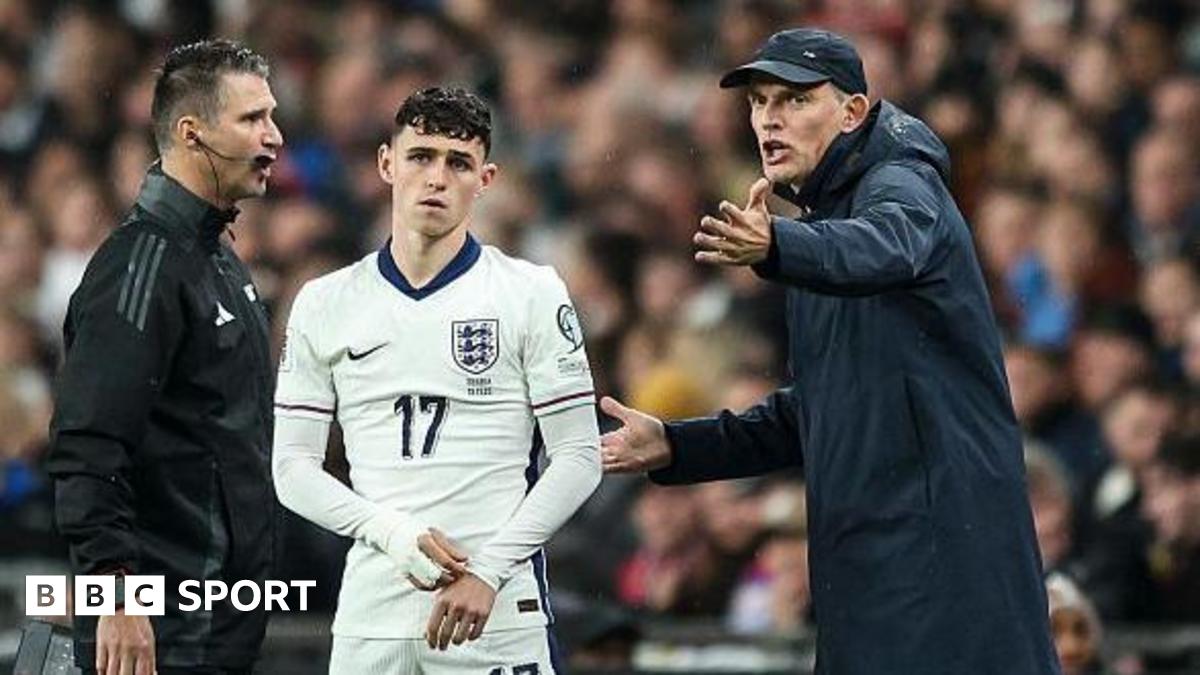
Cole Palmer and Phil Foden are expected to miss England's World Cup squad after recent form dipped, despite both previously being seen as core tournament players. Thomas Tuchel is prioritizing current performance over reputation, favoring options such as Jude Bellingham, Morgan Rogers, and Eberechi Eze. The article is largely a football selection analysis with limited direct market relevance.
This is a clean example of selection-by-recent-form overriding pedigree, which matters more for pricing than the headline itself. In sports-media equities, the second-order effect is that the content cycle shifts from “star-driven tournament buildup” to “meritocratic controversy,” which tends to increase engagement but shorten the shelf-life of legacy narratives around elite players. That usually favors live-news publishers and highlight-heavy platforms over long-form editorial franchises, because the audience wants fast, reactive takes rather than archival prestige.
The bigger market implication is for player-brand monetization: younger stars with flexible roles and visible peak form gain commercial leverage quickly, while once-untouchable names can see endorsement momentum stall within a single season. Over a 6-12 month horizon, that creates a measurable split in social engagement, shirt-sales velocity, and sponsor call-to-action efficiency. The risk is that a major tournament or hot club run can reverse this almost overnight, so any sentiment dislocation should be treated as cyclical rather than structural.
From an investor-sentiment lens, these kinds of omission stories are usually mildly negative on the “celebrity premium” embedded in football coverage, but mildly positive for audience retention because controversy drives traffic. The contrarian miss is that exclusion can improve long-run brand value for the omitted players if it forces a reset and reduces overexposure; a disciplined return to form could produce an outsized comeback narrative, which is often more monetizable than steady-state stardom. In other words, the market may be underestimating the rebound value of scarcity and overestimating the permanence of current selection status.
AI-powered research, real-time alerts, and portfolio analytics for institutional investors.
Overall Sentiment
mildly negative
Sentiment Score
-0.10
