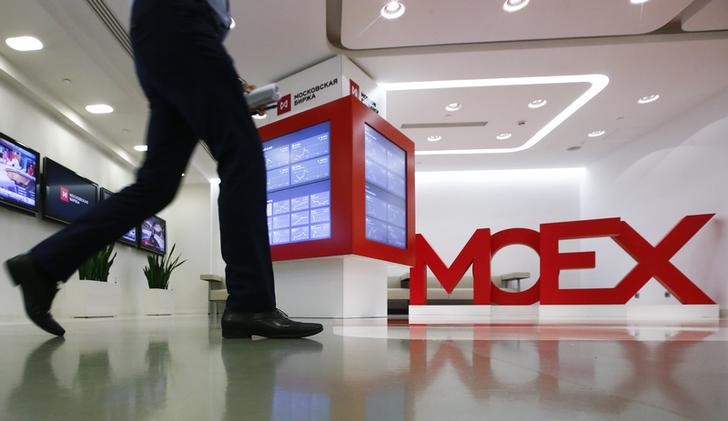
China and the US agreed to reduce tariffs on some goods, a modestly constructive development for trade tensions, while the article’s main market data showed the MOEX Russia Index unchanged at 0.00%. Commodities were mixed to sharply higher, with June gold down 2.63% to $4,561.90/oz, June crude up 4.20% to $105.42/bbl, and July Brent up 3.35% to $109.26/bbl. FX moves were mild, with USD/RUB down 0.55% to 72.85 and EUR/RUB down 0.93% to 84.68.
The market is treating the tariff headline as a cyclical relief valve, but the real transmission channel is through input-cost volatility and inventory timing rather than a clean demand boost. Any reduction in tariffs on industrial and agricultural goods should compress landed-cost uncertainty first, which tends to benefit firms with high imported-content exposure before it shows up in top-line growth. In that setup, the biggest second-order winners are not necessarily the obvious exporters, but downstream processors and retailers that have been forced to hold excess buffer inventory or pass through prices with a lag.
The bigger macro implication is that easing trade friction is mildly disinflationary at the margin, which matters because commodities and FX are already sending mixed signals. Softer tariff pressure can cool the rush into hard assets and reduce hedging demand in the short term, especially if paired with a stronger dollar and a decline in implied volatility. That combination usually punishes crowded commodity-beta longs before it fully filters into earnings estimates.
From a positioning standpoint, the move looks tactically positive for companies with supply chains exposed to China-linked intermediate goods and for makers of discretionary hardware where bill-of-materials inflation has been a concern. The underappreciated risk is reversal: if the tariff easing is narrow, temporary, or tied to geopolitical bargaining, the market will likely fade the move within days and reprice the same names lower on any headline disappointment. Over a longer horizon, the bigger winner may be firms that can arbitrage cross-border sourcing flexibility rather than those simply exposed to trade volume.
AI-powered research, real-time alerts, and portfolio analytics for institutional investors.
Overall Sentiment
neutral
Sentiment Score
0.12
Ticker Sentiment
