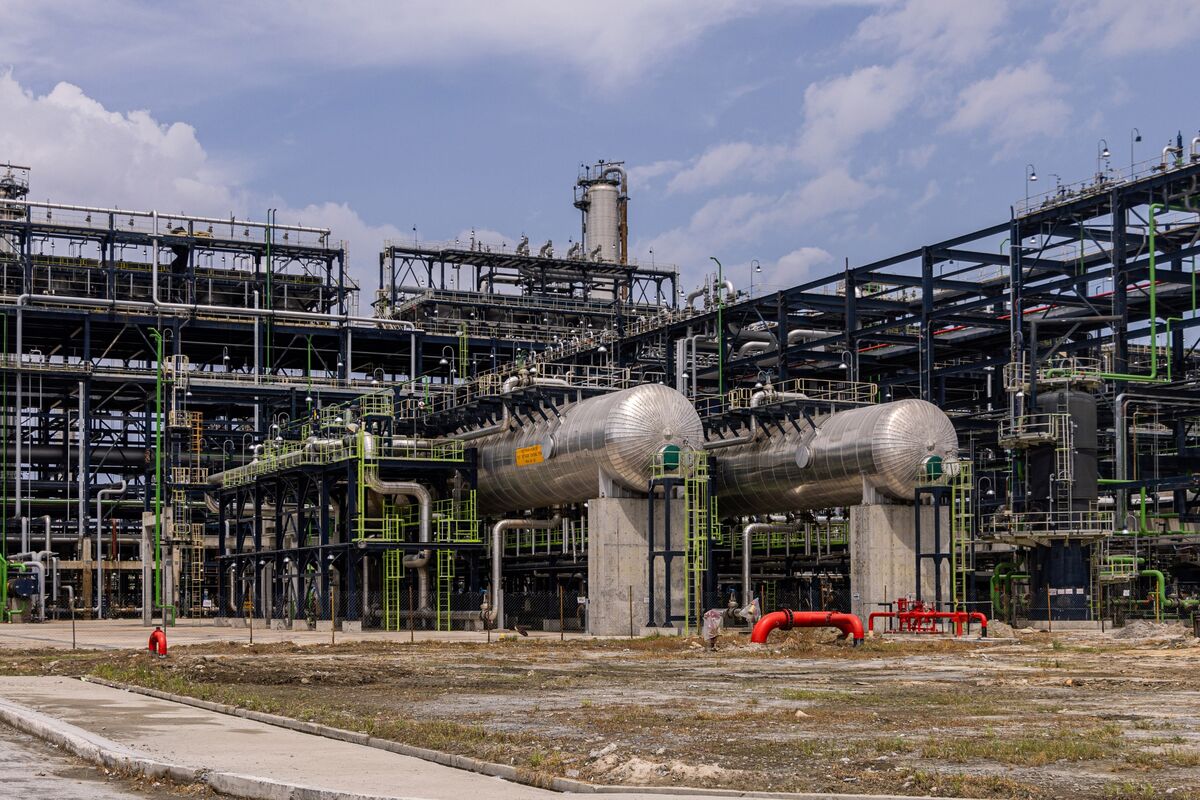
Dangote refinery is increasing purchases of Nigerian crude, helping support West African grades as buyers look past uncertainty over Middle East oil shipments amid the Iran war. The move has lifted Nigerian crude premiums relative to Angolan grades, highlighting diverging physical market pricing across the region. The article points to firmer near-term demand for Nigerian barrels, but the broader tone remains driven by geopolitical supply uncertainty.
The immediate beneficiary is not just the domestic refiner; it is Nigeria’s upstream pricing power. A large local buyer creates a floor for one country’s grades while the rest of West Africa remains exposed to export-market weakness, so the relative spread between Nigerian and Angolan barrels can keep widening even if flat crude prices stay range-bound. That matters because physical differentials often move faster than benchmarks and can be a cleaner signal of regional tightness than Brent itself.
Second-order, this is a demand re-routing story rather than a demand recovery story. If domestic offtake keeps absorbing barrels, exporters lose optionality and must clear excess supply into a more price-sensitive Atlantic Basin market, which can pressure neighboring grades and shipping utilization over the next several weeks. The bigger implication is that local refinery resilience can blunt geopolitical supply shocks at the margin, but only while the plant runs reliably and feedstock financing remains available.
The key risk is reversibility: any maintenance issue, product yield problem, or payment bottleneck at the refinery would quickly unwind the domestic bid and likely re-price Nigerian differentials lower in days, not months. Over a 1-3 month horizon, the main catalyst to watch is whether Middle East shipments normalize; if they do, the premium for nearby West African barrels should compress as the market stops paying up for contingency supply. The contrarian view is that the market may be overestimating how durable this support is, because one buyer cannot structurally absorb all regional excess if broader global demand remains soft.
There is also a hidden beneficiary set in the freight and trading complex. When physical differentials diverge, merchants and blend operators with access to storage and arbitrage capacity can monetize regional dislocations, while smaller producers without contractual flexibility get squeezed. That makes this less of a broad bullish commodity call and more of a relative-value setup across grades and logistics chains.
AI-powered research, real-time alerts, and portfolio analytics for institutional investors.
Request DemoOverall Sentiment
neutral
Sentiment Score
0.15
