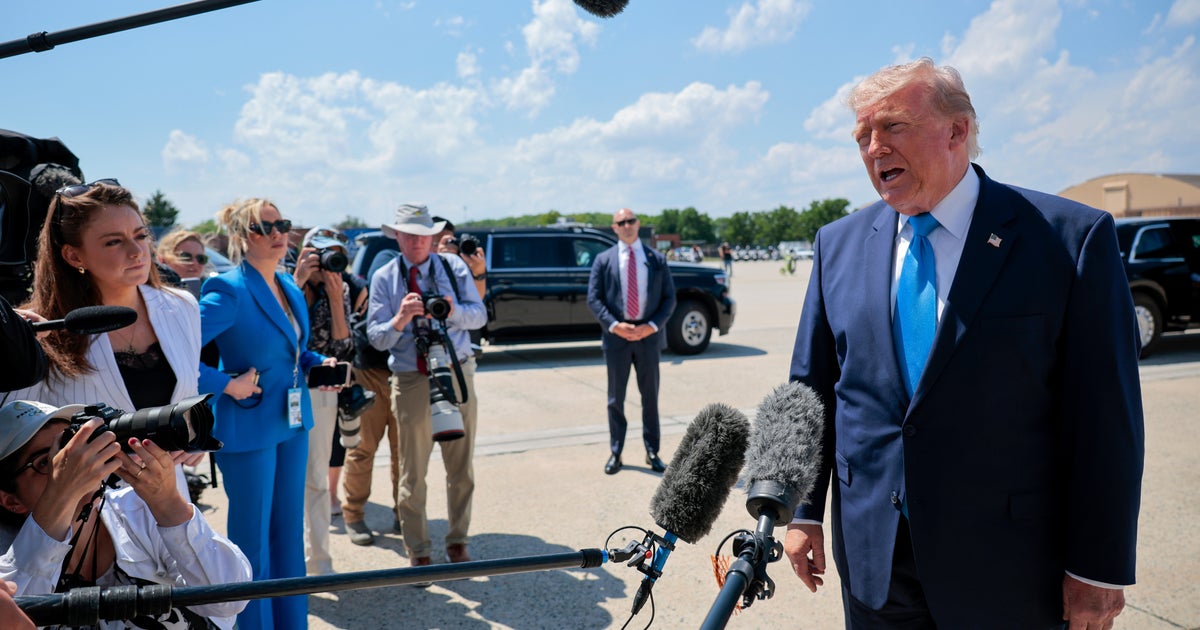
Trump publicly defended a $1.7 billion Justice Department Anti-Weaponization Fund after previously saying he was not involved in its creation, adding a political and legal wrinkle to the settlement narrative. Under the IRS lawsuit deal, Trump and two sons will receive a formal apology but no cash, while the IRS is permanently barred from claims tied to prior tax returns. The fund’s operating rules and eligibility remain unclear, and Senate Republicans have already raised concerns about potential payouts to Jan. 6 defendants and other Trump allies.
This is less a direct IRS fundamental story than a governance-and-process shock that raises the probability of ad hoc fiscal/settlement outcomes being used as a political redistribution tool. For the IRS, the near-term market impact is reputational: a perception that tax administration can be bargained around may modestly increase audit uncertainty premium for high-net-worth and politically exposed taxpayers, but it does not change statutory collection capacity in the next quarter. The bigger second-order effect is on the broader rule-of-law discount applied to U.S. institutions, which can widen policy volatility across sectors that depend on predictable enforcement.
The most exposed beneficiaries are lawyers, claims administrators, and politically connected advocacy channels that thrive when redress mechanisms become discretionary rather than standardized. The losers are large-cap corporates and family offices that depend on stable tax enforcement and clean settlement precedent; if this framework persists, it marginally increases the cost of capital via a higher compliance/risk buffer, especially for regulated financials and asset managers with complex tax structures. Watch for spillovers into any pending IRS-related litigation: the market may begin pricing settlements as negotiation events rather than legal endpoints.
The catalyst path is political, not economic. Over days to weeks, the key variable is whether senators or DOJ officials force definition of eligibility; if the fund is narrowed to clearly nonpartisan cases, the noise premium fades quickly. Over months, the risk is precedent-setting: if other agencies emulate the model, expect a slow-burn expansion of discretionary payouts and more headline risk for agency-linked ETFs and governance-sensitive names.
Contrarian view: the market may be overpricing the institutional damage because the fund may function more as a symbolic political instrument than a large enough cash-flow event to move macro variables. The cleaner trade is not an outright IRS short, but a hedge against rising administrative discretion: long volatility on policy-sensitive baskets and short names whose valuations assume low tax/regulatory friction.
AI-powered research, real-time alerts, and portfolio analytics for institutional investors.
Request DemoOverall Sentiment
neutral
Sentiment Score
-0.05
Ticker Sentiment
