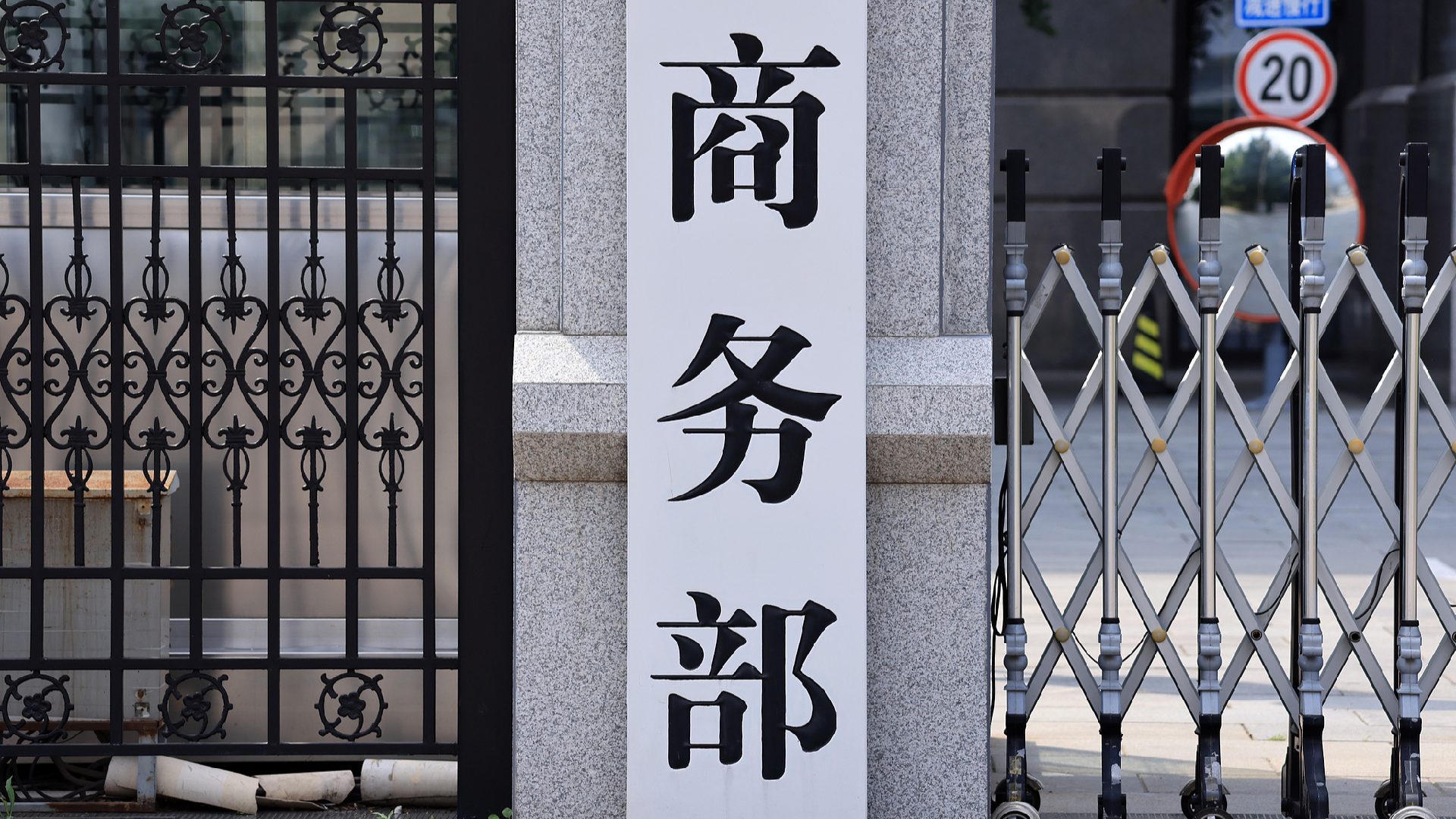
China’s Commerce Ministry said the EU’s Industrial Accelerator Act creates serious investment barriers and discriminates against foreign investors in batteries, EVs, photovoltaics, and critical raw materials. Beijing said the proposal may violate most-favored-nation and national treatment principles, and warned it could slow the EU’s green transition and trigger countermeasures if enacted. The dispute raises regulatory and trade risk for Chinese firms exposed to the EU market and could affect strategic clean-tech supply chains.
This is less about a headline dispute than an accelerating bifurcation in the EV/clean-tech supply chain: Europe is trying to onshore strategic manufacturing while China is signaling it will resist any regime that commoditizes Chinese capital and suppliers. The first-order market read is negative for Chinese-linked battery, PV, and critical-minerals exposure, but the second-order effect is more interesting: European OEMs and developers may face higher input costs and slower project execution if the policy pushes out the most cost-competitive vendors before EU capacity is scaled.
The near-term risk is not retaliation in the abstract; it is selective administrative friction over 1-2 quarters — customs scrutiny, financing delays, procurement exclusions, and softer approvals for EU-exposed Chinese exporters. That tends to hit Chinese battery/value-chain names through lower utilization and weaker export margins, while supporting non-China alternates only if they already have bankable capacity. In other words, the winners are likely to be incumbents with localized European manufacturing, not broadly “green” assets.
The market may be underpricing how regressive this is for the EU transition timeline. If local-content rules reduce competition before supply is deep enough, Europe risks paying a double tax: higher capex on projects and slower deployment, which can compress demand for downstream EVs and renewables over 12-24 months. A broader geopolitical escalation would also raise the option value of policy support for domestic EU industrial champions, so the most durable relative winners are likely those with subsidies, EU production footprints, and less reliance on Chinese IP.
Contrarianly, the move could prove less damaging than the rhetoric implies if the legislation is watered down during implementation or converted into an advisory framework with carve-outs. In that case, the selloff in China-linked clean-tech exposure would be an opportunity, because the real constraint on European green growth is still permitting, grid, and financing — not just foreign ownership. The key tell will be whether procurement exclusions become mandatory and enforceable; if not, the economic effect may fade quickly after the political headline cycle.
AI-powered research, real-time alerts, and portfolio analytics for institutional investors.
Request DemoOverall Sentiment
moderately negative
Sentiment Score
-0.35
