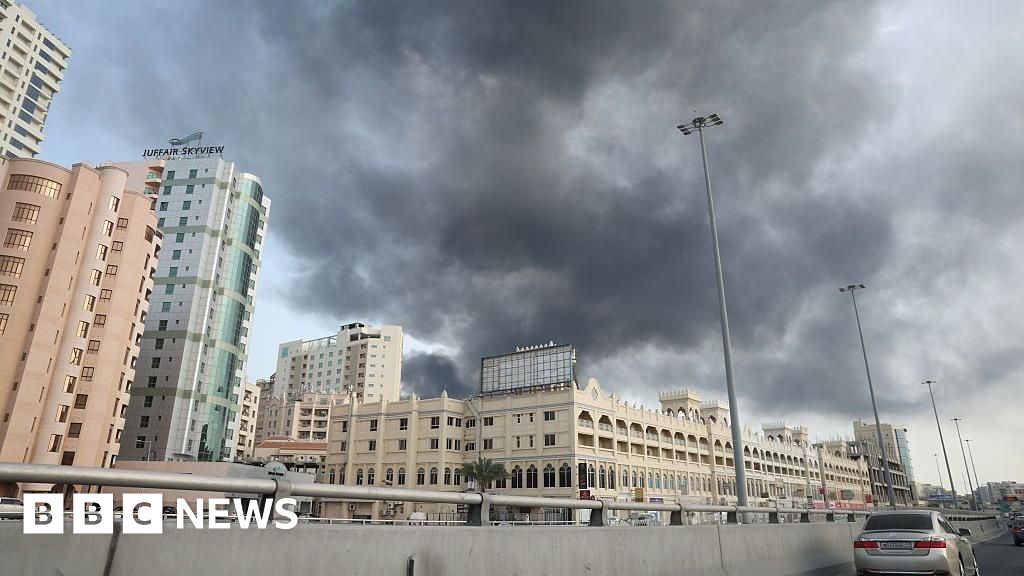
Iran launched missiles and Shahed-style drones that struck the vicinity of the US Fifth Fleet headquarters in Bahrain, with video evidence showing a relatively slow-moving Shahed drone breaching local air defences and no immediate casualty reports. The US has flown in additional THAAD and Patriot systems, deployed roughly a dozen Arleigh Burke destroyers and more than 100 fighter jets to the region, but limited interceptor inventories (Ukraine has fewer than 10 Patriot batteries) and Iran's estimated arsenal of ~2,000 short-range ballistic missiles plus large numbers of one-way attack drones—exacerbated by Russian production and technical assistance—suggest some strikes will likely penetrate defences and strain US weapons stocks. For investors, this is a risk-off development likely to support defence-related demand and regional risk premia while creating uncertainty around supply constraints for high-end interceptors and munitions.
Market structure: Clear winners are US/Allied defense primes and specialty munitions suppliers (Lockheed LMT, Raytheon/RTX, Northrop NOC, Huntington Ingalls HII) as short-to-medium term order flow for THAAD/Patriot interceptors, missiles and ammo will rise; expect procurement revenue upticks of high-single-digits to low-double-digits over 12–24 months and margin expansion for prime contractors with backlog visibility. Losers: regional carriers, ship/insurance stocks and Gulf-exposed EM sovereign credit spread widening; oil-price risk premium lifts upstream E&P cashflows but pressures airlines/shipping rates.
Risk assessment: Tail risks include a broader US–Iran kinetic escalation (probability 5–15% next 12 months) that could spike Brent >$120 and disrupt Straits traffic; conversely a measured Iranian response yields only short-lived oil/FX moves. Immediate (days): risk-off, USD and gold bid, UST yields down; short-term (weeks–months): defense equities rerate and munitions supply bottlenecks surface; long-term (quarters–years): sustained defense capex and re-shoring of critical components.
Trade implications: Favor concentrated but size-constrained long defense exposure (2–3% per name), layered with options to manage drawdown; add tactical oil exposure (2% portfolio) for 0–3 months while using stop at Brent <$80. Hedge equity beta with 1% portfolio 3-month 2% OTM S&P puts and add 2% duration (TLT) as a defensive flight-to-quality for next 1–3 months.
Contrarian angles: Consensus underestimates duration of interceptor/missile demand and procurement lead-times (6–18 months); markets may be overpricing a sustained oil shock — historical precedents (2019 tanker attacks) show fast mean reversion in 4–8 weeks. Watch for China-Russia material support signals (sanctions risk) and US congressional funding votes in 30–90 days as binary catalysts that could re-rate winners or unwind complacency.
AI-powered research, real-time alerts, and portfolio analytics for institutional investors.
Request TrialOverall Sentiment
moderately negative
Sentiment Score
-0.45
