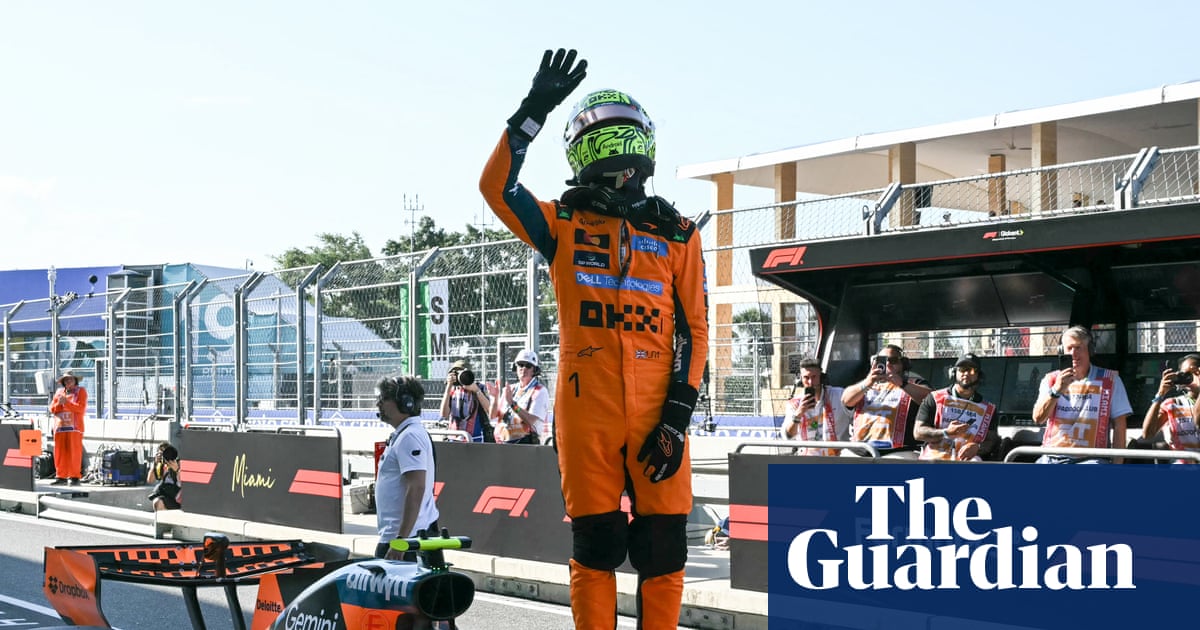
Formula One returns in Miami after a five-week break, with teams bringing upgrades and debuting rule adjustments aimed at addressing energy-management complaints. McLaren took sprint qualifying pole via Lando Norris, with Antonelli second and Piastri third; Mercedes failed to take pole in either format for the first time this season. The race faces an 85% chance of heavy thunderstorms, and the FIA may move the start time forward if lightning risks are confirmed.
The investable signal here is not the headline racing outcome but the dispersion in how effectively each team converts upgrade spend into on-track performance. That matters for any sponsor/rights-holder economics because the market will likely reward brands tied to the perceived momentum leaders for a very short window, while penalizing those that fail to translate off-track engineering effort into visible results. The first-order beneficiary is the team that shows the cleanest step-change this weekend; the second-order winner is the commercial partner with the highest exposure to a title-fight narrative, since media value compounds disproportionately when the championship stops looking like a one-team story.
The weather layer is the more important catalyst. A forced schedule shift or wet-race outcome increases randomness, which compresses the gap between the best-developed car and the rest; that is bullish for underdogs and for any brand seeking an upset-driven exposure spike, but it also creates execution risk for the marketable frontrunner whose valuation is more sensitive to sustained dominance. If the event is moved earlier, teams with stronger setup flexibility and tire-temperature management should outperform, while a chaotic restart-heavy race would reward drivers over chassis and weaken the signal from upgrades for several weeks.
The contrarian miss is that this may be less about who ‘won upgrades’ and more about who avoided introducing correlation risk ahead of a weather-uncertain, sprint-format weekend. In that setup, overconfidence in any one team’s step forward can be punished quickly because the sample size is tiny and the regime is changing. For the public markets, that argues for fading any one-weekend narrative extension and instead positioning for volatility around the event window rather than directional conviction on the final result.
AI-powered research, real-time alerts, and portfolio analytics for institutional investors.
Request DemoOverall Sentiment
neutral
Sentiment Score
0.10
Ticker Sentiment
