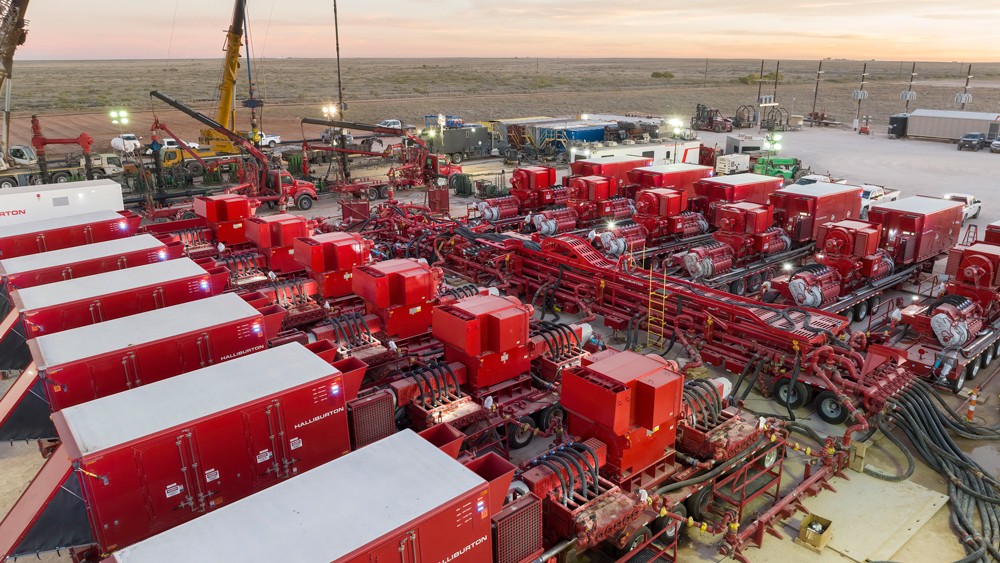
U.S. oil and gas rig count rose by 7 to 558, leaving the total just 8 below a year ago, while oil rigs increased 10 to 425 and gas rigs fell 3 to 125. U.S. crude output slipped in the latest EIA week ending May 15, averaging 13.702 million bpd, about 160,000 bpd below the all-time high. Brent traded at $104.40 per barrel and WTI at $97.94, both higher on the day but lower week over week.
The market is still signaling resilience in upstream activity, but the more important message is that capital efficiency is improving faster than headline rig counts imply. A rising frac spread count alongside a modest lift in oil-directed rigs suggests operators are pushing more completions through a relatively fixed service base, which should support near-term production even if drilling momentum is uneven. That favors the best-capitalized shale names with inventory depth, while creating a headwind for service pricing discipline if this persists into summer.
The second-order effect is on the strip curve and hedging behavior, not just spot production. If U.S. output stays near record levels while geopolitical risk keeps front-end crude elevated, producers are likely to layer hedges into strength, which caps upside for WTI even as the physical market stays tight. That dynamic is negative for pure price-beta longs and positive for names with low reinvestment needs and high free-cash-flow conversion.
The contrarian risk is that the rig count rebound proves more durable than expected in the Permian, where productivity gains can quickly overwhelm a small rig change. If completions remain elevated for several weeks, the market may have to reprice 2H supply higher, especially if weekly production snaps back toward the all-time high. In that case, the trade shifts from owning commodity beta to owning balance-sheet strength and low-cost acreage.
For BKR, the setup is mixed but improving: activity is enough to support utilization, yet not so strong that pricing power should inflect immediately. The equity likely works better as a delayed cycle beneficiary than as an immediate momentum trade, with the key catalyst being whether frac spreads stay above 180 for another 4-6 weeks. For TTE, higher crude is supportive in the near term, but the bigger issue is downstream margin compression if feedstock costs rise faster than product pricing, making integrated exposure less clean than pure upstream.
AI-powered research, real-time alerts, and portfolio analytics for institutional investors.
Request DemoOverall Sentiment
neutral
Sentiment Score
0.10
Ticker Sentiment
