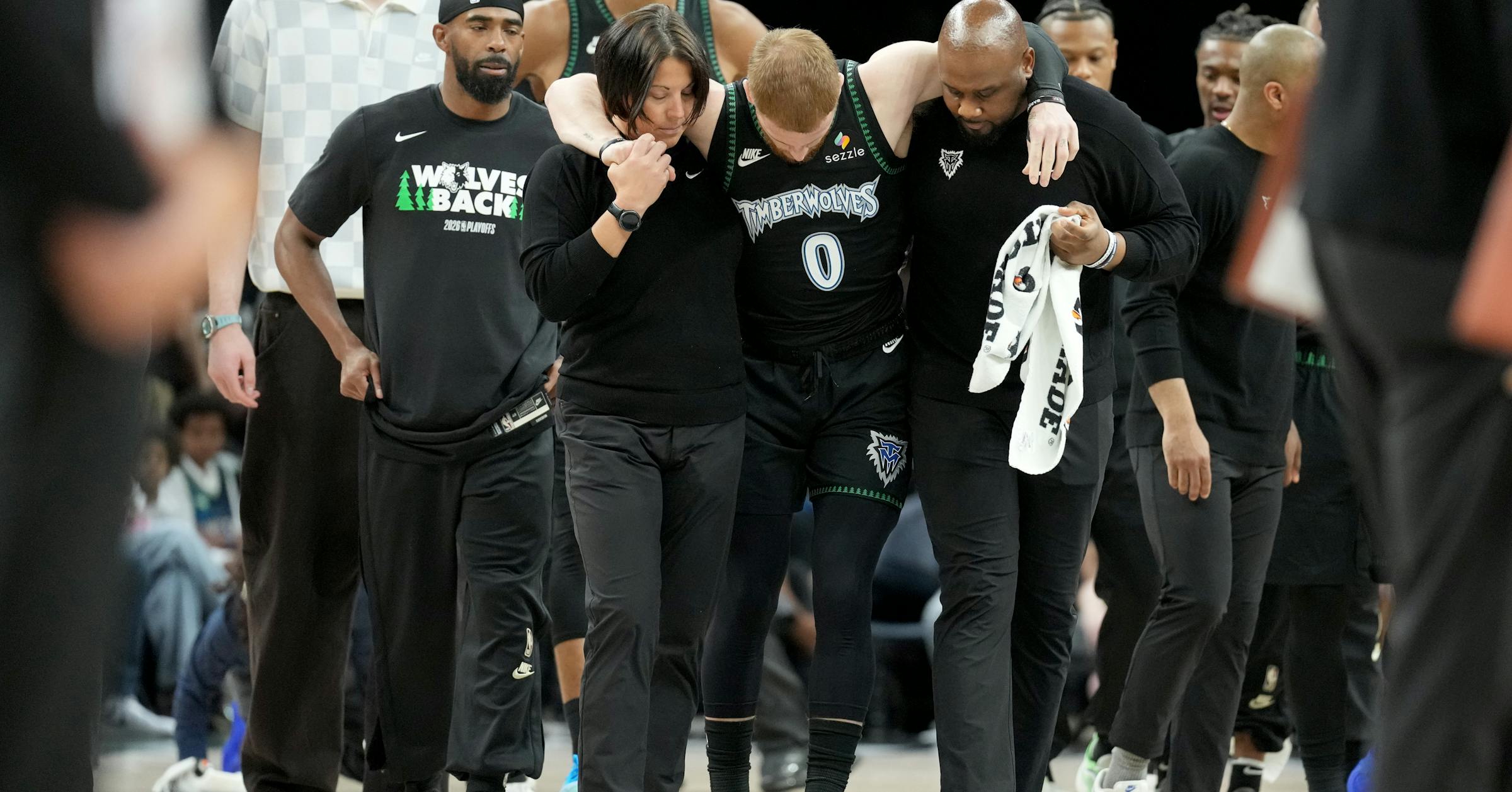
Donte DiVincenzo tore his right Achilles after 79 seconds in Game 4, ending his season and dealing a major blow to Minnesota’s playoff rotation. Anthony Edwards also exited in the first half with a left knee injury, leaving the Timberwolves with two significant injuries in a 112-96 win over Denver to take a 3-1 series lead. The news is materially negative for team performance and near-term fan sentiment, but has limited broader market impact.
This is less about one roster loss and more about playoff variance compressing into a single series: a team can absorb one star absence for a few games, but losing a rotation guard plus any uncertainty around a primary scorer materially changes pricing for the next 48-72 hours. In the short term, the market will likely overreact to the headline by extrapolating a full collapse; that creates an opportunity because playoff pricing often overshoots on emotional injury news before minutes distribution and scheme adjustments are fully reflected.
The second-order effect is on the opponent’s live advance probability and related entertainment/media viewership rather than on any direct security. A short-term injury shock can reduce series length, but it can also increase game-to-game volatility and ratings if the series becomes more chaotic and less efficient. The biggest hidden risk is not this single injury in isolation, but the compounding effect if the team’s ball-handling and wing creation are both compromised; that can force a pace/shot-quality downgrade that persists for the rest of the series and bleeds into the next round.
The contrarian read is that knee-jerk sentiment will likely price a much larger season-long downgrade than is justified if the team still controls the series. If the injured rotation piece is replaced internally without a dramatic change in possession quality, the immediate downside may be capped while the headline fear stays elevated. The real catalyst is not the diagnosis itself but the next game’s rotation and usage distribution; if those stabilize, the panic trade fades quickly over 1-2 trading sessions.
From a positioning standpoint, the cleanest edge is in reaction timing, not direction: wait for the first post-news gap before leaning into any media/entertainment names with playoff exposure or broader market proxies tied to sports sentiment. The risk/reward is best where implied volatility has already expanded on headline shock and then mean reverts once the absence is normalized. The trade should be treated as a short-duration event-driven setup, not a fundamental multi-month thesis.
AI-powered research, real-time alerts, and portfolio analytics for institutional investors.
Request DemoOverall Sentiment
moderately negative
Sentiment Score
-0.45
