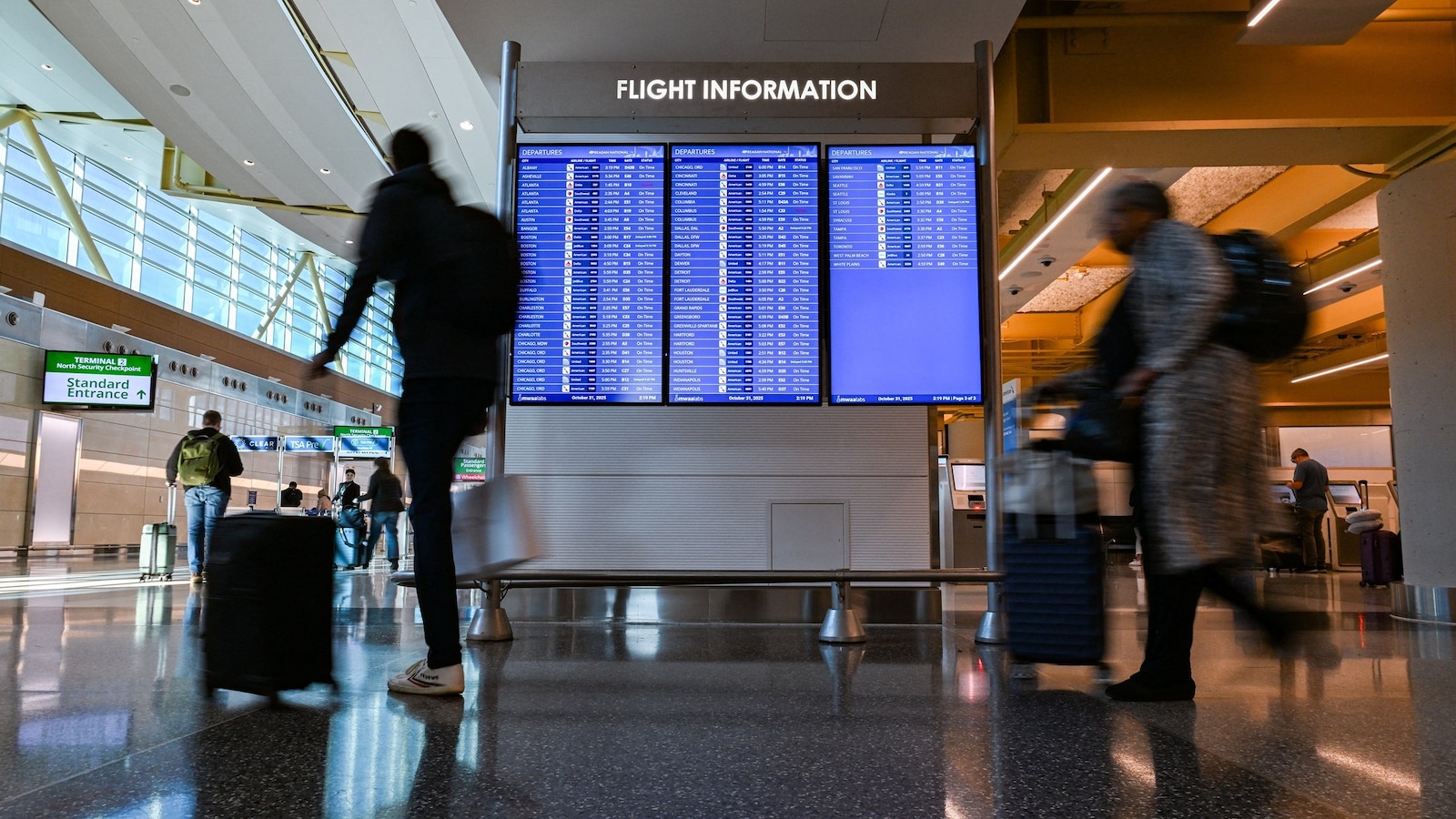
A significant surge in air traffic controller absences, including 80% in the NYC area and shortages at half of the 30 busiest U.S. facilities, is causing widespread flight delays and cancellations across the nation. This operational disruption stems from the ongoing 31-day government shutdown, forcing essential controllers to work without pay and leading to immense stress. While safety remains paramount due to reduced air traffic flow, the unpredictable nature of these staffing-induced delays poses considerable financial and logistical challenges for airlines, travel-related industries, and the broader economy, underscoring the market's vulnerability to prolonged political impasses.
A critical surge in air traffic controller absences, including an 80% rate in the New York City area and shortages across half of the 30 busiest U.S. facilities, is severely disrupting national air travel. This operational strain, directly linked to the 31-day government shutdown forcing essential controllers to work without pay, has led to widespread flight delays and cancellations, as confirmed by the FAA. The situation reflects a strongly negative sentiment (-0.65) and pessimistic tone for the sector.
The operational disruptions are significantly impacting major airline hubs, with Boston (JetBlue, JBLU) and Dallas Fort Worth (American Airlines, AAL) experiencing staffing-related delays. These delays, which are unpredictable unlike weather events, snarl schedules, prevent passenger and baggage connections, and misposition aircraft, contributing to a negative per-ticker sentiment of -0.3 for both JBLU and AAL. This unpredictability poses a unique challenge for airline operations and customer satisfaction.
While safety remains uncompromised due to the FAA's protocol of reducing air traffic flow to match staffing levels, this measure is the direct cause of the extensive delays. The ongoing political impasse and its impact on critical infrastructure workers highlight a significant systemic risk, creating a market impact score of 0.6. Vice President J.D. Vance voiced concerns over increased stress on aviation workers and potential problems for both consumers and the industry's operational integrity.
AI-powered research, real-time alerts, and portfolio analytics for institutional investors.
Request DemoOverall Sentiment
strongly negative
Sentiment Score
-0.65
Ticker Sentiment
