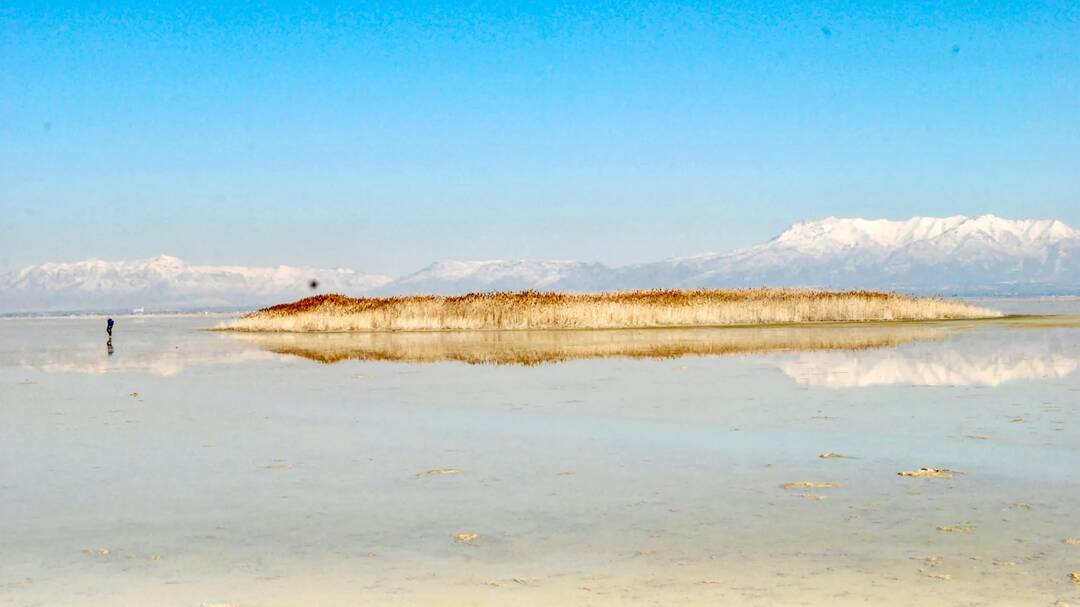
Scientists at the University of Utah identified a hidden freshwater system beneath the Great Salt Lake using airborne electromagnetic surveys, with sediments reaching depths of 3–4 km. The discovery follows a 2025 survey triggered by observations of pressurized freshwater emerging on exposed lakebed in Farmington Bay.
If the subsurface freshwater inference holds up to independent verification, the immediate economic consequence is a re-weighting of value from salt-brine mineral extraction toward water management and subsurface characterization. Expect a 6–36 month window where state agencies and private operators fund high-resolution follow-ups and pilot extraction tests; those contracts flow to engineering firms, specialty drillers and sensor vendors rather than commodity miners.
For brine-dependent mineral producers the core mechanism is not binary loss of resource but margin compression and higher opex: dilution of salinity forces either longer/denser evaporation or costly separation upgrades, which can increase operating costs by a material percentage and push breakeven production timelines out by years. That opens a multi-year runway for direct lithium extraction (DLE) and ion-exchange vendors to commercialize higher-return alternatives.
Second-order winners include airborne geophysics and hydrogeology service providers, downhole logging suppliers and consultants that can monetise recurring survey programs; losers are regional brine processors, some legacy chemical operations and suppliers tied to large-scale evaporation ponds. Social and legal friction over water rights is an asymmetric tail risk — a single high-profile lawsuit or state moratorium could delay projects and reroute capital into remediation and monitoring.
Key catalysts to watch: publication of follow-up surveys, state-level water management rulings, pilot DLE pilot results, and any EPA/state permits. Reversals can come quickly if replicate surveys fail to confirm permeability or if extracted water proves unaffordable to treat, so position sizing should reflect high technical and regulatory execution risk over the 12–48 month horizon.
AI-powered research, real-time alerts, and portfolio analytics for institutional investors.
Request DemoOverall Sentiment
neutral
Sentiment Score
0.00
