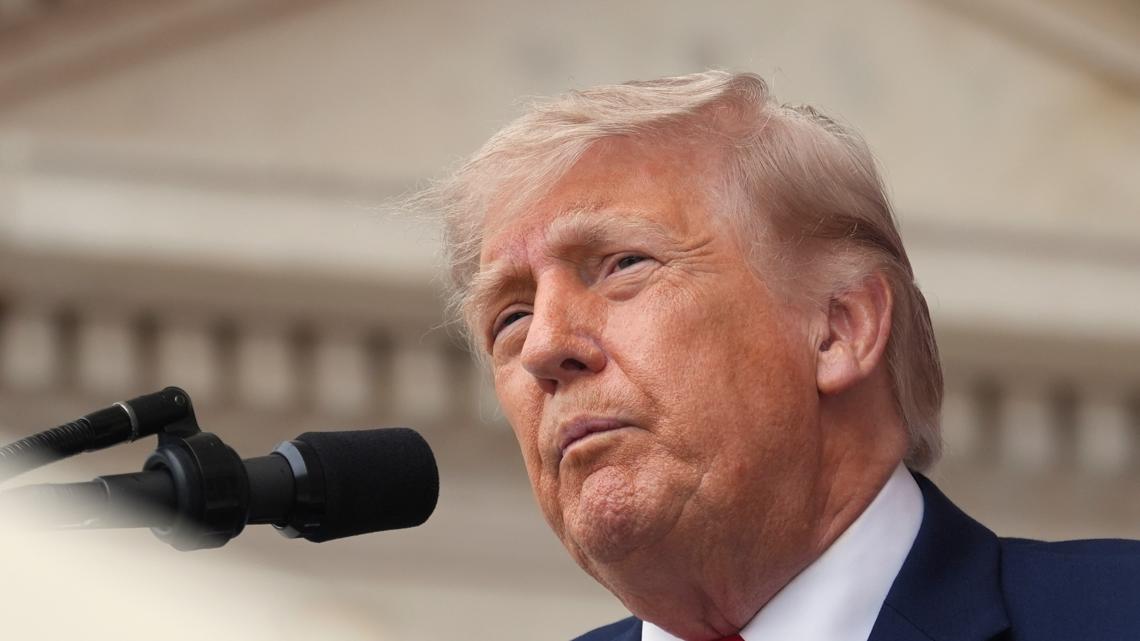
Trump said any Iran peace deal should require several countries, including Saudi Arabia, Pakistan, Qatar, Turkey, Egypt and Jordan, to join the Abraham Accords, adding a new diplomatic condition to the negotiations. The proposal could complicate talks with Iran and faces pushback from Republicans favoring a harder line, while Saudi Arabia and Pakistan remain reluctant without Palestinian statehood progress. The announcement raises geopolitical uncertainty across the Middle East and could affect regional risk sentiment.
The immediate market read is that this is less about a near-term Middle East peace breakthrough and more about a bargaining tactic that raises the hurdle rate for any Iran détente. By attaching normalization demands to the deal, the administration increases the probability of a slower, more conditional process, which tends to compress volatility only after an initial spike in headline risk; in the next 1-4 weeks, that supports defense and cyber names more than broad EM beta. The key second-order effect is that countries being publicly enlisted now have domestic political reasons to slow-roll participation, so the “scope creep” itself may become the binding constraint rather than Iran.
The most interesting market implication is for Gulf capital allocation. If normalization becomes tied to a larger regional package, sovereigns may divert attention toward security coordination, border surveillance, air and missile defense, and dual-use infrastructure, which benefits contractors and integrators even if diplomacy stalls. Conversely, any perception that Saudi participation is being forced could delay incremental foreign direct investment into the kingdom by 1-2 quarters, as investors wait for clarity on whether the Gulf is entering a more durable security architecture or just another episodic negotiation cycle.
The contrarian view is that the headline may be over-interpreted as geopolitically expansive but underpriced as a negotiating device. If this is just leverage, the eventual outcome could be a narrower Iran arrangement with no broad Accords expansion, which would disappoint hawkish positioning but reduce the odds of a larger regional escalation. That means the real tail risk is not a failed deal per se, but a breakdown in talks that re-prices shipping, energy, and defense in a compressed window of days rather than months.
AI-powered research, real-time alerts, and portfolio analytics for institutional investors.
Request DemoOverall Sentiment
neutral
Sentiment Score
0.00
