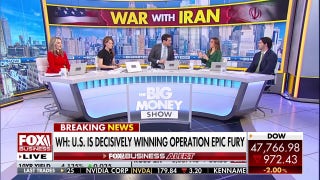
U.S. employers announced 48,307 job cuts in February, down 55% from January's 108,435 and 72% year-over-year, bringing the January–February total to 156,742. Tech led February cuts with 11,039 (33,330 YTD, +51% YoY) while transportation has the second-highest YTD tally at 31,702 (up 872% YoY); healthcare and education also saw elevated cuts. Firms cited store/department closings, market/economic conditions, restructuring and cost-cutting as leading reasons, and AI was cited in about 10% of February reductions (4,680) and 8% YTD (12,304). Challenger warns geopolitical risk from the war in Iran and higher costs could prompt more belt-tightening, while hiring plans rose to 12,755 in February but remain well below year-ago levels.
Market structure: February's 48k announced cuts (down 55% from Jan but still elevated vs historic) concentrates downside in tech, transportation and education/health products. Direct winners are AI infrastructure and cloud providers (NVDA, MSFT, AMZN) that capture higher per-server spend even as software headcount falls; losers are mid/small-cap SaaS and ad-dependent digital platforms that face slower ad spend and funding stress. Labor supply easing and fewer hiring plans (18k YTD vs 40.7k LY) imply downward wage pressure over next 1–3 quarters, ceteris paribus, which is disinflationary for services and supportive for bonds if geopolitical oil shocks do not materialize.
Risk assessment: Key tail risks are Iran escalation (oil > $90/bbl within 30–90 days) reversing disinflation into stagflation, and a credit freeze among late-stage VC-backed tech if funding costs rise >200bps further. Short-term (days-weeks) risks: headline-driven volatility around oil/geopolitics and large tech layoff announcements; medium-term (3–6 months): weaker consumer spending from layoffs depressing retail earnings; long-term (12+ months): structural substitution of labor by AI reducing recurring revenue bases for legacy service firms.
Trade implications: Tactical longs: employment-data plays (ADP) and AI-capex beneficiaries (NVDA/MSFT) into Q2 results; tactical shorts: transportation/airlines and industrials sensitive to oil and volume declines (IYT, DAL, SWK). Use option structures to limit drawdowns: buy 3-month calls on NVDA/MSFT funded by selling modest OTM calls, and buy put spreads on IYT if oil breaches $90 within 30 days. Pair trades: long ADP or MSFT vs short IYT to express labor-services resilience vs transportation pain.
Contrarian angles: Market underprices the reallocation effect—AI layoffs can compress operating costs and lift margins for surviving firms, creating outsized earnings beats in 2–4 quarters (historical parallel: post-2002 tech capex cycle). Conversely, consensus underestimates consumption hit if layoffs become permanent; retail/restaurant stocks may be overvalued if unemployment surprises +50–75 bps. Watch corporate commentary on AI-driven role eliminations: if >10% of layoffs cite AI persistently, rotate more aggressively into AI-infra names and hedge consumer exposure.
AI-powered research, real-time alerts, and portfolio analytics for institutional investors.
Request TrialOverall Sentiment
moderately negative
Sentiment Score
-0.35
Ticker Sentiment
