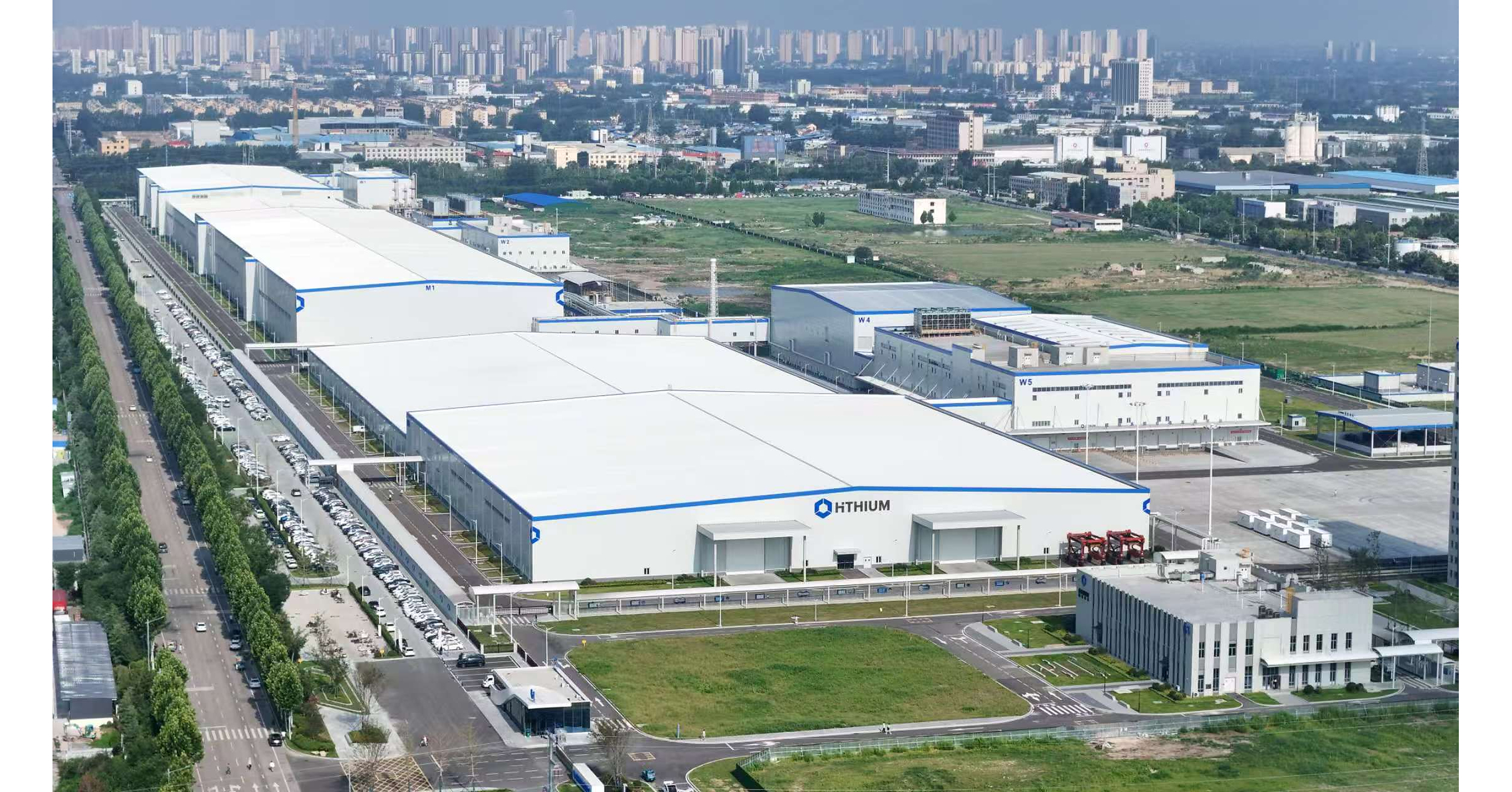
Shandong HiTHIUM began the production rollout of its long-duration energy storage (LDES) integrated industrial park in Heze, China, a planned ~80-hectare site with total investment of over RMB 13 billion. The company claims major manufacturing efficiency gains from fifth-generation lines—50% less floor space per GWh, 58% fewer production workers, 13% lower energy use, and automation >95% with AI-based visual inspection. While largely operational/strategic rather than near-term financial, the scale and cost-performance improvements support a constructive outlook for LDES manufacturing and delivery capacity.
This reads as a cost-curve event more than a single-company milestone: if the manufacturing claims are real, the next leg is not revenue surprise but pricing pressure across the LDES stack. The first-order winner is the end-customer side of the market — utilities, IPPs, and renewable developers that need multi-hour firming — because lower system cost improves project IRRs and should pull forward procurement over the next 1-3 quarters. The first-order loser is any Western or small-cap storage vendor whose valuation assumes durable gross margins; scale, vertical integration, and delivery certainty are the moat here, not technology alone.
Second-order, cheaper LDES is bearish for gas peaker economics and for companies relying on scarcity pricing in grid-storage bids. The impact on battery metals is mixed: volume can grow, but vertical integration means more of the economic rent stays inside the manufacturing stack, so upstream miners do not automatically capture the margin benefit. The cleaner read-through is to project developers with strong balance sheets and procurement leverage versus OEMs that still need external cell supply and lack a cost advantage.
The contrarian point is that investors may be over-indexing on the headline and underestimating localization friction. Chinese capacity does not equal global share gain if tariffs, local-content rules, certification, or financing barriers keep exports constrained; in that case, the stock-market impact outside China is mostly sentiment, not fundamentals. I would watch for order conversion, utilization, and ASP commentary over the next 1-2 earnings cycles before extrapolating a durable margin reset.
AI-powered research, real-time alerts, and portfolio analytics for institutional investors.
Request DemoOverall Sentiment
mildly positive
Sentiment Score
0.25
Ticker Sentiment
