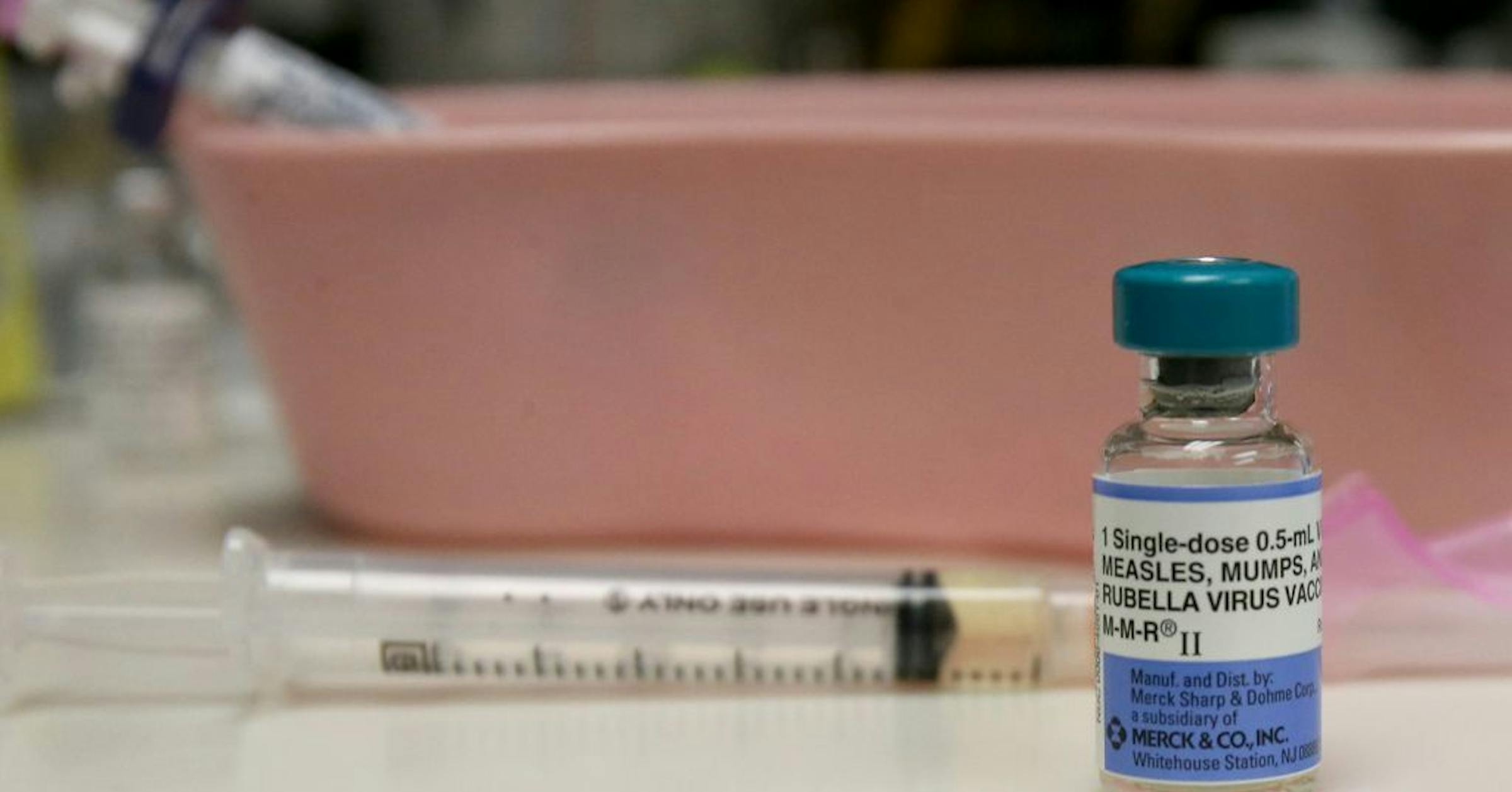
Minnesota will continue to recommend a 17-disease pediatric vaccine schedule for children despite a federal move last week to pare the recommended immunizations to 11, aligning the state with professional medical groups including the American Academy of Pediatrics. State officials said the federal change reflects policy shifts under Health Secretary Robert F. Kennedy Jr. rather than new science; the two lists still agree on 11 vaccines (diphtheria, tetanus, pertussis, Hib, pneumococcal, polio, measles, mumps, rubella, HPV and varicella), and Minnesota will keep those on its K–12 schedule.
Market structure: The immediate winners are large, diversified vaccine producers (Merck MRK, Pfizer PFE, GlaxoSmithKline GSK) and pediatric providers in states that keep broader schedules; losers are niche U.S.-centric vaccine pure‑plays (e.g., NVAX) and marginal revenue lines at distributors (McKesson MCK, Cardinal CAH). The federal change (17→11 vaccine types) is a ~35% reduction in vaccine categories but likely only a ~10–20% reduction in pediatric dose volumes nationally, implying a roughly 1–3% revenue swing for big-cap vaccine franchises over 12–24 months, not existential. Pricing power shifts toward firms with diversified global portfolios and adult vaccine franchises; specialty pediatric suppliers face margin pressure and higher commercial risk.
Risk assessment: Tail risks include (1) policy cascade—>30 states adopting narrower schedules within 12 months which would push revenue hits >5% for U.S.-focused vaccine makers, and (2) epidemiological tail—measles/pertussis outbreaks triggering emergency procurements and litigation that spike volatility. Immediate horizon (days) is headline-driven; short-term (weeks–months) depends on state legislative/adoption cycles and CDC advisory meetings; long-term (quarters–years) is driven by uptake, litigation and possible policy reversal. Hidden dependencies: school-entry enforcement, private insurer coverage and global export markets which can amplify or mute U.S. demand by ±50% relative to base case.
Trade implications: Favor small, tactical overweight in large-cap, diversified vaccine/biopharma (MRK, PFE, GSK) with 6–12 month horizons and underweight/short small U.S.-centric vaccine pure‑plays (NVAX) where binary regulatory outcomes dominate. Use 3–6 month call spreads on MRK/PFE (size 0.5–1% each) to capture upside on policy reversals or outbreak-driven demand spikes while capping premium. Rotate out of small-cap biotech vaccine exposure (trim 20–30% of positions) into defensive healthcare and broader pharma; re-evaluate after CDC/state rulings in 30–90 days.
Contrarian angles: Consensus underestimates the probability of policy reversal or legal challenge — if even 5–10 large states announce retention of broader schedules in 30–60 days, demand re-acceleration is likely and small caps will gap higher. Historical parallels (post-H1N1 short-term demand shocks) show outbreaks drive emergency procurements that create >15% revenue upside for incumbents in quarters, so limited, staged long exposure to big-cap vaccine names is asymmetric. Unintended consequence: increased politicization raises volatility; keep position sizing tight and use options to manage tail risk.
AI-powered research, real-time alerts, and portfolio analytics for institutional investors.
Request DemoOverall Sentiment
neutral
Sentiment Score
0.00
