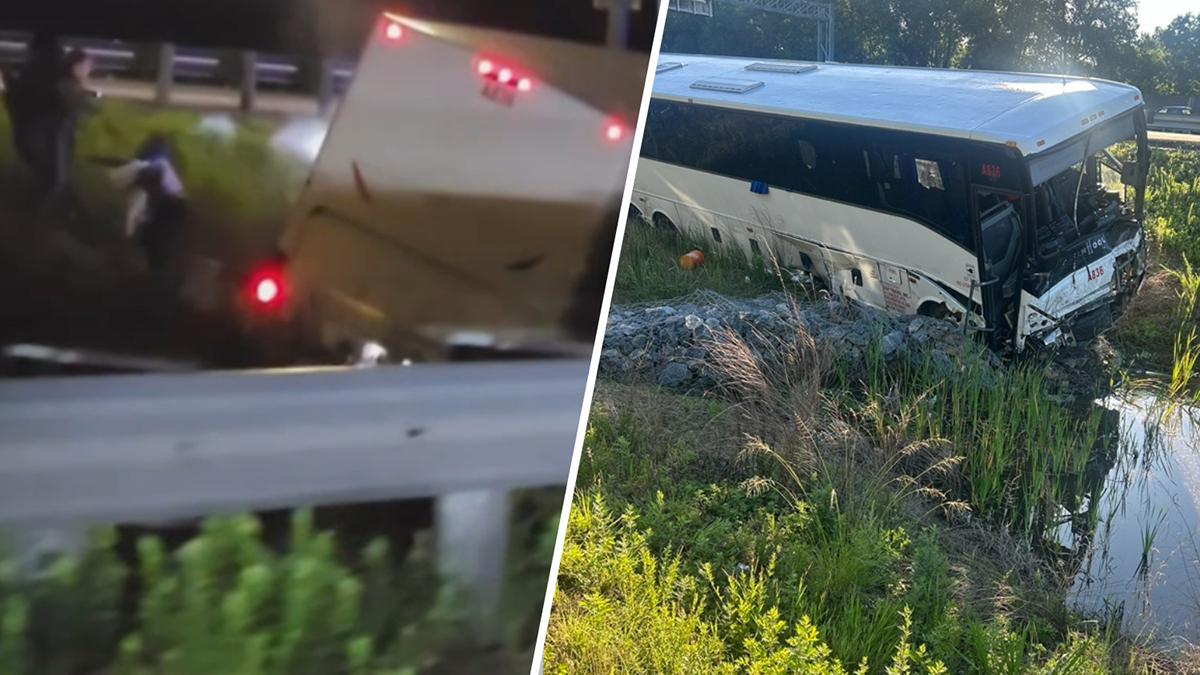
A charter bus crash on I-95 in Stafford County, Virginia killed 5 people and sent about 44 to hospitals, including 3 in critical condition. The bus struck multiple vehicles in a work zone after the driver failed to slow for traffic; federal and state authorities, including the NTSB and DOT, are investigating the driver's background and the carrier's safety record. The incident is likely to heighten scrutiny of bus safety, licensing standards, and commercial carrier regulation.
This is a near-term regulatory shock for the charter-bus complex, but the market consequence is likely to show up first in margins, not demand. Expect a fast tightening of enforcement around licensing, English-language proficiency, and fleet compliance, which raises the cost of doing business for smaller operators and for brokers that rely on lightly vetted capacity. The second-order winner is the compliance stack: firms that sell driver screening, telematics, dashcam/event-data, and safety audit software should see a multi-quarter procurement bump as carriers try to preempt headline risk.
The bigger implication is that this is not just an isolated negligence event; it increases the probability of a broader FMCSA/NTSB rulemaking cycle and state-level scrutiny over interstate charters. That tends to hit the lowest-quality operators first through higher insurance premiums, more roadside inspections, and faster license suspensions, which can create capacity attrition in the charter and shuttle market over the next 3-12 months. If enough operators exit or de-rate, pricing can firm even without volume growth, helping the stronger regional fleets.
The contrarian view is that the market may overestimate how much this changes passenger behavior. Charter demand is generally event-driven and price-inelastic in the near term, so the revenue hit to the industry could be smaller than the margin hit from compliance costs and liability reserves. The more durable trade is not to short transportation broadly, but to express relative underperformance in the weakest regulated operators versus beneficiaries in safety tech and insurance-brokerage adjacent names.
Catalyst risk cuts both ways: if the investigation confirms a simple operational failure rather than a systemic licensing issue, political pressure may fade in days and the trade can reverse. If, however, DOT expands enforcement into months-long audits, the repricing of insurance and contractor vetting could persist through the next bid cycle.
AI-powered research, real-time alerts, and portfolio analytics for institutional investors.
Request DemoOverall Sentiment
extremely negative
Sentiment Score
-0.85
