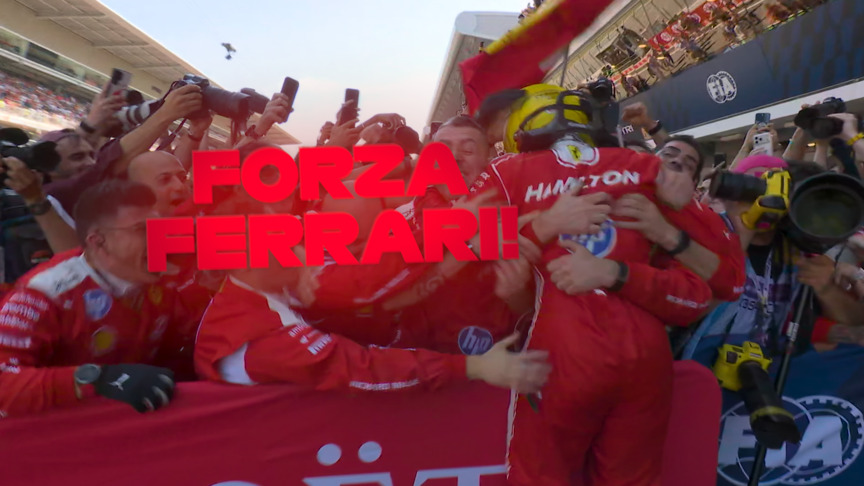
Lewis Hamilton won the 2026 Barcelona-Catalunya Grand Prix for Ferrari, securing the team’s first victory since the 2024 Mexico City Grand Prix and his first F1 win for Ferrari. Kimi Antonelli retired late with a mechanical issue, allowing George Russell to finish second and Lando Norris to complete the podium, while Charles Leclerc also retired after a separate mechanical problem. The article is largely race coverage and is unlikely to have meaningful direct market impact.
Hamilton’s win is less about one result than a regime shift: Ferrari just proved it can convert upgrade pace into race-winning execution against a front-running Mercedes package. That matters for RACE because the market usually prices Ferrari as a luxury/brand story, but F1 credibility spills into broader margin narrative, sponsorship leverage, and halo demand in key geographies where motorsport still moves aspiration. The second-order effect is pressure on Mercedes’ competitive moat in premium performance branding, while Ferrari gets a cleaner runway into the next two races if this upgrade path is validated.
The more interesting signal is strategic optionality. A three-stop win in hot conditions suggests Ferrari may now have a tyre-deg and in-race adaptation edge, which is exactly the kind of capability that can produce outsized points capture when the field is compressed. If that holds for even 3-5 consecutive weekends, the title probability repricing could be meaningful; if it doesn’t, today’s move risks being read as a weather/SC-assisted outlier. The reliability failures at Mercedes and Ferrari’s own Leclerc issues keep this from becoming a clean “Ferrari fixed it” trade — execution variance remains high.
For the stock, the near-term setup is favorable but not frictionless: positive brand headlines can support sentiment into the Austria/Great Britain double-header, yet the durable catalyst is sustained competitive evidence, not one trophy. Consensus may be underestimating how quickly a sport-led narrative can influence consumer mindshare at the margin, but it may also be overestimating the persistence of this win if it relied on perfect timing. The right framing is asymmetric: upside if Ferrari becomes a consistent podium-to-win contender, downside limited unless reliability or strategic errors recur immediately.
AI-powered research, real-time alerts, and portfolio analytics for institutional investors.
Request DemoOverall Sentiment
mildly positive
Sentiment Score
0.35
Ticker Sentiment
