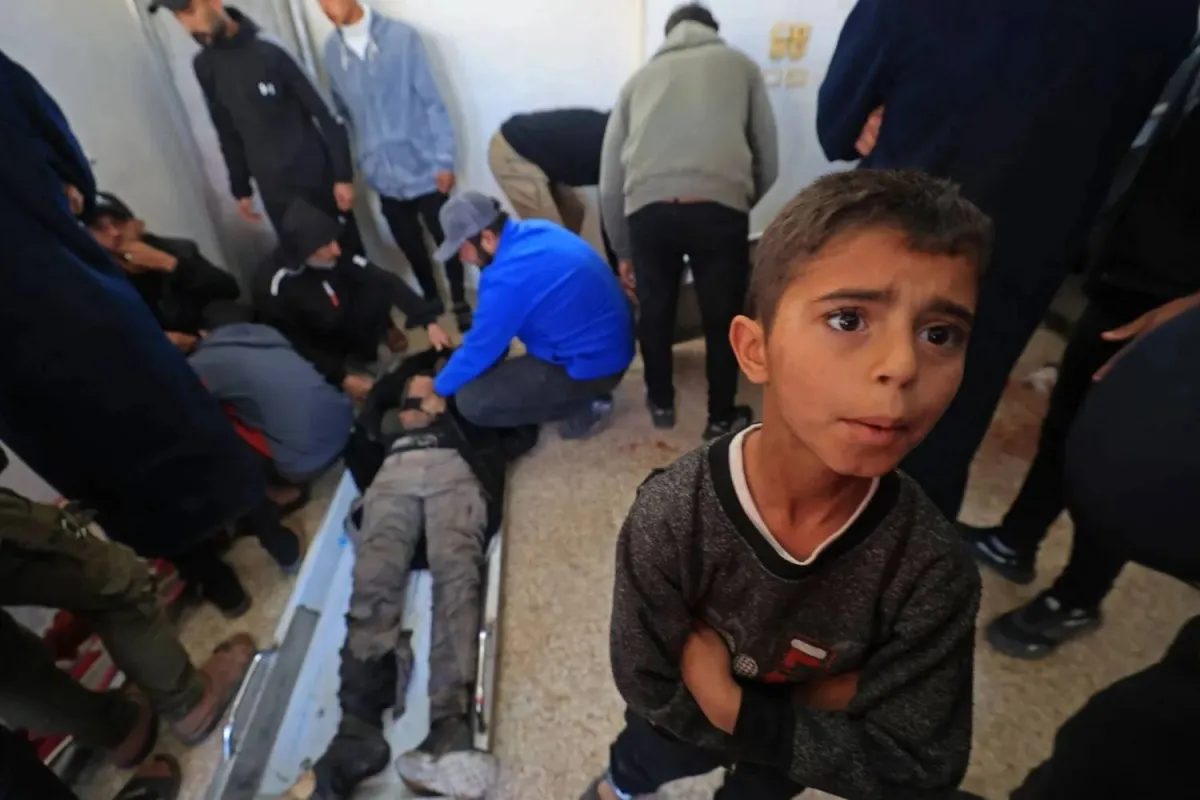
Lebanese and Israeli envoys held rare direct talks in Washington, but Israel ruled out any ceasefire discussion and instead pressed Lebanon to disarm Hezbollah before any peace deal or normalization. The conflict has already killed more than 2,000 people in Lebanon and forced 1.2 million from their homes, while triggering a broader regional risk-off backdrop that has spiked oil prices and disrupted energy supply. The meeting is a diplomatic milestone, but one overshadowed by entrenched demands and elevated war risk across the Middle East.
This is less about a peace breakthrough than about whether Washington can convert a tactical de-escalation into a durable enforcement regime. The near-term market implication is a lower probability of immediate energy supply disruption, but a higher probability of a drawn-out, low-intensity security contest that keeps a geopolitical premium embedded in crude and refined products. That matters because the market tends to fade headline ceasefire risk quickly, yet infrastructure sabotage, shipping insurance repricing, and episodic missile/drone escalation can keep volatility elevated for weeks even if spot prices retrace.
The key second-order effect is on sovereign and quasi-sovereign balance sheets in the region. Lebanon gets a modest upside if talks create a humanitarian pause, but the more investable consequence is pressure on reconstruction and border-security spending in Israel, and on US/European diplomatic capital if the process stalls. If disarmament becomes the central demand, the probability of internal Lebanese instability rises materially; that would be bearish for local banks and insurers, but bullish for defense and border-security vendors if the West funds monitoring, logistics, and surveillance instead of hard peace enforcement.
The contrarian read is that the market may be overpricing the chance of a clean resolution and underpricing the chance that this becomes a frozen conflict with periodic flare-ups. A ceasefire that excludes the armed-group question is unstable by construction: it can cap the worst-case energy shock, but it does not remove the tail risk of renewed strikes or a domestic Lebanese political crisis. For oil, that argues for selling upside only after a violent spike, not preemptively fading the geopolitical premium while negotiations are still undefined.
From a trading standpoint, the best risk/reward is in expressing volatility rather than direction. Defense and cyber names should outperform on any negotiation failure, while energy beta should remain supported by headline risk; the downside is a sudden diplomatic breakthrough that compresses both premiums quickly. The market is likely to get multiple opportunities to reprice this over the next 2-6 weeks as mediators test whether either side will trade ceasefire language for enforcement commitments.
AI-powered research, real-time alerts, and portfolio analytics for institutional investors.
Request TrialOverall Sentiment
moderately negative
Sentiment Score
-0.40
