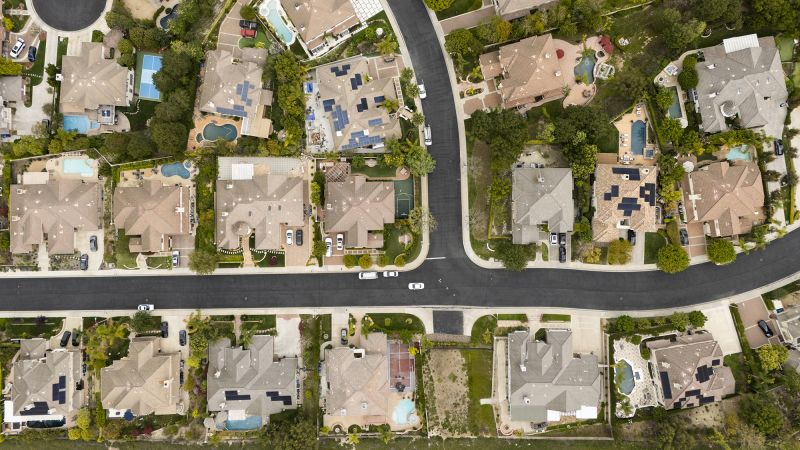
President Trump recently suggested eliminating capital gains taxes on home sales. Currently, primary residences are exempt up to $250,000 for single filers and $500,000 for joint filers, but these 1997-era caps increasingly impact long-term homeowners and those in high-appreciation areas, potentially disincentivizing sales. Analysis indicates that eliminating this tax would disproportionately benefit wealthier, older homeowners who typically exceed the current exemption thresholds.
A proposal to eliminate capital gains taxes on primary home sales has been introduced into the political discourse, but its path to legislation remains highly uncertain. The current tax structure exempts the first $250,000 of gains for single filers and $500,000 for joint filers, thresholds that have not been adjusted for inflation since their implementation in 1997. This static nature has led to 'bracket creep,' where significant home price appreciation now exposes a growing number of sellers to taxation, particularly long-term owners and those in high-value markets. According to a National Association of Realtors study, this may be disincentivizing sales and constraining housing inventory. However, analysis from the Yale Budget Lab, using 2022 Federal Reserve data, indicates that a full repeal would disproportionately benefit wealthier households. Homeowners with gains exceeding the current exemption thresholds possess an average net worth of $5.7 million, starkly higher than the approximate $1 million average for those below the threshold. The proposal's fiscal feasibility is also questionable, arriving after a separate bill was signed that is projected by the Congressional Budget Office to increase the national deficit by $3.4 trillion over the next decade.
AI-powered research, real-time alerts, and portfolio analytics for institutional investors.
Overall Sentiment
mildly negative
Sentiment Score
-0.25
