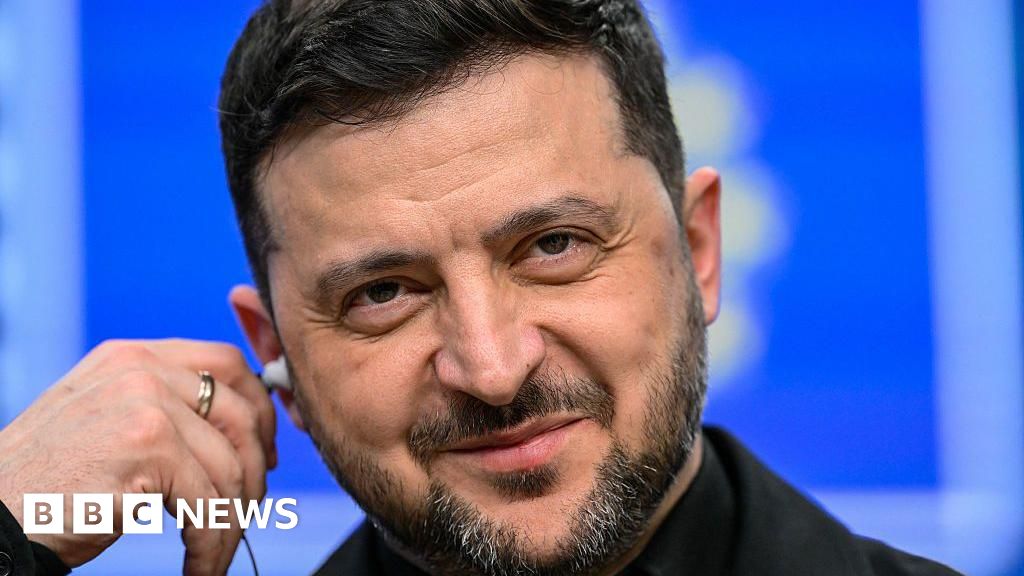
Zelensky has dispatched Ukrainian military, intelligence and defence teams to Qatar, the UAE and Saudi Arabia to help counter Iranian-launched Shahed attack drones and is offering mass-produced interceptor drones and expertise. Kyiv is conditioning assistance on reciprocal support—primarily more Patriot and other air-defence systems—and hopes to monetize drone sales to replenish depleted state coffers and win Gulf partners. The development is sector-positive for defense suppliers and could shift diplomatic alignments, but carries domestic political risk in Ukraine if resources are perceived as diverted from its own front-line needs.
Ukraine exporting counter-UAS expertise and platforms to Gulf customers is a practical force-multiplier: it shifts the economics of air defence away from high-cost interceptor missiles toward lower-cost, high-rate producible drone interceptors, EO/IR sensors, and electronic-warfare suites. Expect procurement budgets to reallocate within 6-24 months — tactical C-UAS and sensor OEM revenue should grow faster than strategic missile sales in the near term, while integrators that can field turnkey C-UAS packages will win the bid competitions.
A second-order fiscal effect is material: if Kyiv monetizes exports, incoming FX reduces near-term reliance on Western in-kind transfers, which could slow the cadence of Patriot/long-range missile deliveries over months. That creates a divergence between companies anchored to high-end SAM sales (sensitive to political flows) and those providing scalable counter-drone solutions or dual-use electronics (sensitive to procurement cycles and manufacturing ramp). Watch supply-chain constraints: composite airframes, GPUs for autonomous guidance, and radio-frequency components will bottleneck scale-up; suppliers of those inputs gain leverage and pricing power.
Tail risks are twofold and time-sensitive: domestic political backlash in Ukraine could halt exports within weeks, and escalation by state actors could broaden demand for long-range interceptors, reversing the pivot. Practical trading catalysts are contract announcements and government procurement line-items (expected within 1–9 months) and election/policy shifts in the US that alter transfer timetables. Tactical positioning should therefore prefer liquid exposure to C-UAS and tactical unmanned vendors with optionality, kept hedged against the Patriot/missile-supplier recovery scenario.
AI-powered research, real-time alerts, and portfolio analytics for institutional investors.
Request DemoOverall Sentiment
mildly positive
Sentiment Score
0.15
