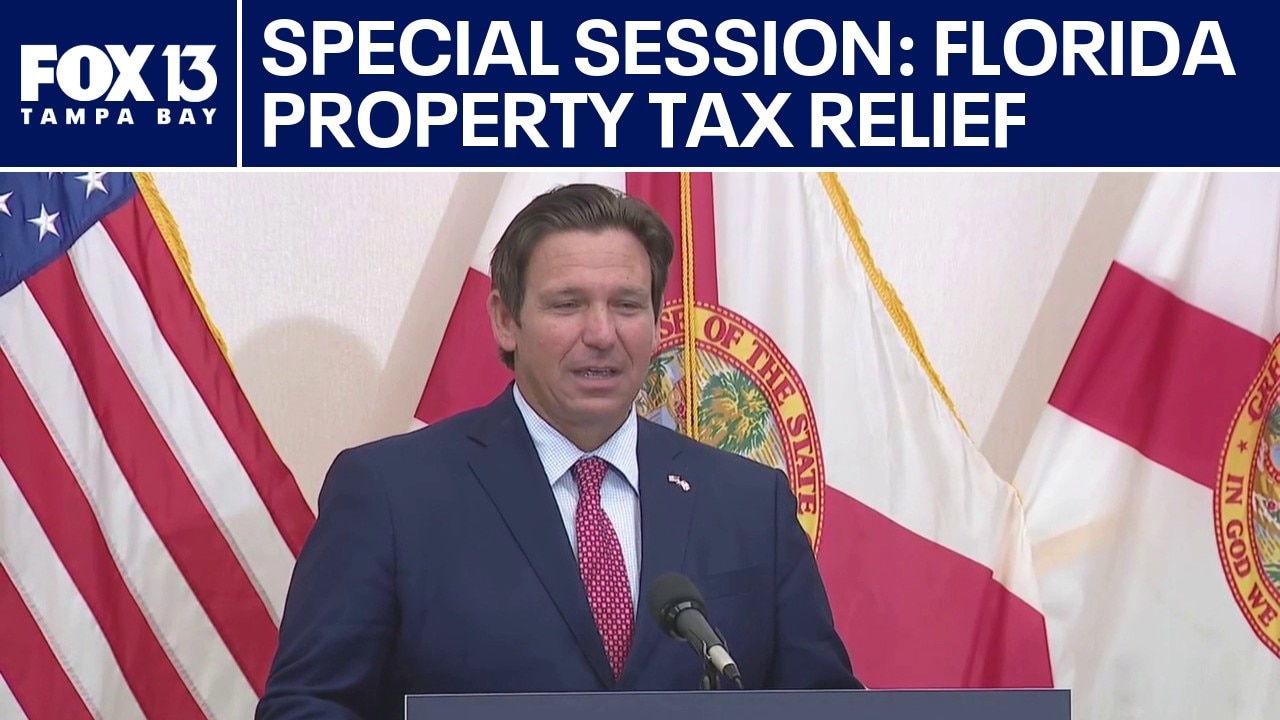
Florida Governor Ron DeSantis is calling a special legislative session to advance a property tax amendment for the November ballot, starting with a proposed homestead exemption increase to $250,000 and potentially phasing toward full elimination. He said the $250,000 threshold could make property taxes effectively zero for 60% of Florida homeowners, with a $500,000 threshold covering about 92%. The proposal still requires legislative agreement and at least 60% voter approval, and local governments warn it could force offsetting hikes in other taxes or service cuts.
This is a multi-year fiscal stress test for Florida municipalities, not a one-off political headline. The first-order effect is a transfer of tax burden from owner-occupied housing toward either renters, businesses, or service cuts, but the second-order effect is more important: credit spreads for local issuers can widen if markets start pricing in a structurally weaker property-tax base and political limits on backfilling revenue. The market will likely front-run this well before any ballot outcome because the proposal itself forces cities and counties to model downside scenarios now. The most exposed economically are local-service-dependent operators and the broad Florida consumer ecosystem. If municipalities respond by leaning harder on sales taxes or business taxes, that is mildly stagflationary for lower-income demand and margin-negative for small retailers, restaurants, and service franchises with concentrated Florida exposure. The housing channel is more nuanced: owner-occupied affordability improves at the margin, but unless mortgage payments or insurance costs fall, the elasticity on home demand may be limited; the bigger effect may be on home price expectations in lower- to mid-tier markets, where tax savings are capitalized into prices over 12-24 months. The contrarian view is that the immediate market reaction may be too binary. A 60% voter threshold and the need for implementing legislation make this a long-dated political optionality trade rather than a clean policy change. That lowers near-term conviction for equity beta, but it increases value in hedged structures around Florida municipal credits, insurers, and consumer names with local revenue exposure. Tail risk is that local governments get forced into non-property tax revenue replacement, which could create a second-round hit to commercial real estate and small business valuations even if homeowners cheer the headline.
AI-powered research, real-time alerts, and portfolio analytics for institutional investors.
Request DemoOverall Sentiment
neutral
Sentiment Score
0.05
