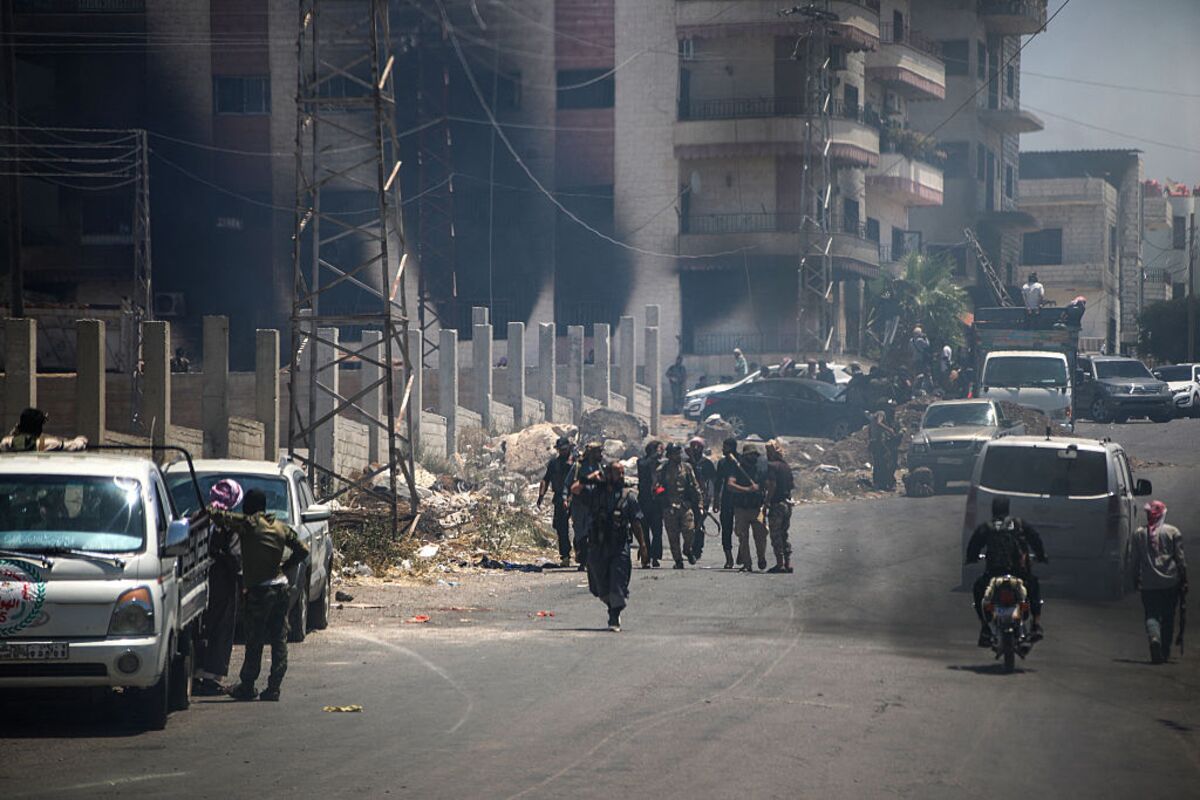
Syria's Bedouin clans have withdrawn from the Druze-majority city of Sweida following a U.S.-brokered ceasefire, concluding weeklong clashes with Druze militias that resulted in hundreds of casualties and further destabilized the nation's fragile postwar transition. The conflict underscored the region's complex dynamics, notably with Israeli airstrikes targeting Syrian government forces who had sided with the Bedouins.
A U.S.-brokered ceasefire has led to the withdrawal of armed Bedouin clans from the Druze-majority city of Sweida, Syria, temporarily halting intense clashes that resulted in hundreds of fatalities. The conflict highlights the severe fragility of Syria's post-war state and reveals a complex regional dynamic, with Syrian government forces reportedly siding with the Bedouins, which in turn provoked Israeli airstrikes against those government positions. While the event's market impact score is exceptionally low at 0.05, indicating minimal direct financial spillover, the involvement of the U.S. as a mediator and Israel as an active military participant underscores the persistent geopolitical volatility. The resumption of humanitarian aid signals a de-escalation, but the underlying sectarian and political tensions that ignited the violence remain a significant source of latent risk for regional stability.
AI-powered research, real-time alerts, and portfolio analytics for institutional investors.
Request DemoOverall Sentiment
mixed
Sentiment Score
0.00
