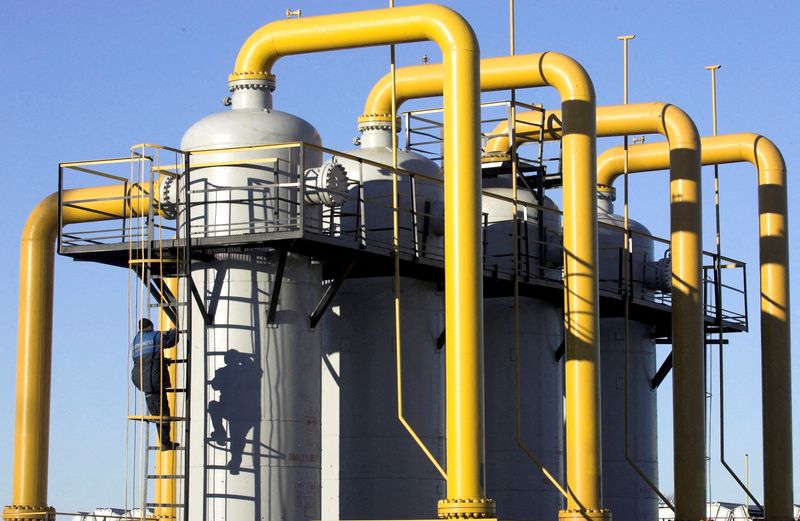
European natural gas prices tested a three-week high after lingering storage-replenishment anxieties outweighed the U.S.-Iran peace talks in Qatar; the front-month Dutch contract was down 0.2% at €43.89/MWh (still at its highest since mid-June) and the UK contract moved to 104.4 pence/therm. Despite oil crude benchmarks falling back to pre-war levels as Strait of Hormuz shipping normalized, the gas complex stayed supported by slow summer injections tied to Norwegian pipeline maintenance, stiff LNG competition, and a southern Europe heatwave boosting gas-fired power demand. Overall, the news is cautionary for the gas market because internal supply bottlenecks are not yet offset by improved physical flows to Europe.
The key second-order read is that Europe is still price-setter on marginal LNG cargoes even when headline geopolitics improve. That favors upstream and midstream gas-exposed assets with flexible export optionality, while pressuring European power-heavy industrials, fertilizer, and chemicals where gas is the main input shock. The broader equity implication is not a pure energy beta trade; it is a relative-margin trade between firms that can pass through fuel costs and those that cannot.
Near term, the market likely overstates the permanence of the move if weather normalizes and Norwegian outages ease over the next 2-6 weeks. But into the 1-3 month window, the real catalyst is storage trajectory: if injections stay behind normal, TTF can remain bid even with calmer geopolitics, which would keep European utilities and energy-intensive sectors under multiple pressure. The bigger structural point is that Europe’s post-Russian gas system has less shock absorption, so each heatwave or maintenance delay creates outsized spot volatility.
Contrarian view: the move may be too tactical to justify chasing commodity beta here. A front-month pop driven by storage anxiety can reverse quickly if LNG arrivals from Qatar/US step up or if demand softens after the heatwave. The cleaner expression is relative value, not outright long gas, because the upside to price can be dominated by prompt weather and flow data while the downside for Europe-exposed end users shows up later in earnings revisions.
For NGS, the read-through is weak unless there is a sustained U.S. gas activity pickup tied to higher LNG-linked domestic pricing; otherwise it is more a watch item than a direct trade. The more important indicator is whether TTF holds above the recent high once maintenance ends and injections accelerate; a failure to do so would falsify the bull case for gas beta.
AI-powered research, real-time alerts, and portfolio analytics for institutional investors.
Request DemoOverall Sentiment
mildly negative
Sentiment Score
-0.15
Ticker Sentiment
