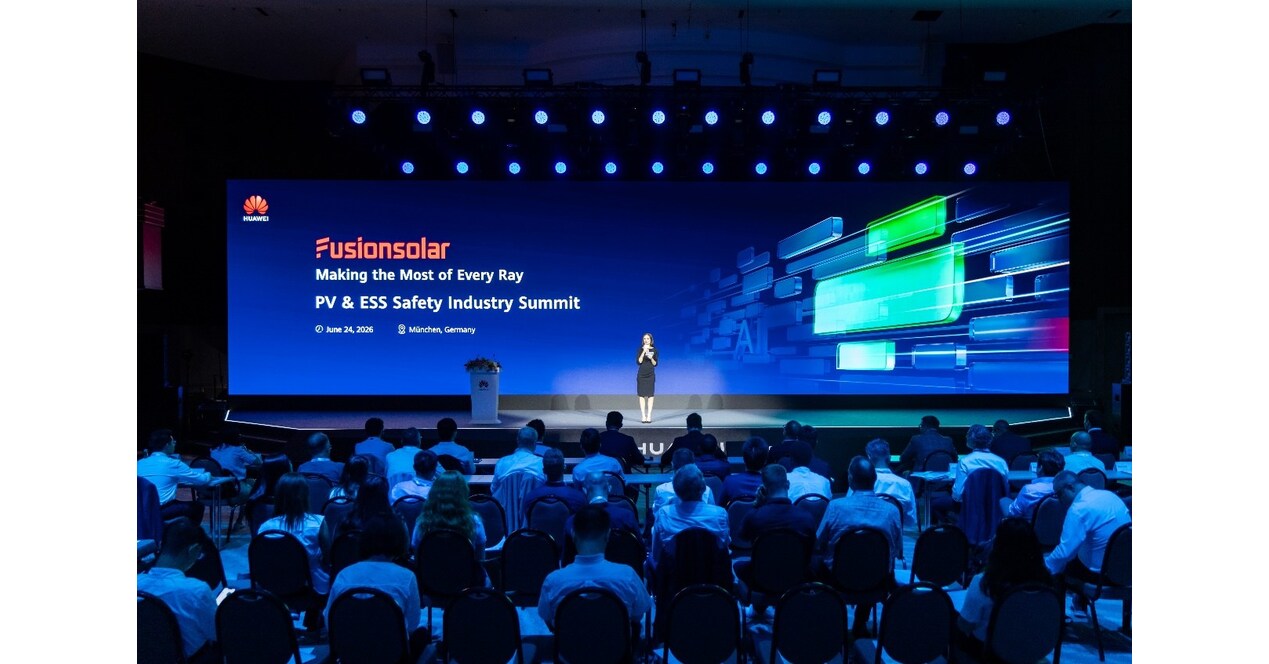
Huawei Digital Power, con partner globali, ha inaugurato il 2026 PV & ESS Safety Industry Summit a Monaco di Baviera per affrontare rischi di sicurezza e lacune di copertura assicurativa nello sviluppo su larga scala di fotovoltaico e sistemi di storage (ESS). Il settore mira a superare restrizioni normative e nuove linee guida di sicurezza nei prossimi 3 anni, con focus su test di sicurezza (es. UL 9540A), “safety-by-design” e framework di valutazione quantitativa del rischio lungo l’intero ciclo di vita. Il summit ha anche pubblicato un Grid-Forming ESS Safety White Paper, con enfasi su digitalizzazione, attacco-difesa nei test e integrazione tra valutazione rischio e meccanismi assicurativi.
This reads less like a near-term revenue catalyst and more like an underwriting regime shift. The economic transfer is from capital-light risk intermediaries toward developers and storage OEMs that must now prove bankability, fire mitigation, and operational monitoring before projects can clear financing and insurance hurdles. In practice, that raises all-in project costs and lengthens commissioning cycles, which is bearish for fast-scaling BESS platforms with thin gross margins and aggressive backlog assumptions.
WTW is the cleaner second-order beneficiary because tighter safety standards and wider disclosure requirements increase demand for risk engineering, placement expertise, and structured cover for business interruption. But the upside is fee-rate based, not volume explosive, so this is more of a steady margin tailwind than a re-rating catalyst. DELL looks largely irrelevant unless one believes utility-scale storage safety will pull through more edge monitoring, digital twin, or control infrastructure spend; that channel is too indirect for a conviction trade.
The contrarian miss is that safety rhetoric often sounds bullish for the entire storage stack, but it usually widens dispersion: incumbents with stronger testing data and larger compliance budgets gain share, while smaller integrators absorb the friction. The key falsifier is whether insurers actually reprice renewables/BESS risk over the next 1-3 months; if premiums stay stable and regulators do not adopt installation-level testing or separation rules, the market should treat this as noise rather than a structural earnings shift.
AI-powered research, real-time alerts, and portfolio analytics for institutional investors.
Request DemoOverall Sentiment
neutral
Sentiment Score
0.05
Ticker Sentiment
