
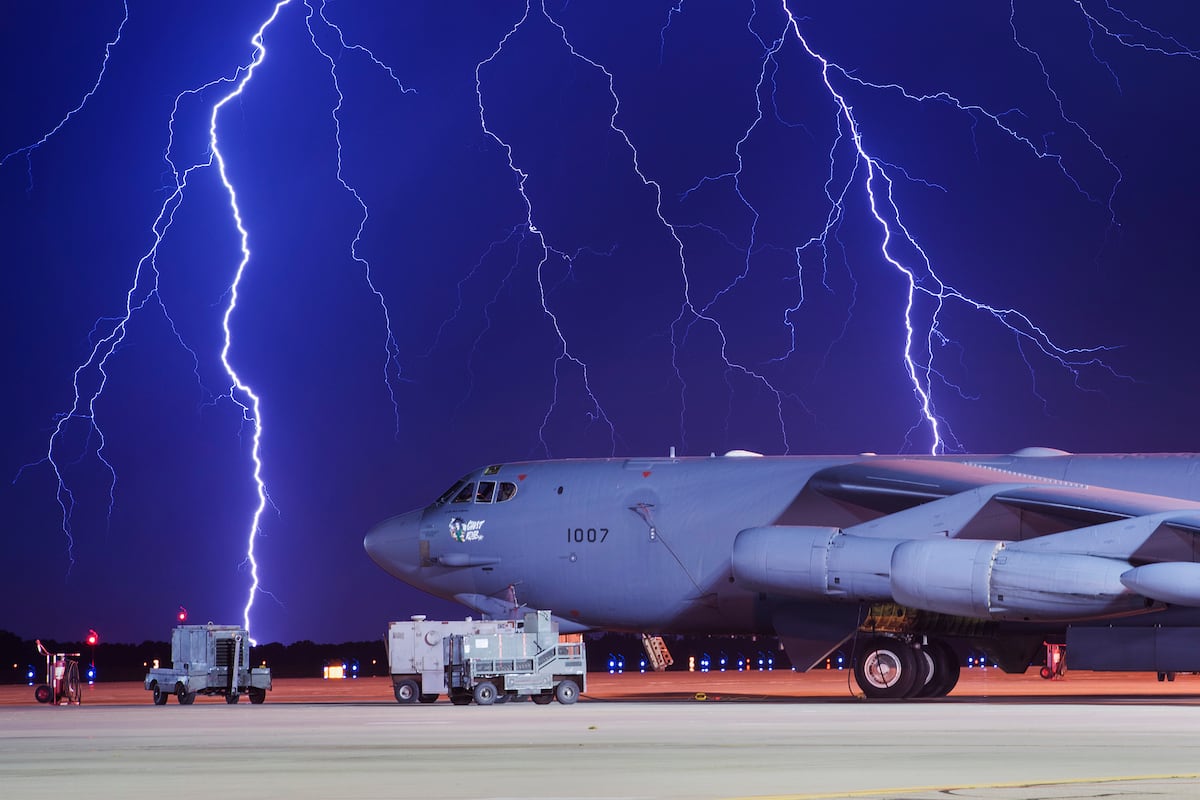
Since Operation Epic Fury began on Feb. 28, U.S. Central Command reports roughly 2,000 targets in Iran have been struck, with B-1B and B-52H bombers added to strikes against ballistic missile facilities, command-and-control nodes and naval assets. Commanders say the strikes established local air superiority and have destroyed more than 20 Iranian naval vessels; the B-52H’s long-range, 70,000-pound mixed-ordnance payload expands U.S. strike reach and raises near-term escalation risk with potential market sensitivity in oil and defense sectors.
Market structure: Near-term winners are U.S. defense primes and sustainment vendors (BA, LMT, NOC, RTX, XAR ETF) because active strikes and attrition increase demand for munitions, logistics and avionics upgrades; expect a 5–15% relative outperformance of defense names vs. the S&P over 1–3 months if strikes continue. Losers include oil-importing EMs, commercial airlines (AAL, UAL, DAL) and tourism/leisure sectors if oil rises >$5–$10/bbl or risk-premiums push travel demand down; consumer cyclicals face margin pressure. Cross-assets: safe-haven flows typically lift Treasuries and USD while a sustained oil shock steepens the curve and lifts gold; credit spreads can widen 25–75bps in risk-off spikes.
Risk assessment: Tail risks include escalation to Gulf-wide conflict (low probability, high impact) that could push WTI >$100 (+$20 from here) within weeks and force supply-chain shocks to aerospace suppliers, and cyber/insurance losses to contractors. Immediate (days) risk = volatility spikes and flight-to-quality; short-term (weeks–months) = lumpy revenue recognition and backlog shifts; long-term (quarters–years) = accelerated defense budgets if Congress passes emergency funding. Hidden dependencies: congressional appropriations timing, parts shortages (turbomachinery, semiconductors) and export controls that can delay revenue by 6–18 months.
Trade implications: Direct plays: tactically overweight BA (smaller caps NOC/LMT exposure) for 3–12 months; hedge with oil and rate-sensitive shorts. Pair trades: long XAR vs. short XLY or AAL to capture relative defense strength. Options: use 3–6 month call spreads on BA/LMT (15–25% OTM) and buy short-dated VIX calls as insurance. Entry: scale into positions over 1–4 weeks; exit if Congressional emergency funding is not enacted within 60 days or if defense names underperform S&P by >7% in 10 trading days.
Contrarian angles: Consensus assumes sustained defense outperformance; missing that backlog realization lags by quarters and budget politics can cap upside — similar to the 1991 Gulf War where defense stocks spiked then mean-reverted. Reaction may be overdone if strikes plateau; unintended consequences include central bank tightening from oil-driven inflation that hurts defensives longer-term. Monitor two-week moving average in WTI, 10y Treasury yield moves >30bps, and Congressional vote counts — these will flip the trade faster than headlines.
AI-powered research, real-time alerts, and portfolio analytics for institutional investors.
Request TrialOverall Sentiment
moderately negative
Sentiment Score
-0.45
Ticker Sentiment
