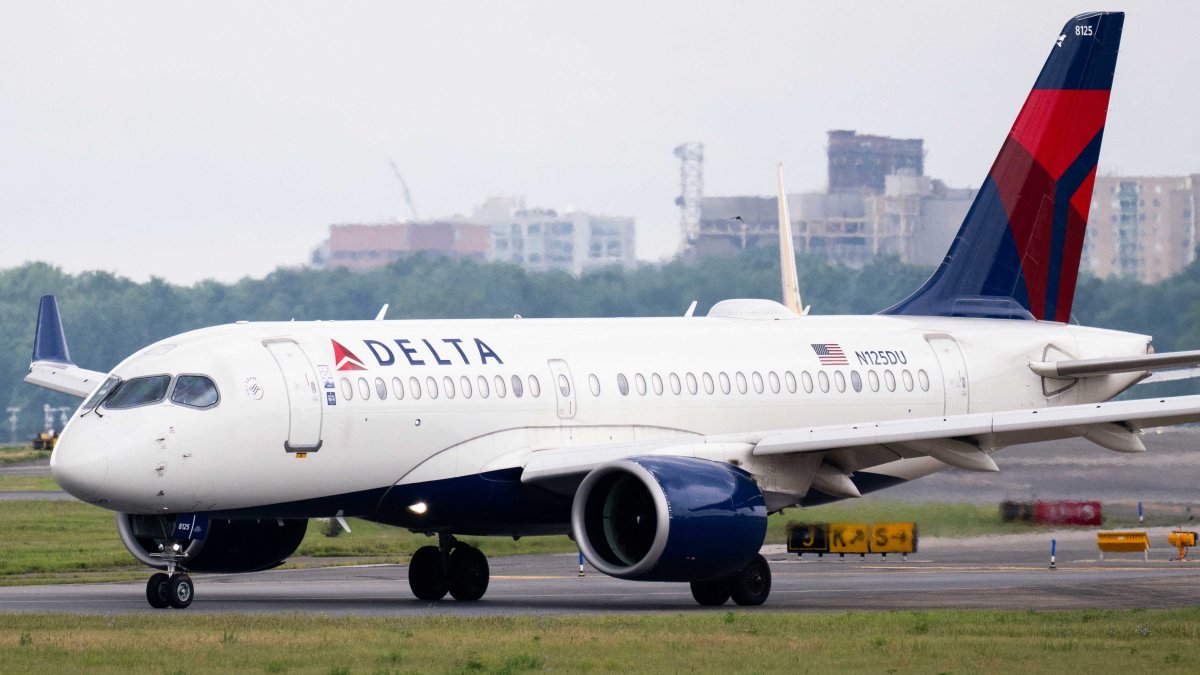
Delta Air Lines will eliminate drinks and snacks on flights under 350 miles starting May 19, affecting about 9% of its up to 5,500 daily flights, including connections. Flights of 350 miles or more will continue to receive full beverage and snack service, while some routes that previously had limited service will see expanded offerings. The change is operational and customer-experience focused, with limited near-term market impact.
This reads as a micro-margin optimization, not a demand signal. The economic value is small in absolute dollars, but it matters because it is a clean lever on unit costs in the short-haul network where ancillary service is disproportionately expensive relative to stage length; the incremental benefit should show up quickly in CASM ex-fuel and very modestly in operating margin. The market is likely to underappreciate that the bigger second-order effect is procedural: fewer catering touches reduce turn complexity and lower the odds of late departures on the shortest turns, which can improve aircraft utilization and protect completion factor.
Competitive implications are limited unless rivals follow. If peers maintain service on similar stage lengths, Delta can still defend premium perception because these flights are usually connectivity-driven rather than product-driven; however, if multiple carriers copy the move, it becomes a sector-wide cost reset and removes a small but visible expense bucket from the network. The supply-chain loser is the airport caterer and onboard provisioning ecosystem more than the airline itself, since fewer short-haul uplift cycles reduce order frequency and labor demand at outstations.
The risk is not consumer backlash in isolation; it is a broader narrative shift if this is interpreted as management seeing softness in close-in demand or trying to preserve margins ahead of a slower travel season. That would matter more over the next 1-2 quarters than immediately, because any revenue impact would likely surface through customer satisfaction and brand preference lagging into booking curves. A reversal would likely require either a competitor using service as a differentiator or a rebound in premium short-haul corporate traffic that makes the saved cost immaterial versus yield protection.
Contrarian read: the move may be more bullish than the headline suggests because it signals discipline at the margin without changing the core revenue product. For investors, the key question is whether the savings are purely cosmetic or part of a broader cost-intensity reset that can compound through the year. If the market treats this as a sign of stress, that may be overdone; if it treats it as durable margin architecture, that is underpriced.
AI-powered research, real-time alerts, and portfolio analytics for institutional investors.
Request DemoOverall Sentiment
neutral
Sentiment Score
-0.05
Ticker Sentiment
