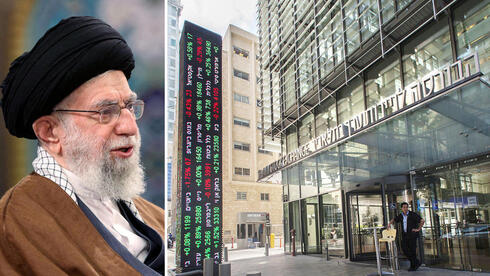
A major military strike against Iran by Israel (backed by the U.S.) has elevated near-term uncertainty for Israeli capital markets, though the Tel Aviv Stock Exchange has rallied since October and after a prior Iran confrontation. Analysts say the economic outcome hinges on whether the conflict produces a lasting shift in Iran's regional position — a decisive change could lower Israel's risk premium, attract foreign investment and benefit defense firms, while a protracted campaign would depress consumption, tourism, airlines and real-estate activity and widen the fiscal deficit. Short-term volatility and selective positioning are expected, with IPO activity likely to slow and banks/insurers vulnerable to foreign investor outflows.
Market structure: Immediate winners are defense contractors and global arms ETFs as demand for munitions, training, and ISR services increases; losers are Israeli airlines (El Al/ELAL), tourism/leisure, residential developers and banks with high FX/foreign investor ownership due to potential capital flight. Pricing power will shift to defense suppliers (ITA, LMT, NOC) and selective domestic exporters; domestic consumption sectors will see compressed margins if activity and air connectivity shrink for >2-3 months. Cross-asset signals: expect EM/Israel sovereign spreads +150–400bp potential widening in a severe scenario, USD/ILS volatility spike, higher gold (GLD) and oil (Brent +5–15% on supply-route risks), and equity option implied vols to reprice 30–80% higher short-term.
Risk assessment: Tail risks include wider regional escalation (Iran proxy strikes on Gulf shipping or oil infrastructure) or a regime-altering outcome in Iran that permanently lowers Israel risk premium; both have asymmetric returns—escalation = sharp risk-off, regime collapse = durable risk-on. Time horizons split: days (volatility spikes, airspace closures), weeks–months (tourism, IPO slowdown, fiscal deficit widening), quarters–years (structural foreign direct investment shifts if Iranian posture changes). Hidden dependencies: foreign investor liquidity (large; >20–30% of market) and Gulf capital re-entry are binary drivers. Catalysts: verified regime damage, US casualty, or major shipping lanes attack will accelerate sell-offs; diplomatic de-escalation will unwind premia rapidly.
Trade implications: Use concentrated defensive longs in large-cap defense names/ETF (ITA, LMT) over 3–12 months while hedging Israel equity exposure with 1–3 month put spreads on EIS sized to protect 3–5% portfolio allocations. Short/underweight Israeli travel & leisure and domestic real-estate developers; consider pair trades long defense (ITA) / short EIS financials or ELAL for 3–6 months. Option strategies: buy 3-month 10–20% OTM puts on EIS as tail protection and sell short-dated call spreads on highly bid defense names to finance net exposure. Entry timing: implement hedges immediately; add conviction longs after 7–14 days if volatility and flows stabilize.
Contrarian angles: Consensus assumes either quick de-escalation or permanent risk removal; both may be wrong — a protracted low-intensity campaign could produce tailwind for defense without the fiscal/credit improvement needed for strong domestic recovery, creating a multi-year divergence. The market may have already priced in a "reduced Iranian risk" rally; therefore long broad Israeli equities (EIS) is riskier than concentrated sector longs. Historical parallels (post-2006/2014 operations) show strong rebounds but only when conflicts were short and did not alter fiscal metrics; if deficits widen >2% of GDP or sovereign spreads remain >200bp wider for >6 months, re-rate is likely negative. Unintended consequence: overbought defense equities could mean crowded longs — layer in volatility-selling defensively only after assessing implied vol term structure.
AI-powered research, real-time alerts, and portfolio analytics for institutional investors.
Request TrialOverall Sentiment
mixed
Sentiment Score
-0.05
