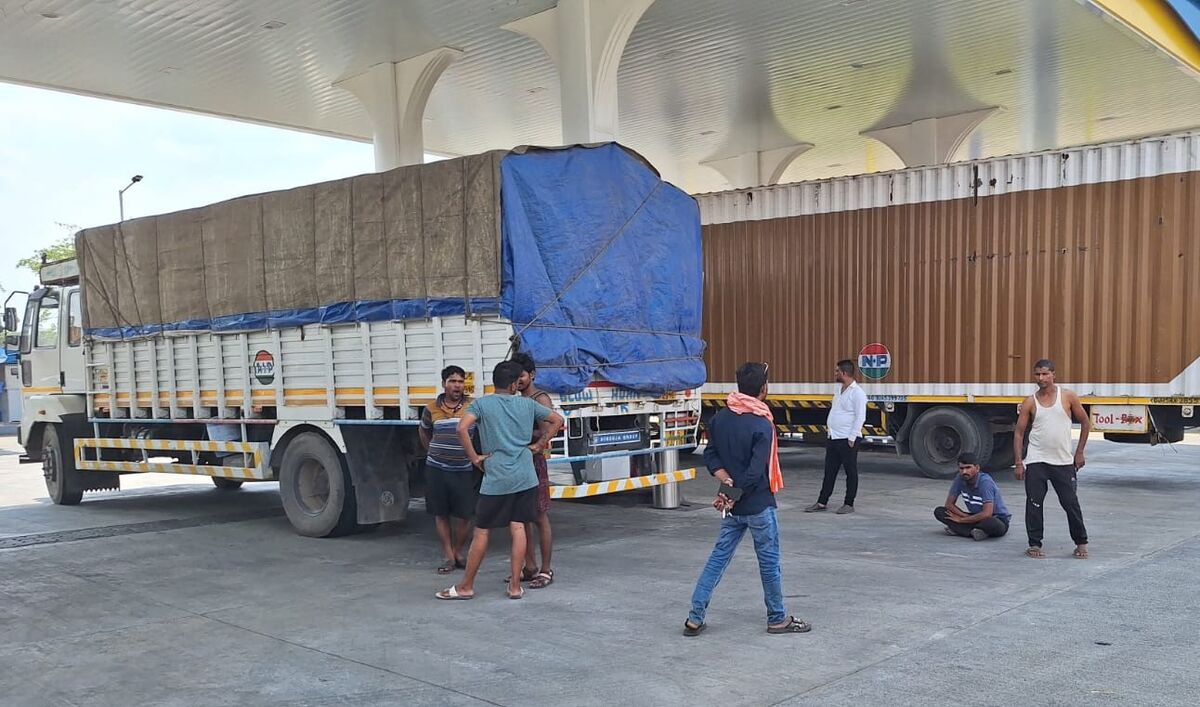
Truckers near Nagpur are being stranded for hours in roadside diesel queues, highlighting a fuel supply bottleneck that is disrupting freight movement across India. The crunch is affecting loads ranging from garments and snacks to Amazon packages and railway equipment, underscoring pressure on transportation and supply chains. The article signals a localized but meaningful negative for logistics and commerce in an emerging market.
This is a near-term throughput shock, not a demand shock. When fuel availability becomes a bottleneck, the first-order pain is on owner-operators and spot freight, but the second-order effect is inventory dislocation: time-sensitive, high-value goods get repriced for reliability, not just cost. That tends to favor shippers with captive fleets, multi-node routing, or the ability to hold inventory in-country, while punishing asset-light logistics models exposed to same-day delivery SLAs.
For AMZN, the direct revenue impact is likely negligible, but the operational risk is in India-origin fulfillment and line-haul continuity rather than retail demand. The bigger issue is service-quality compression: missed dispatch windows can cascade into slower promise times, higher cancellation rates, and temporary margin dilution if the company needs to buffer inventory or pay up for alternative transport. If this persists beyond a few days, expect localized stockouts in discretionary categories before consumers notice broad pricing effects.
The macro tell is that diesel tightness can spread from a regional inconvenience into a freight-rate spike if refueling delays become systemic. That would be bullish for fuel suppliers and larger integrated carriers with better allocation power, but negative for downstream shippers and industrial users that cannot pass through costs quickly. The key catalyst to watch is government intervention on supply allocation or price controls; if addressed within 1-2 weeks, the market impact stays contained, but if it lingers into month-end, expect a measurable hit to freight efficiency and working capital across Indian supply chains.
Contrarian view: the market may be underestimating how quickly logistics networks adapt. In India, informal route changes, night dispatching, and stock accumulation at regional hubs can blunt the disruption faster than developed-market models assume. So this is probably a tactical earnings headwind rather than a secular impairment unless diesel scarcity broadens across multiple corridors or persists through a full restocking cycle.
AI-powered research, real-time alerts, and portfolio analytics for institutional investors.
Request DemoOverall Sentiment
moderately negative
Sentiment Score
-0.45
Ticker Sentiment
