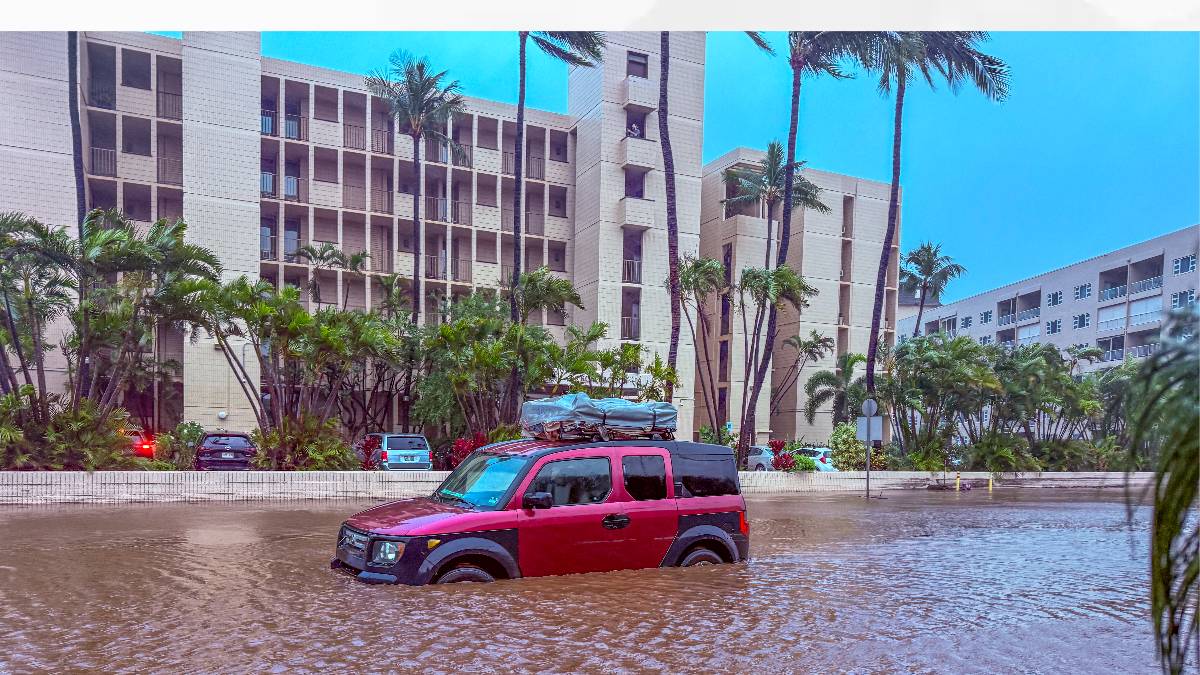
Severe storm-driven flooding in Kīhei, Maui turned Kūlanihākoʻi/S. Kīhei Road into raging rivers, displacing a 40-foot container, leaving >1 foot of mud in parking lots and washing out road edges while cutting power to local businesses. Vehicles were stranded or abandoned, community assets (Kīhei Youth Center, canoe club) experienced washouts, and residents face home flooding and emergency response strain; more rain is forecast, extending clean-up and repair needs. Local tourism and retail activity will be disrupted in the near term, but this remains a localized infrastructure and property event with minimal broader market impact.
This event is a textbook localized shock with asymmetric supply-chain winners and losers: near-term demand for building materials, roll-off disposal, and environmental remediation will spike within days-to-weeks and stay elevated for several quarters as homeowners and small businesses rebuild. National chains (HD, LOW) and logistics/disposal providers (WM, CLH) capture a disproportionate share of that spend because they control inventory, last-mile distribution, and emergency-services contracts; smaller local contractors and uninsured homeowners absorb losses and liquidity stress, creating elevated replacement demand but also credit pressure in the short run.
On a 3–12 month horizon the insurance and reinsurance market is the lever to watch — single-county coastal flash flooding typically produces insured losses in the order of 10s–low-100s of millions; that’s often enough to drive regional rate increases and underwriting scrutiny without moving industry aggregate capital. Over 12–36 months, public-sector budget reallocation (FEMA payouts + state infrastructure repair) is the largest structural amplifier: it lifts construction materials and heavy civil contractors while compressing discretionary tourism CapEx if room nights are deferred.
The consensus knee‑jerk is to treat this as a durable hit to Hawaii tourism; that’s overly pessimistic. Tourism booking windows are short (weeks), so airlines and hotels see immediate volatility but often recover within 1–3 quarters barring repeated events. The higher-probability, underpriced outcome is a multi-quarter trade-off: concentrated repair and remediation upside for national merchandisers and waste/remediation specialists, paired with transient softness for local travel operators and uninsured homeowners which may create credit and municipal funding dislocations to exploit.
AI-powered research, real-time alerts, and portfolio analytics for institutional investors.
Request DemoOverall Sentiment
strongly negative
Sentiment Score
-0.60
