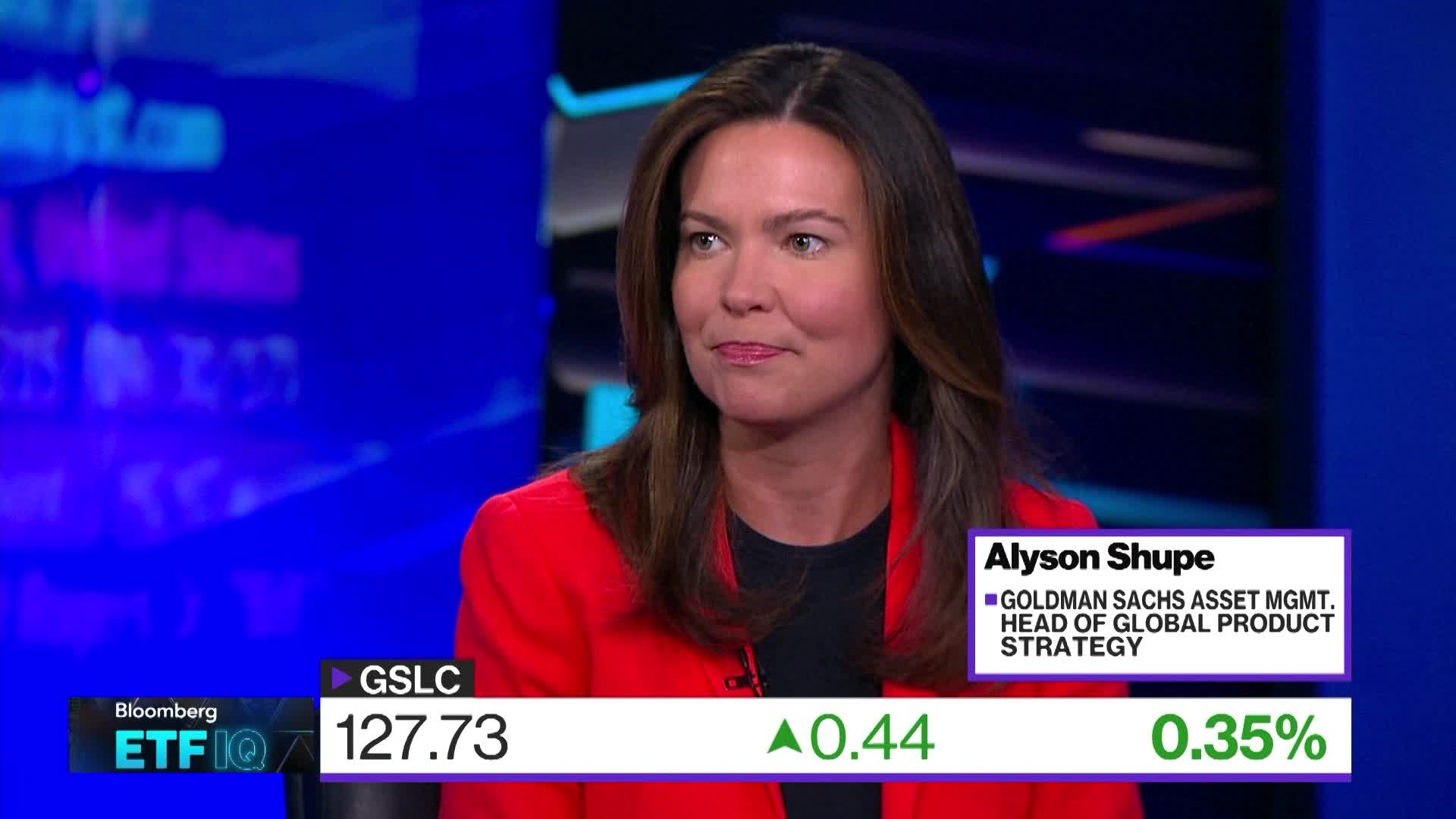
Alyson Shupe, Head of Global Product Strategy at Goldman Sachs Asset Management, identifies derivative income as a leading category for asset allocation, noting that derivative ETFs offer investors an additional source of consistent high monthly income. This highlights a significant focus on derivative-based strategies for yield generation within institutional portfolios.
Derivative income strategies are being positioned as a primary category for asset allocation, according to a key executive at Goldman Sachs Asset Management. The commentary highlights that derivative-based Exchange Traded Funds (ETFs) are being utilized as an accessible tool for investors to secure a "consistent high monthly income." This signals a significant trend in fund flows and investor positioning towards more complex, yield-generating instruments. The strongly positive sentiment associated with this news suggests a favorable institutional outlook on these products, reflecting a broader market search for alternative income sources beyond traditional fixed income or dividend equities.
AI-powered research, real-time alerts, and portfolio analytics for institutional investors.
Request DemoOverall Sentiment
strongly positive
Sentiment Score
0.80
Ticker Sentiment
