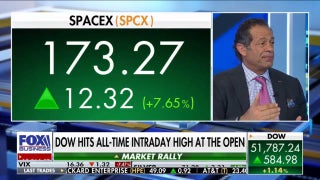
Fox Corporation announced a $22 billion acquisition of Roku at $160.00 per share, creating a combined company that would pair FOX's NFL, MLB and news assets with Roku's 100M+ streaming households. The deal is expected to close in the first half of 2027, with ownership split 73% to current FOX shareholders and 27% to Roku shareholders. Management says the transaction preserves FOX's investment-grade balance sheet and ongoing buybacks and dividends while accelerating connected TV advertising expansion.
This is less a simple media roll-up than a bid to own the control point of the television ad graph: if FOX can stitch premium live sports/news to Roku’s device-layer data and inventory, it can reprice CTV on a more deterministic basis than either asset can alone. The second-order effect is that ad buyers will likely push for bundled reach across linear, streaming, and shoppable surfaces, which should pressure independent ad tech and smaller AVOD players that rely on being the neutral middleman. The real strategic value is not just audience scale, but reduced customer acquisition friction for FOX-owned streaming and a stronger negotiating position with agencies and OEM distributors.
The market will probably underappreciate how long integration risk can suppress the upside. Regulatory review is the obvious months-long overhang, but the bigger 12-24 month risk is execution: combining a legacy broadcast mindset with a high-velocity product platform can create decision latency, product drift, and retention friction among Roku’s ad-tech and engineering talent. If that happens, the combined entity may end up monetizing the same audience with more complexity but not materially better yield, which would cap synergy credibility and keep the deal multiple from expanding.
For competitors, the most vulnerable names are the ones sitting in the middle of TV distribution without must-have content or hard device control; they get squeezed if FOX improves direct monetization and uses its content to drive ad share away from neutral platforms. Conversely, hardware OEMs and wireless carriers that depended on Roku as the default TV gateway may face worse economics if FOX pushes for more vertically integrated inventory control. The contrarian point is that this could be a defensive move by FOX against structural cord-cutting pressure, not a triumphal growth story; in that case, the deal may preserve relevance more than create new value, making the spread/merger arb the cleaner expression than outright directional longs.
AI-powered research, real-time alerts, and portfolio analytics for institutional investors.
Request DemoOverall Sentiment
strongly positive
Sentiment Score
0.82
Ticker Sentiment
