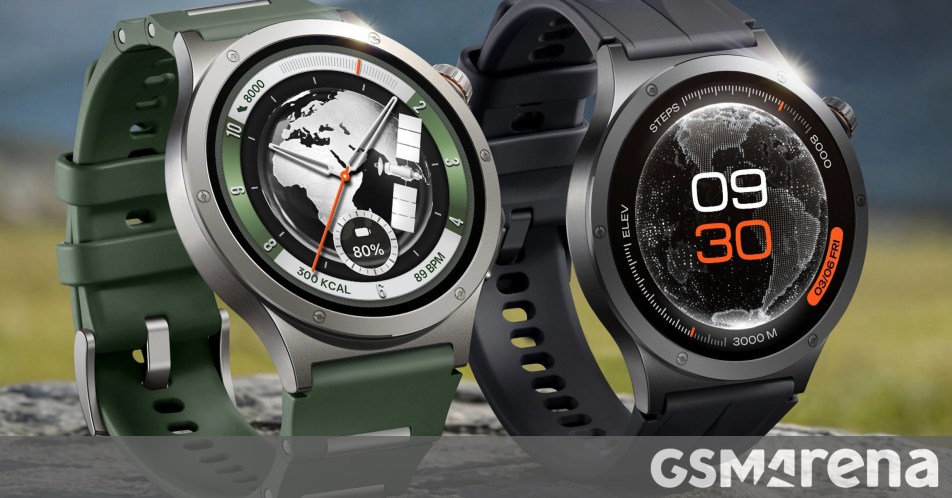
OnePlus has officially revealed the Watch 4, a titanium smartwatch with Wear OS 6, Snapdragon Wear W5, 2GB RAM, 32GB storage, and a 646 mAh battery rated for up to 16 days in power saver mode or 5 days in smart mode. The watch adds a brighter 3,000-nit LTPO OLED display, MIL-STD-810H durability, and broad connectivity including dual-band GPS and NFC with Google Wallet support. Pricing and availability were not disclosed, and the device appears to be a rebranded Oppo Watch X3 with only incremental upgrades.
This reads less like a breakthrough launch and more like a margin-defense exercise. Reusing an existing China SKU lets the OEM amortize R&D and industrial design while preserving premium positioning in global markets, which is favorable for unit economics but likely limits the size of the addressable surprise. The bigger implication is that the wearables category is drifting toward feature parity, so brand equity and channel execution matter more than hardware deltas; that tends to benefit the ecosystem owner more than the device maker itself.
The second-order winner is Google: Wear OS 6 deepens switching costs and gives Google another surface for services monetization, payments, and health-data capture. If this class of device becomes the default mid/high-end Android watch, accessory and app attach rates should improve, but competition also intensifies for Samsung and other Android OEMs because differentiation now shifts to software cadence and battery optimization rather than specs. Component suppliers with exposure to low-power chips, AMOLED, sapphire, and sensors may see steadier demand, but not necessarily better pricing power.
The main risk is that a compelling spec sheet without disclosed pricing or launch timing is often a signal of modest near-term commercial impact. Over the next 1-3 months, the stock reaction in adjacent listed names will likely depend less on the product itself and more on whether this supports a broader premium Android wearables share gain; absent that, it is noise. Over 6-12 months, the key variable is whether Google can convert Wear OS refreshes into higher ecosystem monetization fast enough to matter against Apple’s installed base advantage.
Consensus may be overestimating the importance of titanium and battery claims relative to software lock-in and distribution. The underappreciated angle is that if Android OEMs standardize on a common wearable software stack, hardware differentiation compresses further, which can actually improve bargaining power for Google while pressuring OEM gross margins. In that sense, the launch is slightly more constructive for platform economics than for handset-adjacent hardware profits.
AI-powered research, real-time alerts, and portfolio analytics for institutional investors.
Request TrialOverall Sentiment
mildly positive
Sentiment Score
0.15
